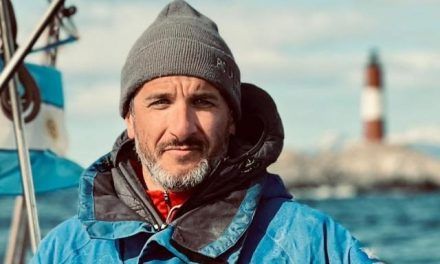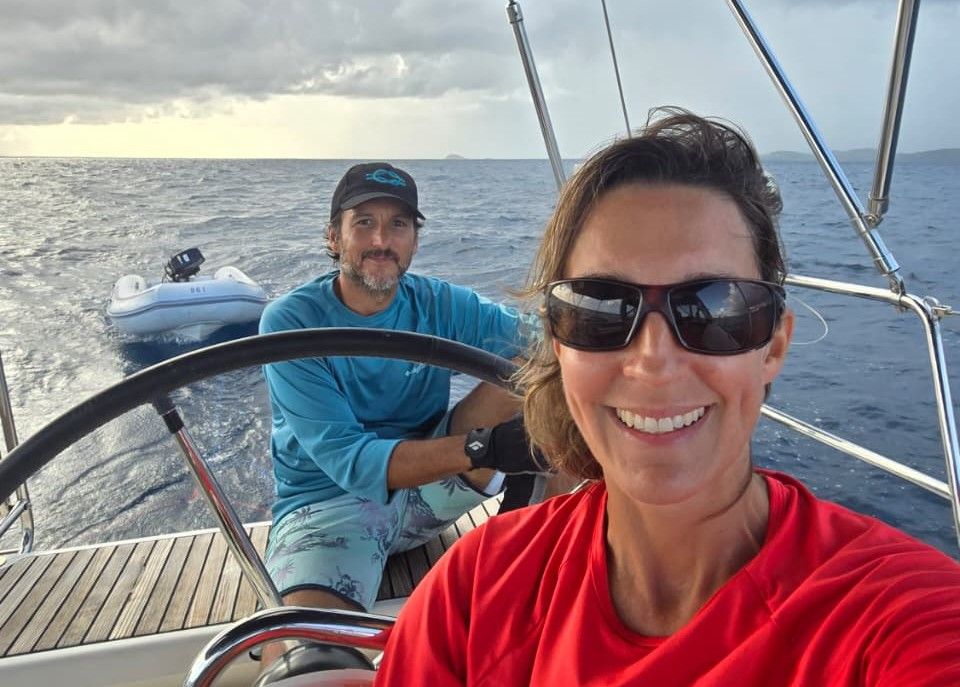
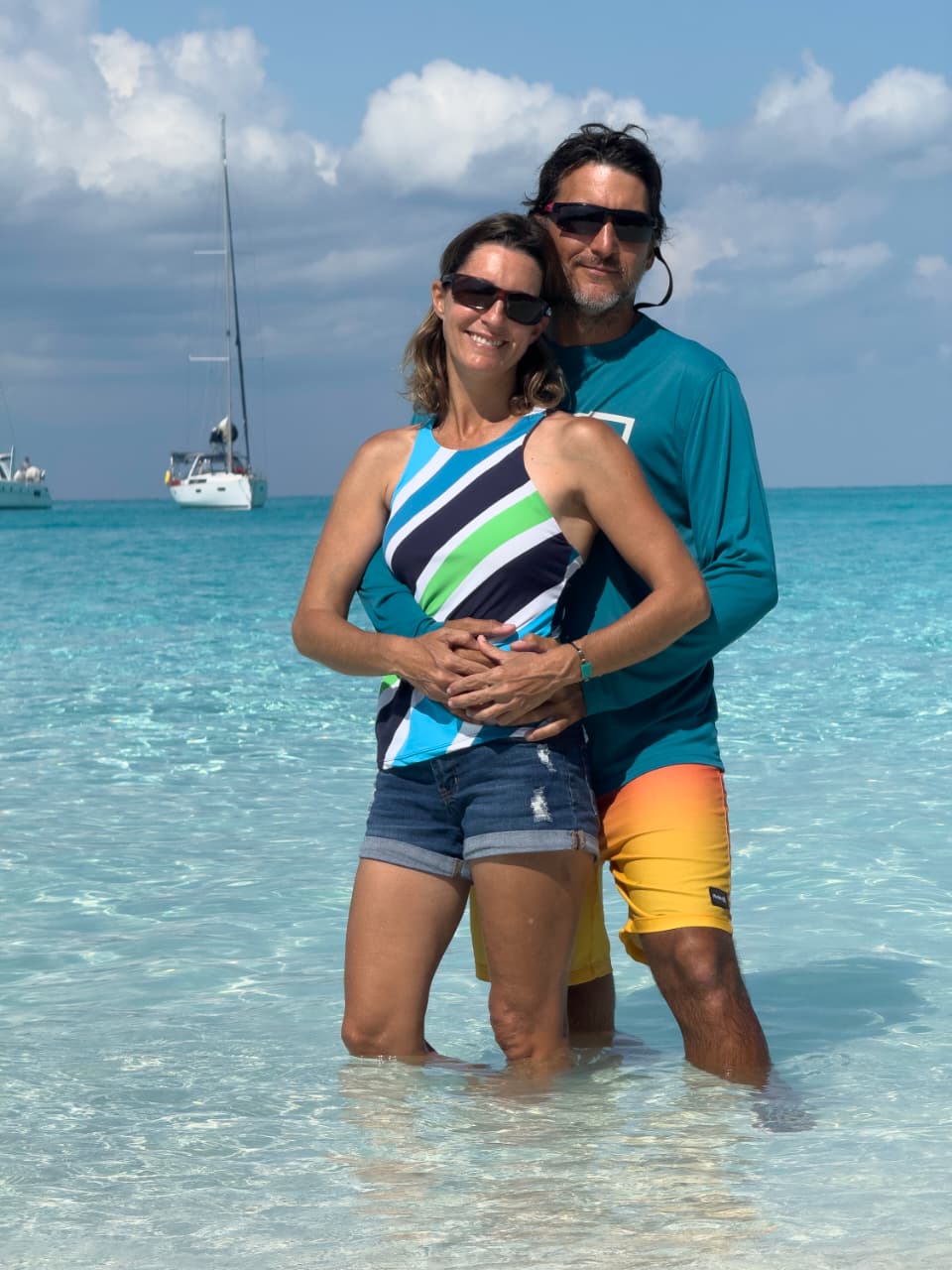
This Argentinian couple—Cecilia, an architect, and Ezequiel, a systems engineer—began their project a decade ago: they wanted to circumnavigate the globe by boat. However, initial difficulties in completing the voyage led them to spend five years traveling in a motorhome, covering 93,000 kilometers until they finally found their dream vessel and began counting miles.
“After completely turning our lives around, we decided that the best way to live was by traveling. So we made travel our way of life.” In this way, with few words, in a stunning summary, Cecilia—better known as Chilu—and Ezequiel introduce themselves on their website. “The combination of Chilu and Eze da Chez: very original (laughs). The ‘Team’ part is because we’ve always considered ourselves a team, although it was a bit of a parody of Americans who add ‘team something’ to everything. But like all jokes, it stuck,” Ezequiel explains.
However, for this couple from Argentina, it didn’t all begin aboard a sailboat, nor navigating rivers or seas, with a compass and counting nautical miles. There was a plan B on dry land. Cecilia was born and raised in San Isidro, in the province of Buenos Aires, in a family of six siblings. She studied Architecture and at 26 decided to travel the world: what began as a gap year ended up being an eight-year journey from New Zealand to Europe and Asia.
“I’ve always been adventurous, I loved the adrenaline rush, taking risks, and climbing everywhere,” she says, just minutes before starting a conversation at the same San Isidro club where they took the helmsman and skipper course, where her social media followers are eager to hear their story firsthand. Ezequiel, for his part, lived in Bella Vista his whole life. He is the eldest of three brothers, studied Systems Engineering, and worked in the family business. At least until he met Chilu.
While a boat was their first choice and it didn’t work out from the start, the couple, more than ten years ago, figured out how to make their dreams of traveling the world a reality. They started in May 2016, almost ten years ago. Or until the ship arrived. The first leg, they thought, would be through Argentina, Brazil, and Chile. But it didn’t all end in those three countries. “You can’t give up, and in any case, the plan is to have no plan,” they sum up with a smile.
How did you get into sailing? What were your first steps??
—(Ezequiel) I lived in Bella Vista, about fifty kilometers north of Buenos Aires. It’s not a place with lakes or rivers for boating; it’s inland. My family didn’t exactly encourage me in that direction, but we’d occasionally come to Tigre (the Paraná Delta and the Río de la Plata estuary) for outings. At one point, one of my brothers and I took a sailing course and bought a boat to go out in the delta. After that, I started doing some water sports like kitesurfing. But since that depended a lot on wind conditions, I started a course to learn how to sail a catamaran. I bought one and practiced on a lake near my house.
—(Chilu) I started sailing very young, at seven years old, in an Optimist at the San Isidro Yacht Club. I wasn’t hooked at all; in fact, it terrified me. I was somewhat pressured by my family because my father was a huge sailor. Later, I started sailing again and got hooked at 16 because it was a different story. I wasn’t afraid; I was a teenager, and it was summertime fun. I got really into it, so I decided to take the skipper’s course. But that year my father died, and I couldn’t continue. I focused on my studies (Architecture).
What happened next?
—(Chilu) After a few years of studying and working in my profession, I took a gap year, went to Australia, worked odd jobs—mostly as a cook in restaurants—and dedicated myself to traveling. That gap year eventually turned into eight (laughs): I traveled the world. My return to sailing came much later, when I was almost thirty, when I met the captain of a luxury yacht in Spain who hired me as a temporary stewardess for a three-week delivery. I loved that lifestyle; it seemed amazing to me, and shortly after, he hired me permanently for that boat. I sailed all over the Mediterranean, through beautiful Northern Europe, for about two or three years. What also happened when I met him was that I discovered his family, who lived on a sailboat and were circumnavigating the globe for the second time. We would visit them every summer, and I was amazed by that lifestyle: living on a boat for mere mortals like us (laughs).
It wasn’t just for a privileged few.
—(Chilu) Of course, when I met them, I realized it wasn’t just for a few brave, adventurous, or privileged people who dared to do it: many people can dedicate themselves to it. My work on that boat ended, I returned to Argentina, and I decided I wanted to dedicate myself to sailing again. I loved the water and the lifestyle. I started the helmsman course at the University of Buenos Aires (UBA), where we had the theoretical classes, while the practical sessions were at the San Isidro Sailing Club (CVSI). Shortly after, I was hired on a sailboat in Spain, and just a couple of weeks before returning to Europe, I met Ezequiel.
The motto was: don’t fall in love with a sailor
—(Ezequiel) We actually met while taking a climbing course. I was immediately charmed by Chilu because she also had so many travel stories, and I was at a point in my life where I needed more. We dated for a couple of weeks, but she had to return to Spain. I was completely smitten; a few weeks passed, and I was still feeling down, so I took a flight and went to visit her in Europe. The boat was undergoing maintenance in Mallorca, so we took advantage of the opportunity to get to know each other a bit better over those two weeks. We went to Ibiza, explored all the islands—it was like a honeymoon. I was working for a family business, and they let me take a few weeks off. The boat then continued on to Naples. I traveled around Italy on my own and went to meet her at the next port because the captain had told me where she would be stopping on a certain date. The first thing Chilu told me when she arrived was that she had given up the boat so we could travel together.
What did they do with their jobs?
—(Chilu) By then, we were hooked again. So I thought it was my turn to take the plunge, and we went back to Argentina together, but with the plan of going on a trip. The original plan was to sail around the world, him as a sailor, me as a stewardess (because it’s very common to hire couples on yachts), but then we immediately started the helmsman course with Carolina and Jerónimo at CVSI (because I hadn’t completed it).
—(Ezequiel) I had taken the motor helmsman course, but I was missing the sailing part. We finally did it together.
But they also lacked practice!
—(Chilu) Of course, in the middle of the course we realized we didn’t really want to work for others and wanted to have our own boat. We lacked training and practical experience, so as soon as we finished the helmsman course, we also completed the skipper course. We were completely convinced that we wanted to buy a boat and sail around the world. With that in mind, we learned everything we could about sailing. We had a friend who bought a boat and took us out all the time, and we practiced a lot in Colonia and Punta del Este. We sailed a ton. You always need a good friend with a boat (laughs).
How did you get to the motorhome?
—(Ezequiel) To buy a boat, we had to sell a house my brother and I owned in Bella Vista, which my mother had left us, but the market was at a standstill at the time, and we couldn’t manage it. We also looked for ways to support ourselves and put Chilu’s apartment up for rent, made some investments to generate income, and, most importantly, I had to quit my job. It was a long process because I couldn’t abandon my family, the company, everything. It all took us about three years.
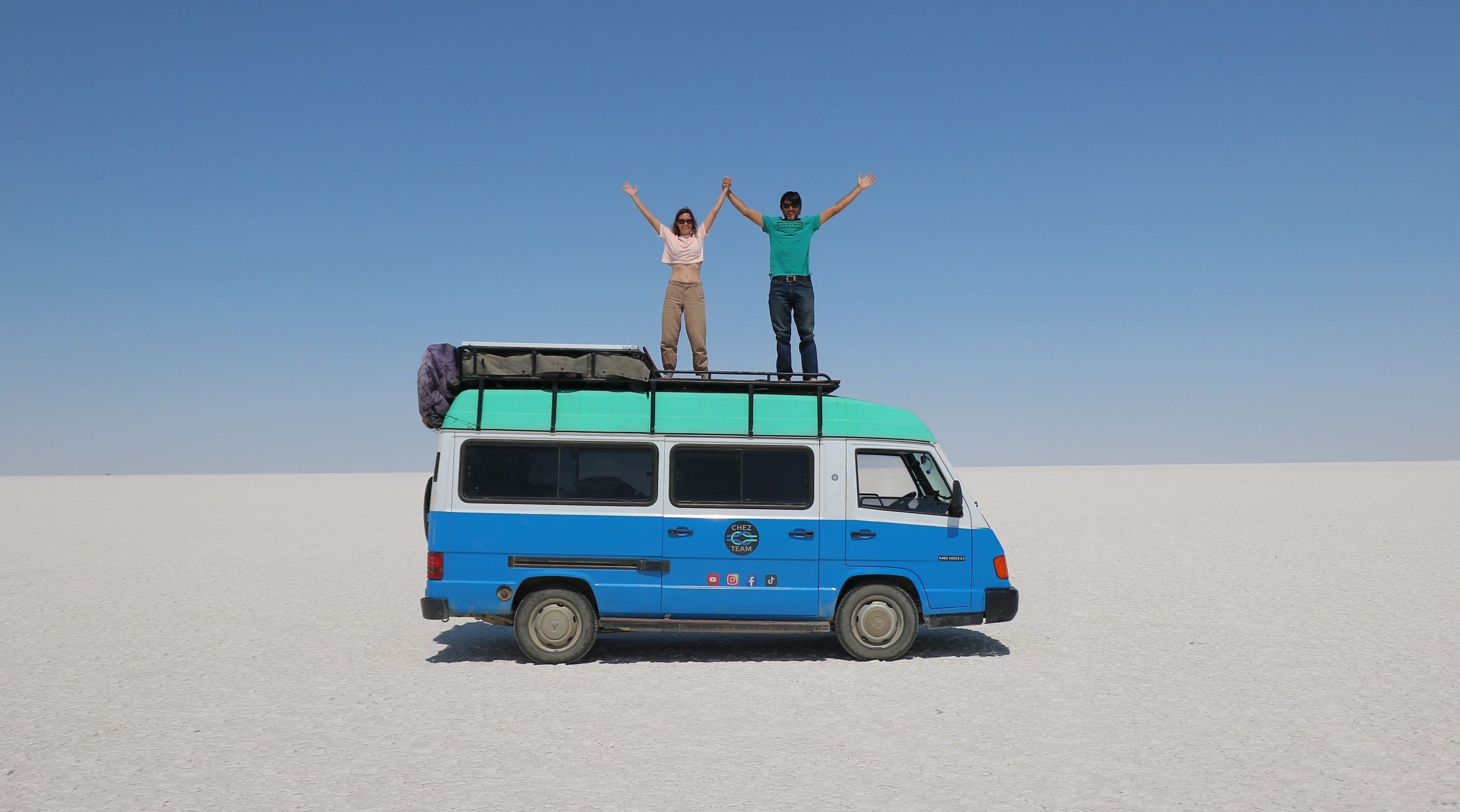
—(Chilu) However, there was a financial crisis in the country, and nothing was selling. We had taken several trips by car, but it was very uncomfortable. We had quite a bit of equipment, like kitesurfing and paragliding, but we had to stay at campsites or hotels. It was very expensive. So we thought it would be better to travel by motorhome until we could sell the house and buy the boat. Ultimately, it was Plan B, but it’s what we did most of the time: we traveled for five years and covered 93,000 kilometers.
But how long was it initially planned to last?
—(Ezequiel) We put it together in a couple of weeks, hit the road, thinking we’d only be traveling for a year until the house sold. We planned to travel through Argentina, Brazil, and Chile.
—(Chilu) But nothing ever goes as planned. We sold the car, bought the van, a 1994 MB180, and outfitted it. After about four months, we continued our journey because the house wasn’t selling. We finished the motorhome little by little, even taking some wood for the roof. The house still wasn’t selling, so we kept traveling: we ended up touring all of South America. We made it to Ecuador, and it was spectacular. We had a great time, doing sports everywhere—paragliding, climbing, snowboarding, kitesurfing—lots of adventures, but we were missing the boat.
But you needed the sailboat.
—(Ezequiel) Yes, Chilu kept saying a little more, a little more. It was great, but I needed the boat. I also think we set the bar too high because we wanted a catamaran.
—(Chilu) The problem was that the house wasn’t selling, the motorhome had increased in value because of the pandemic, and we couldn’t find the boat we wanted, but maybe a smaller one. So we were thinking of buying an older one that would allow us to get into that world, do more practical work, and start the life we were looking for.
How did you end up raffling off the motorhome?
—(Chilu) The sales process takes time, and we were in Ecuador, trying to figure out how to get back to Argentina. We were quite anxious, so we came up with the idea of holding a raffle. We already had a whole community of followers, and we could give someone the opportunity to embark on this adventure. We were partly inspired by the messages we received every day: “Guys, what you’re doing is amazing! I’m dying to travel in a motorhome, but I can’t afford one.” This made it possible, at least for a small price. Three months passed between launching the raffle and returning to Argentina, so everything fell into place to complete the transfer. The raffle tickets cost five dollars, and a woman from Santa Fe (one of Argentina’s main provinces) won. It went very well, much better than we expected. We had buyers from Spain, Central America, everywhere.
—(Ezequiel) We had also considered what would happen if nothing sold, how we would refund everyone who had bought one. We even thought about paying for the winner’s one-way ticket to wherever we were, whether they were from Europe or elsewhere—we considered all the alternatives. The important thing for us was to recoup at least the initial cost of the truck.
—(Chilu) In the end, it turned out spectacularly, and social media helped a lot, because it has also grown a lot in recent years.
Did yoy finally get the boat?
—(Chilu) Yes, after raffling off the truck, we went to the Caribbean with some friends for a short catamaran trip and arrived in Puerto Rico to pick up the boat. We started there because it seemed centrally located; some followers welcomed us and gave us a place to stay, and it’s a good base. It was already cold in Europe, and hurricane season was still a ways off here, so the weather was perfect. They took care of all the logistics. Everything worked out perfectly.
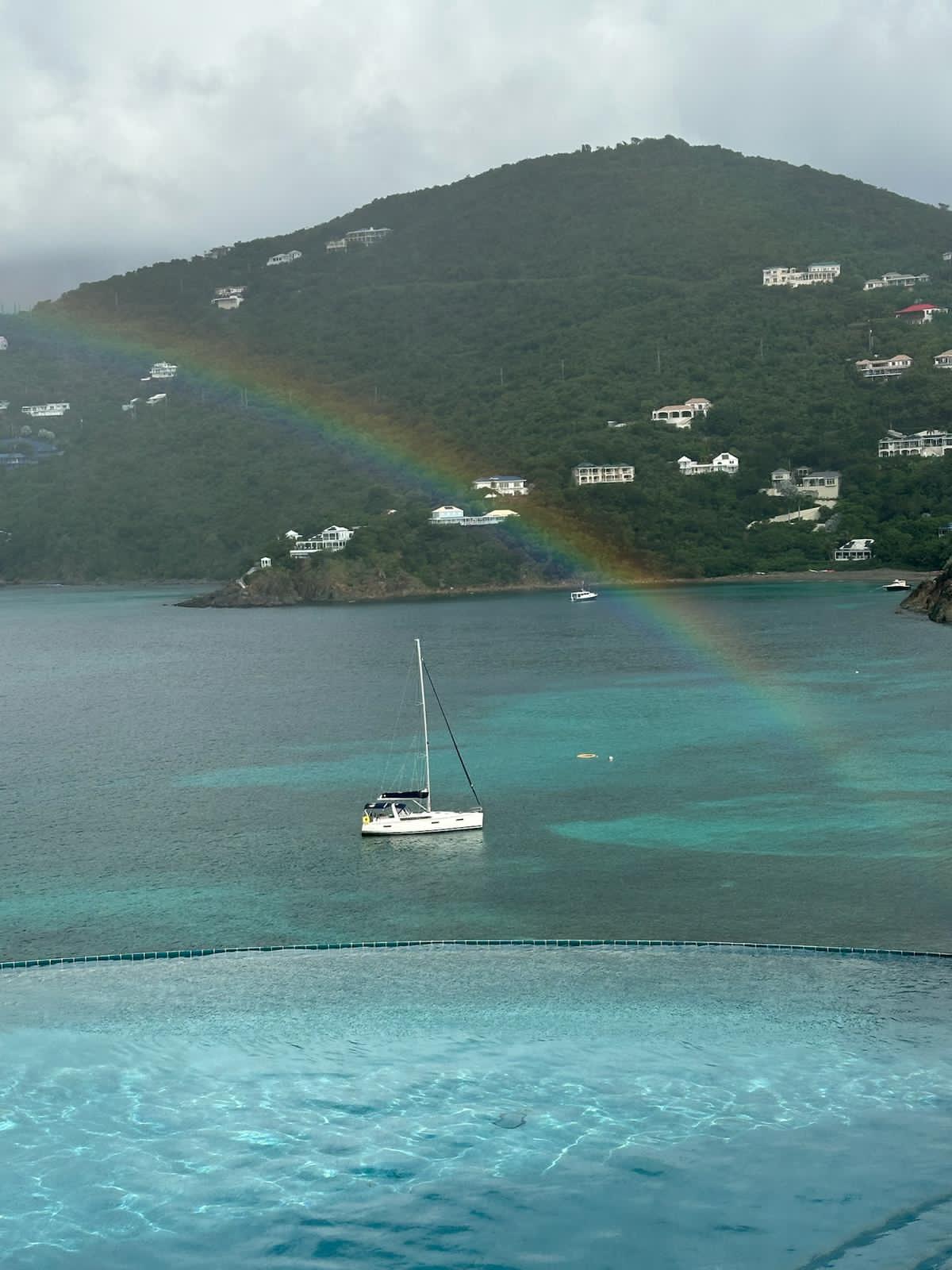
—(Ezequiel) We searched quite a bit but couldn’t find a boat that quite fit our needs. We spent a lot of time walking around the marinas to see if there were any boats for sale that weren’t listed. Once we’d seen all the boats in Puerto Rico, we moved on to the Virgin Islands. On Saturday, our second-to-last day, a man came ashore on an impressive sailboat. We stood there watching, and he asked if we wanted to come aboard. We told him what we were looking for, and he called a broker he knew who said he had a boat with those characteristics.
And what happened?
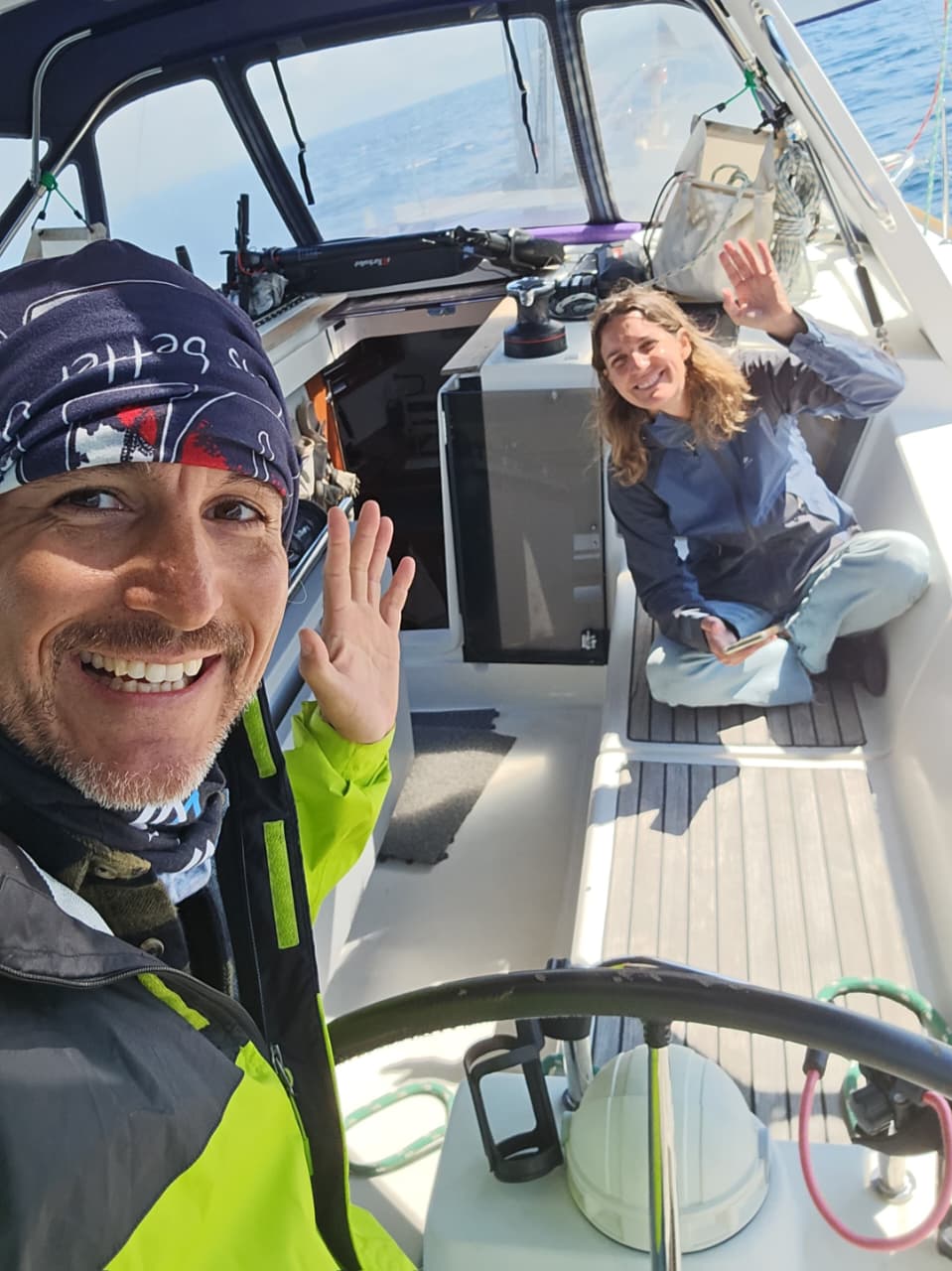
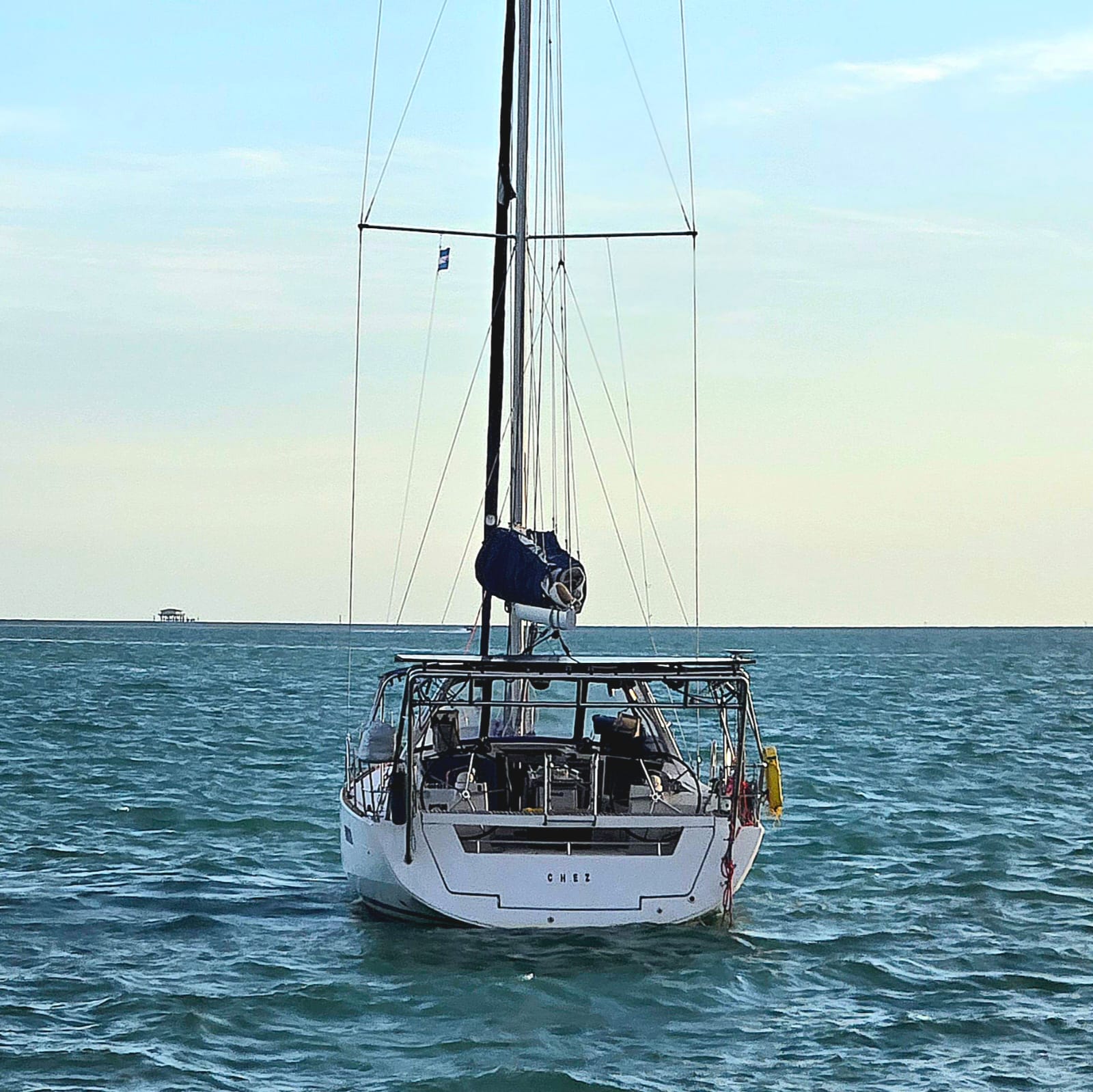
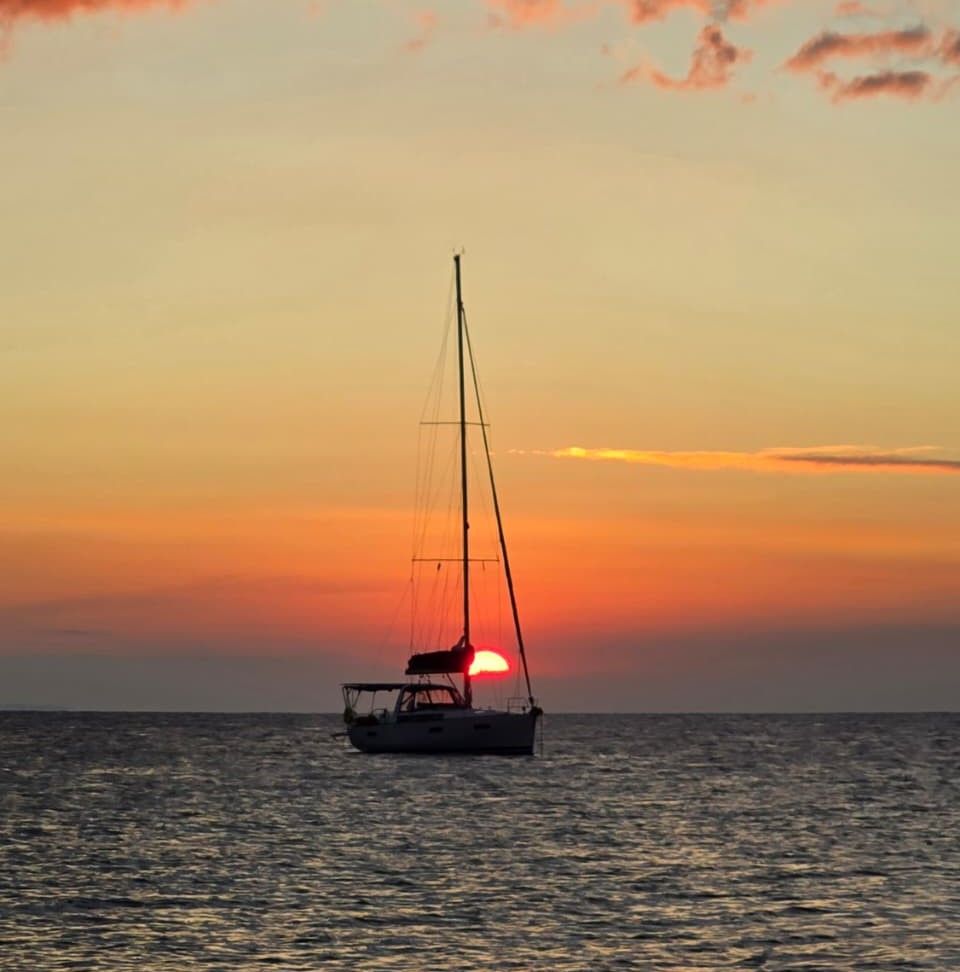
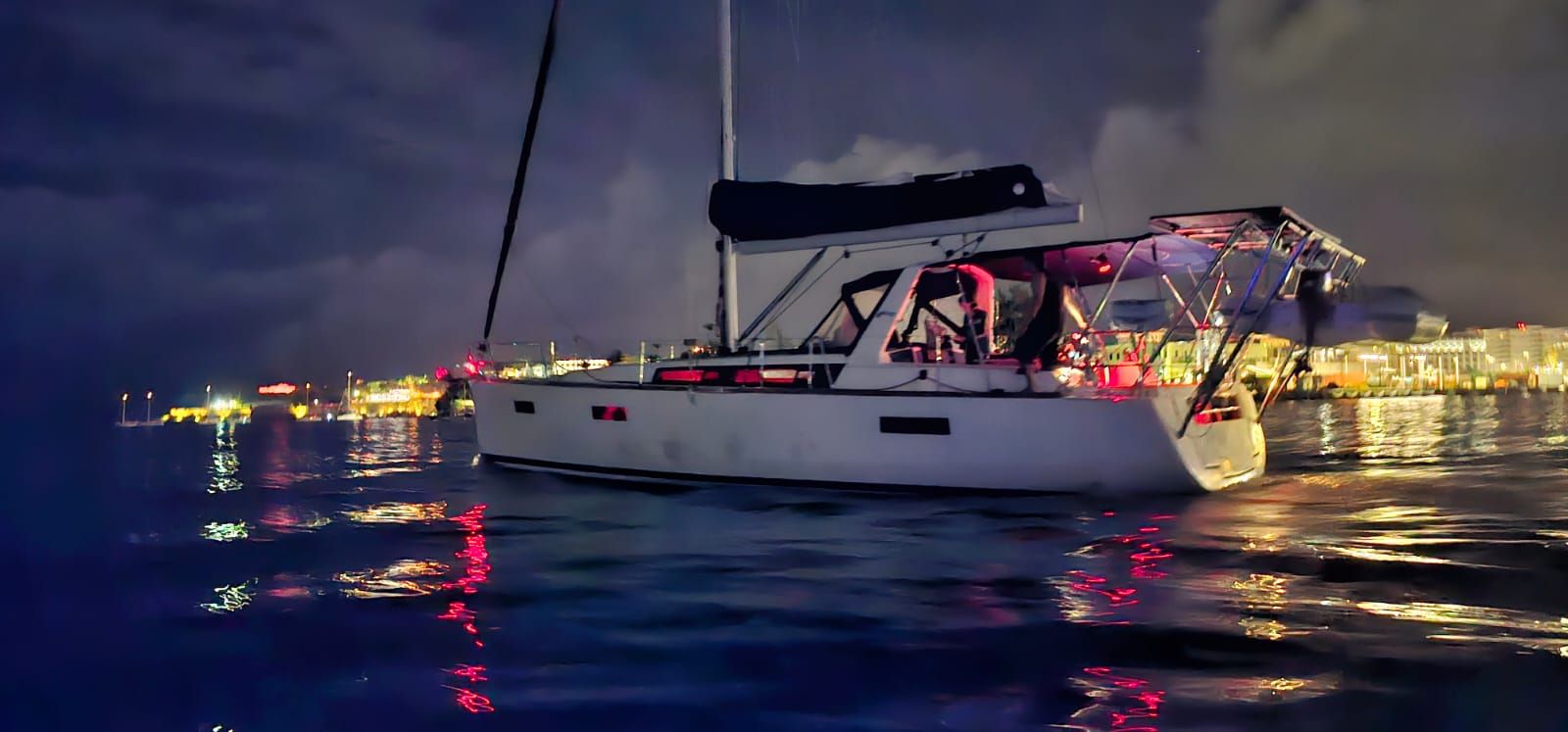
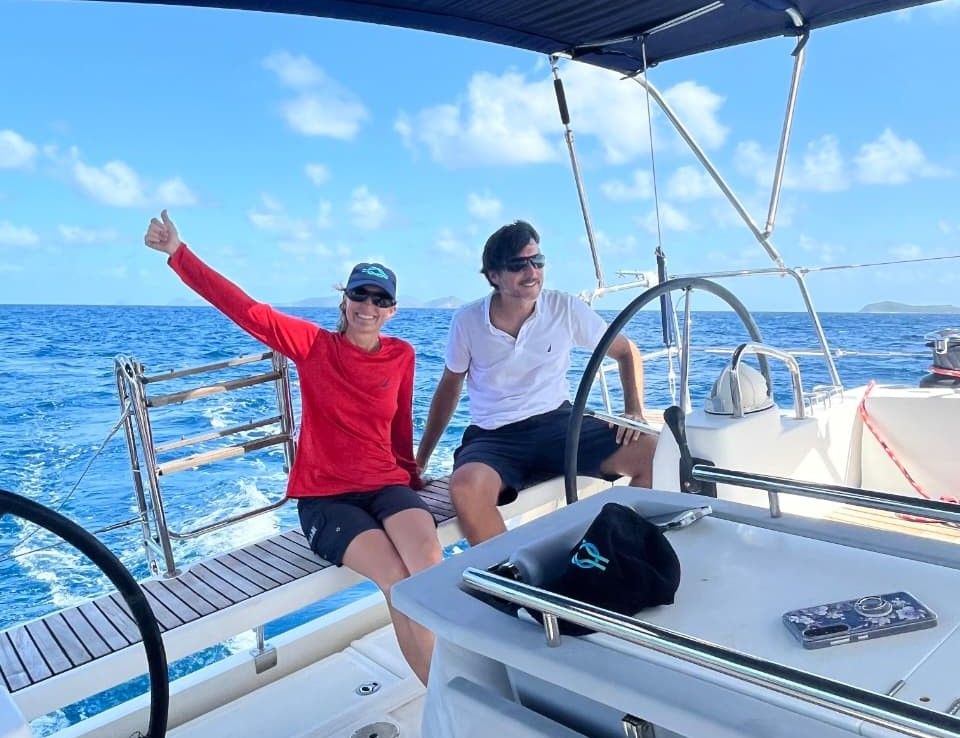
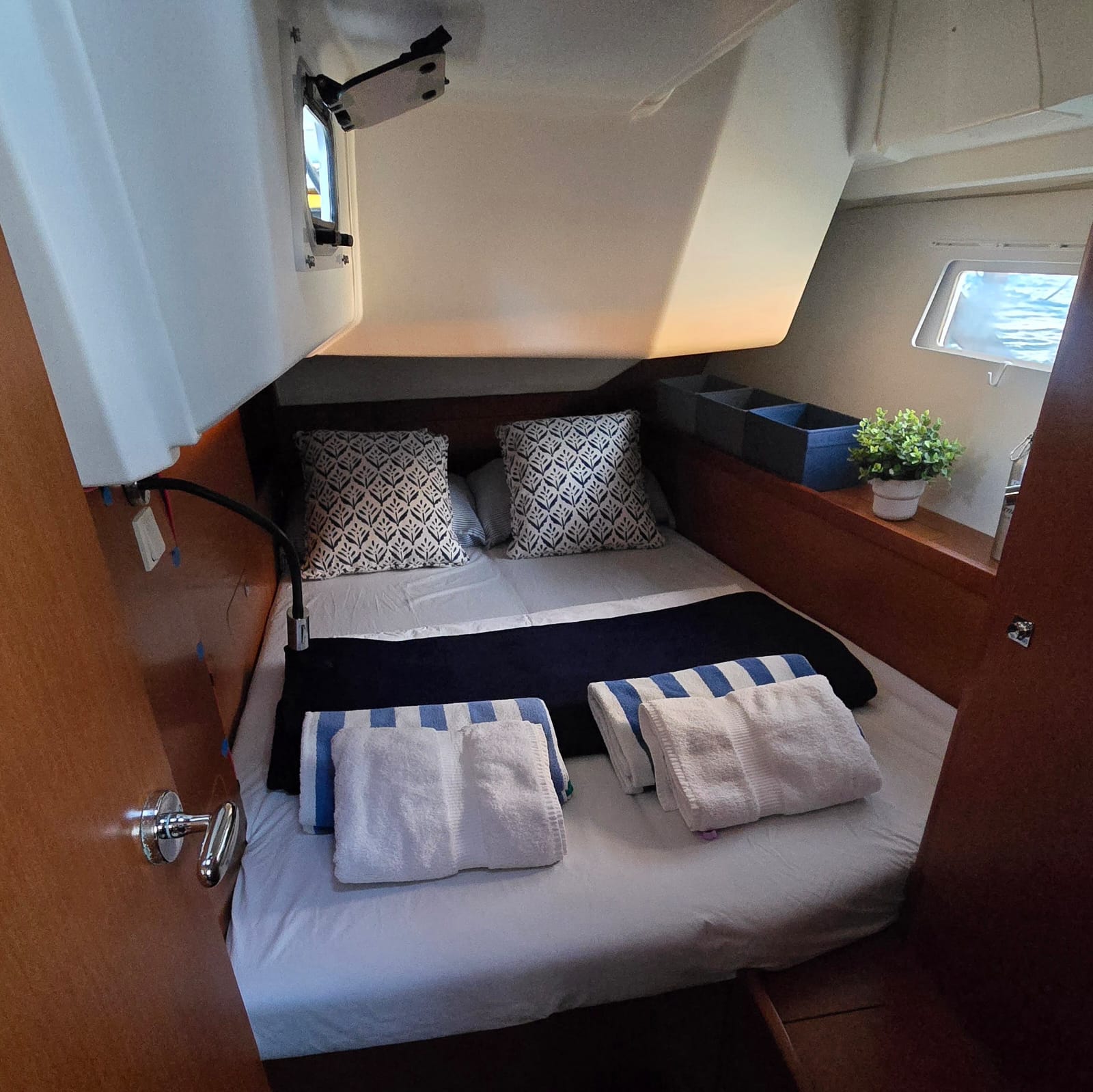
—(Ezequiel) We couldn’t believe it because it was right where we’d started our search. There were over 300 boats there, and it turned out the sale had fallen through a couple of times and it hadn’t been listed again yet. They were trying to get rid of it because it was the oldest boat in the fleet, from 2016, but for us, it was very modern. The boat was ready because, since other people had made offers, it had all its checks, services, and paperwork up to date. They have a shipyard section that fixed the two little things it was missing. It’s a 43-foot Beneteau Oceanis. We made an offer and finally bought it. A week later, we went to make the payment, and they delivered the boat to us on the island across the way because, due to tax regulations, they don’t deliver it there. It was being driven by a captain who, because of insurance issues, wouldn’t let us travel with him. We went by ferry and saw the captain drop it off and walk away through another marina. That’s how we got the boat. We said, “Now what do we do?” Very strange, I don’t know, we put a padlock on it (laughs). Besides, we had never steered such a big ship before.
—(Chilu) Also, we hadn’t sailed much lately; it was all very strange.
How did things go? What are the plans now?
—(Chilu) We started in the Virgin Islands because they’re a dream, like being in paradise. But we were scared because we didn’t have solar panels to charge the batteries, we had to find water at the stations because we didn’t have a water purifier—everything was very improvised, because we were starting to live on the boat.
—(Ezequiel) For all these reasons, we thought about returning to Puerto Rico because we had a base there, we knew people, and we could organize it better. That was our longest crossing up to that point.
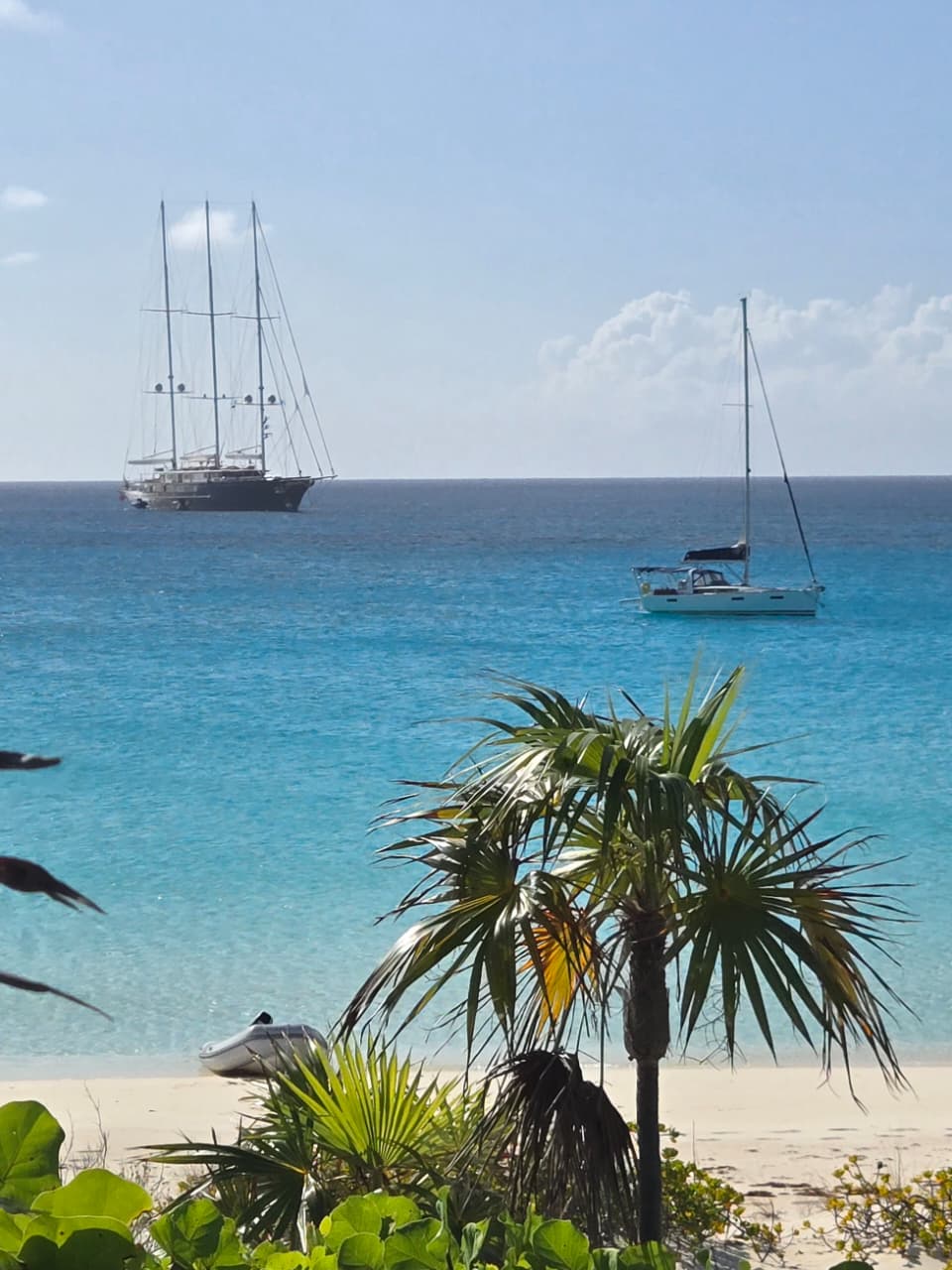
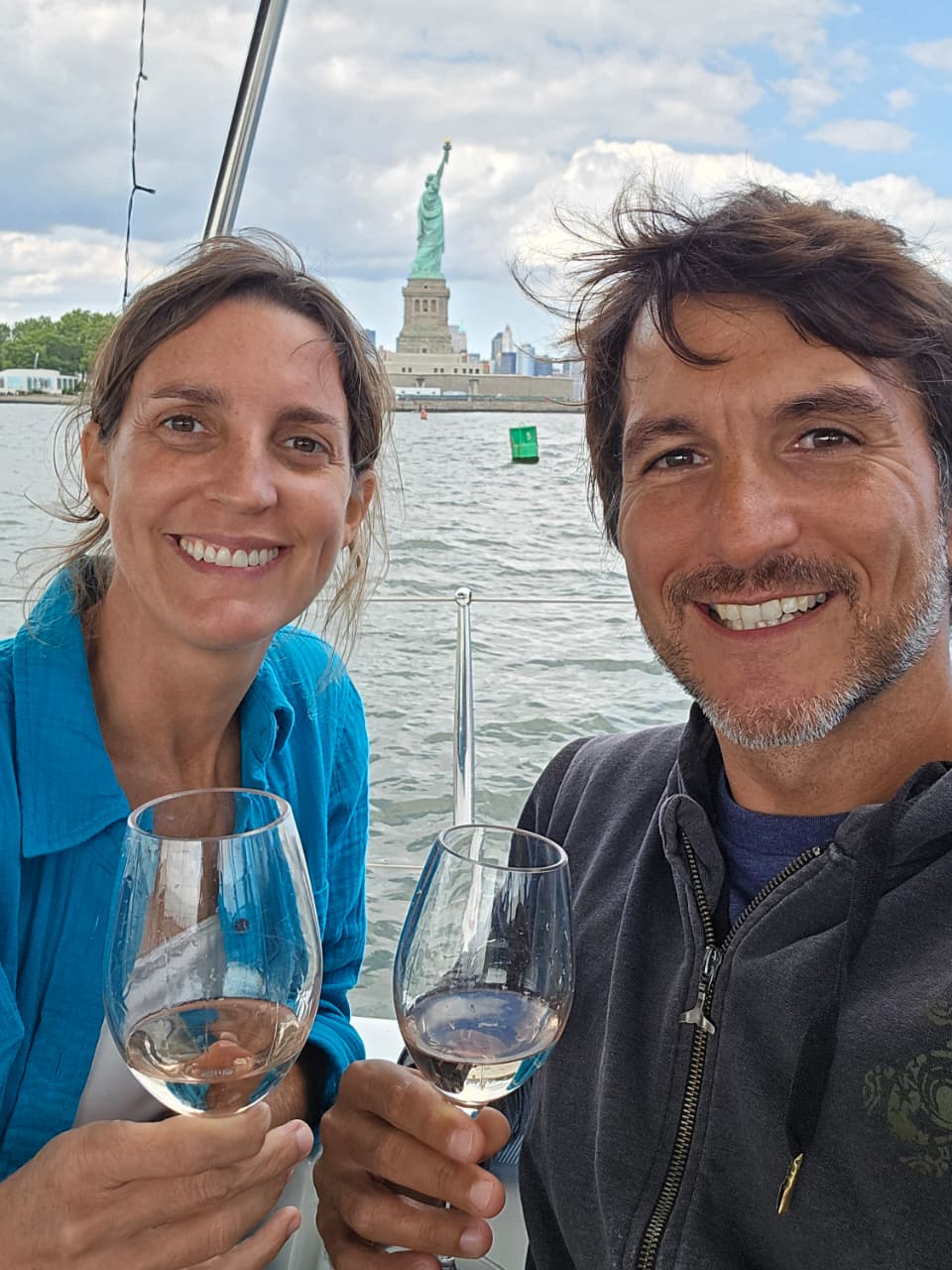
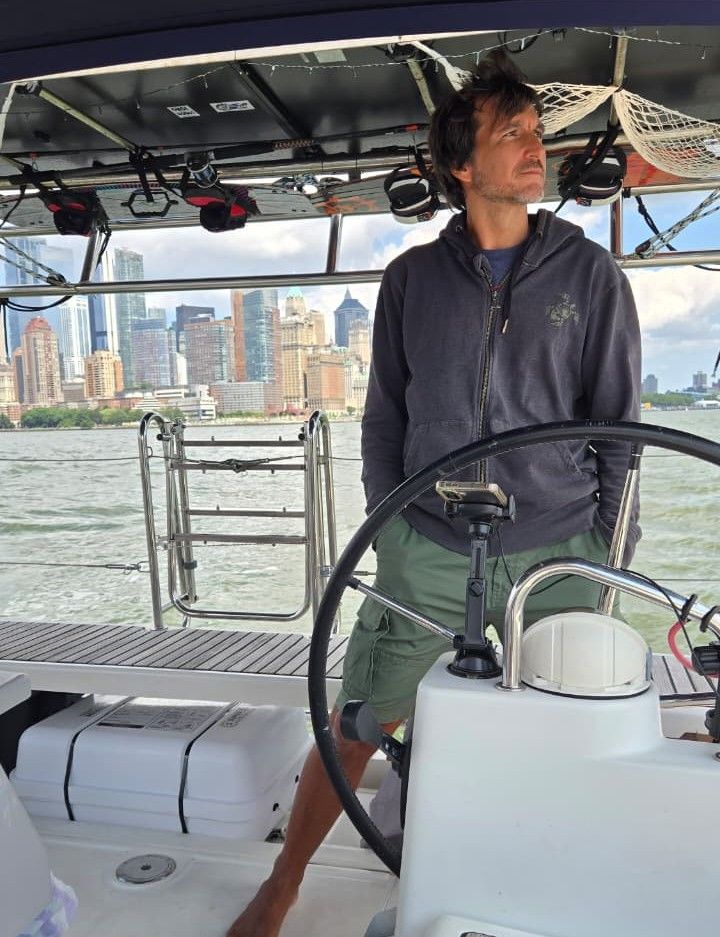
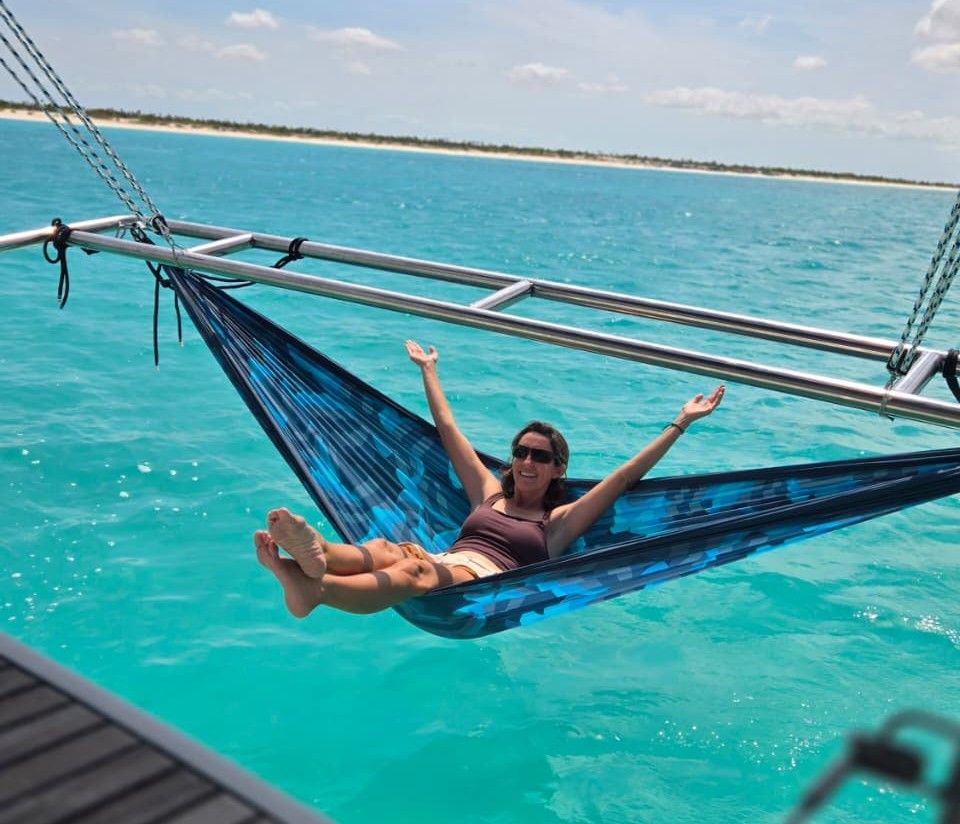
—(Chilu) We’ve been traveling for a year now, and we’ve already explored Puerto Rico, the Dominican Republic, and the Bahamas. Later, we went up the coast to the northern United States, returned via New York with the Bohemias (Tommy and Agus), and came back down the Intracoastal Waterway, which connects the entire east coast of the United States through a series of canals (very shallow, so we had to use the motors because we couldn’t use the sails much). We sailed down to Florida, where we left the boat to travel to Argentina. We haven’t decided where to go next yet; the plan is to explore the Lesser Antilles and then reach Panama because we have many friends in San Blas. The idea is to spend the entire next season in the Caribbean before crossing the canal and then the Pacific, but first, we want to gain experience and prepare the boat for that journey.
Links:
Web page: https://chezteam.com.ar/
Instagram: https://www.instagram.com/chezteam
YouTube: https://www.youtube.com/@ChezTeam/
Facebook: https://www.facebook.com/chezteam
From “Navegantes Oceánicos” we thank Chilu and Ezequiel for their collaboration and for sharing their experiences with our readers in this fascinating interview.
Chez Team, we wish you fair winds, safe passage, and the best of luck in the future!