
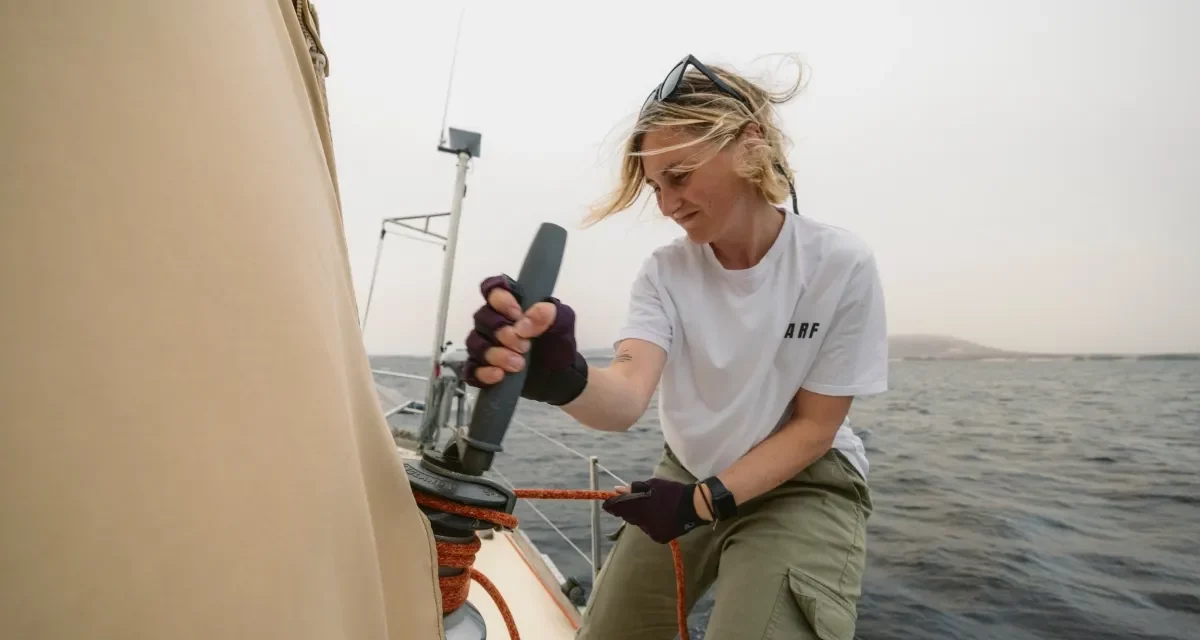
The communicator, known on social media as Merysinplastico, has been sailing since childhood in Buenos Aires. Her concern for a healthy lifestyle and environmental protection led her to explore different ways to promote more planet-friendly practices.
A guide to separating waste for river or sea trips, for example, is among her latest proposals.
“In this system, everything is marketed with disposable plastics,” she says.
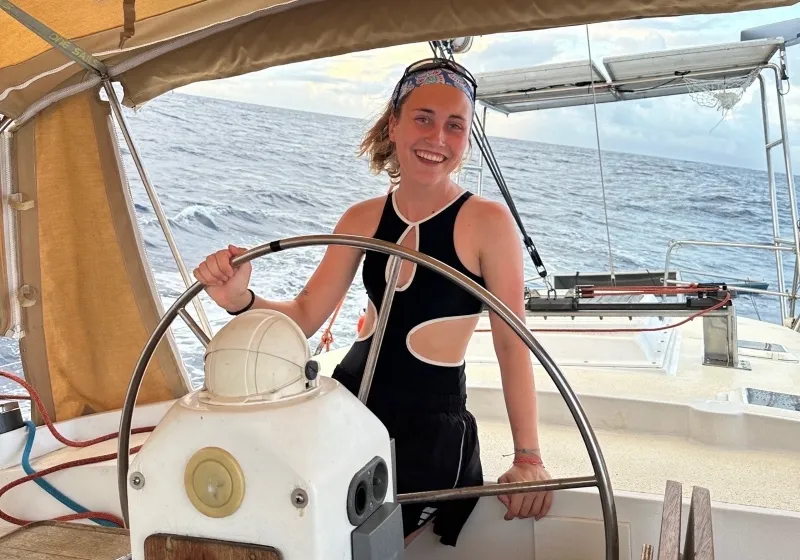
Mery Sackmann is known on social media as Merysinplastico. Sometimes even her own friends and acquaintances call her that. However, her concern for a healthier life and environmental care began long before: perhaps when she sailed with her father on the Río de la Plata estuary or when she collected trash on the coast with a non-governmental organization coordinated by Olympic sailor Yago Lange.
“I’m passionate about sailing, I love taking photos, and I’m very creative. I like connecting with people who are creating cool things and projects,” she says now.
In 2004, her father—who had sailed all his life—decided to build his own sailboat, which they still sail with friends and family to this day. “I love living simply and uncomplicatedly, in contact with nature and trying to have the least possible impact on the planet.” That’s why, in 2019, for a university project, she created a blog “to inspire a plastic-free life.”
Today, she says, “I like to believe that I inspire a life more connected to nature through different sports and good company,” because “in the fast-paced world we live in, taking a moment to breathe, go outside to read a book, or share a mate on the riverbank is almost an act of rebellion, in the best sense of the word.”
The 28-year-old, who studied industrial design, graphic design, and finally, communication sciences, began working in 2017 with TECHO, an organization that builds homes for highly vulnerable populations. Just two years later, in 2019, she volunteered in Mozambique to build school classrooms. Upon her return, she began working with Módulo Sanitario, another NGO, which aimed to improve the lives of many families in Argentina.
“At one point I moved out on my own and became obsessed with having the life I imagined for Mery without plastic. So I bought everything plastic-free, cooked homemade meals, composted, got around by bike, living a slower life connected to nature. Along the way I got very frustrated but I also learned things.”
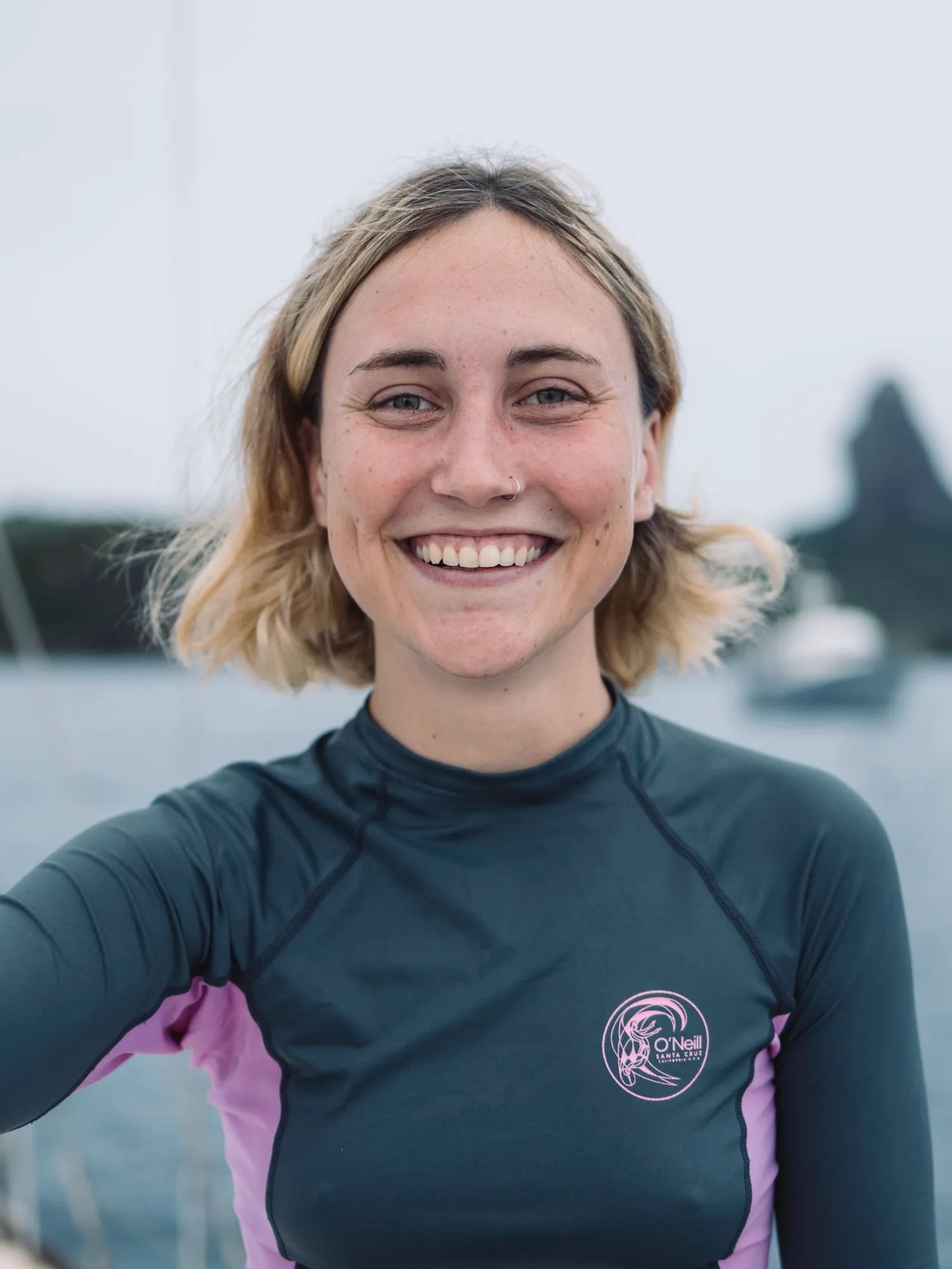
Mery, How did you get started in sailing?
Sailing started in my family: when I was five or six years old, my dad began building his own boat, a Lotz 270, a design by Néstor Volker (a well-known naval designer in the country). It’s a fiberglass boat, 8.24 meters long, known for its cruising and racing design, built by the Lotz shipyard. He initially bought the hull and started assembling it himself.
So when I was little, my sister and I would go to the boat and paint while he worked on things… He’s the kind of person who never hires anyone and manages to do everything himself, because he likes to understand how things are done and always tries things out. We went sailing every weekend. Later, my parents separated, and all our plans with my dad included going to the boat because he lived in a tiny apartment. It was our family plan: boat, boat, boat.
What happened next? Did you start sailing in any category?
He never signed me up for Optimist sailing, I don’t really know why. But when I was about fourteen, I was already a bit too old to sail those kinds of boats, so I joined the club for some bigger sailboats called Avan 660s. That’s where I started, and I spent about three years sailing every Saturday and Sunday. I got really hooked, made a group of friends, and started going all out. I combined all of that with family sailing trips.
Around 23, one Carnival weekend when we were going to cross over to Colonia (in Uruguay), my dad backed out at the last minute. I got mad, and he told me, “Whenever you want to go, get your skipper’s license and go on the boat.” So I did (laughs). During the course, I reconnected with sailing, made another group of friends, started sailing again every weekend, and joined a regatta group with a training boat. It was with that group that we also made trips to Uruguay, to Mar del Plata, everywhere.
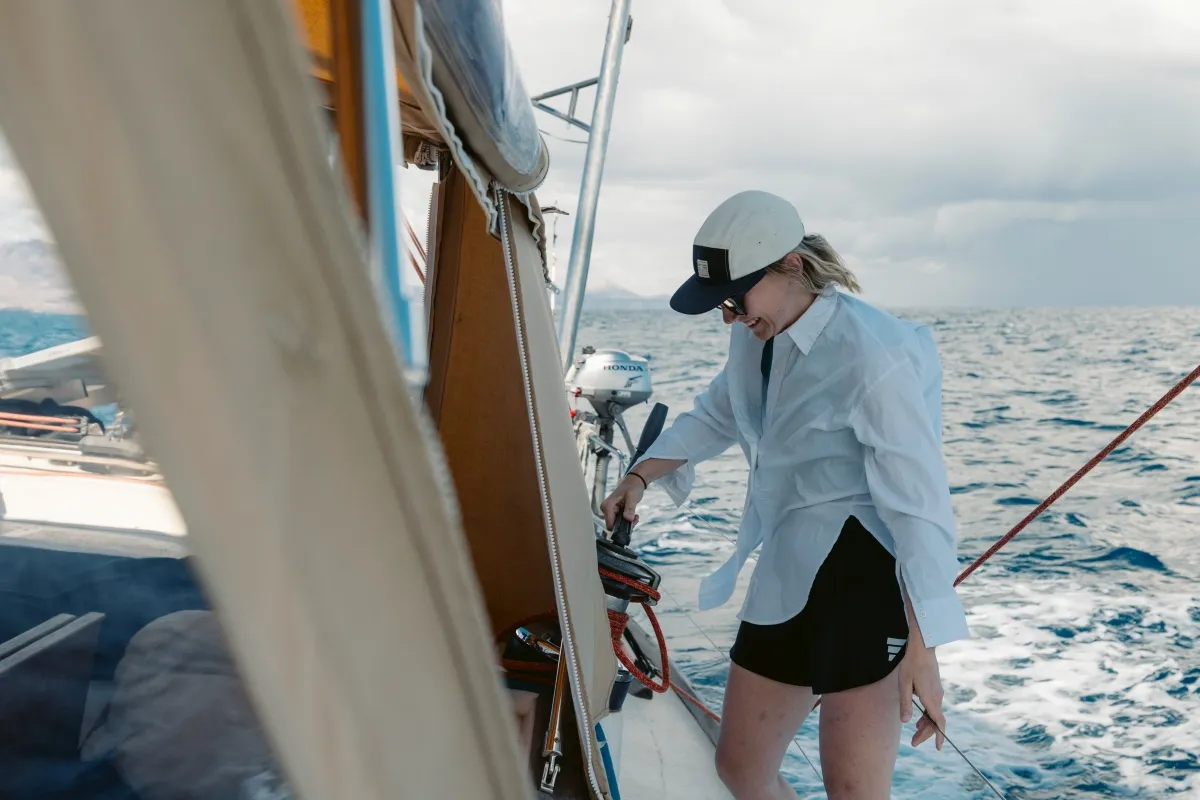
What is the ship you sail on like? What features does it have to have, or what do you think is essential for a voyage?
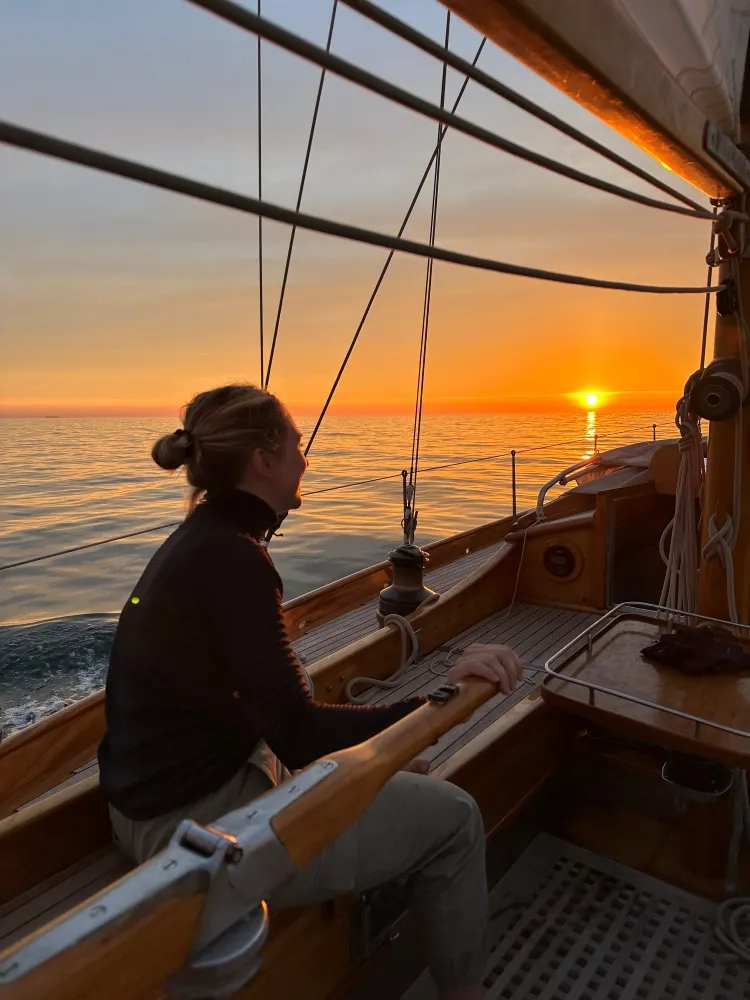
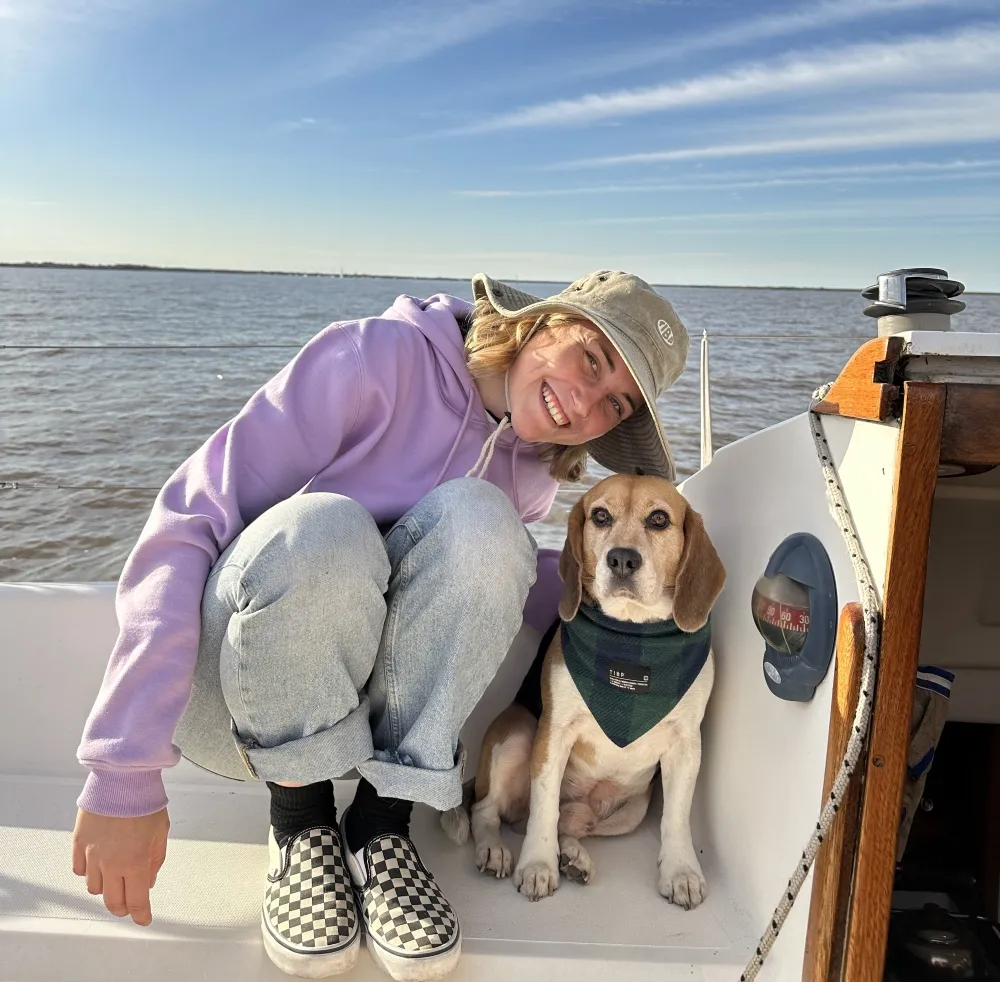
An ideal sailboat for the Río de la Plata is one with a very shallow draft. But the one my family and I have is super easy to handle; you can go out alone, all the rigging is in the cockpit, and it has a tiller. It’s also very comfortable because it has a galley, a bathroom, and you can even make yourself some mate and sail all the way to Riachuelo (Uruguay). I can’t do without my mate or my dog, Fito. I almost always take him with me when I go out. The boat also has a furling genoa and a mainsail, which is the most convenient thing in the world for going out alone with my dog because it allows me to do everything with peace of mind.
How did your interest in the environment arise?
Alongside all this sailing stuff, I was very interested in the environment. On the river, while sailing, I saw so much plastic: it was chaos. In 2019, I started working—as a volunteer—cleaning the river, and that’s how I met Yago Lange. In 2023, he told me he was thinking of buying a boat and crossing the Atlantic.
He also needed someone who worked in communications but who knew about the environment and sailing to help him with those three areas. At first, he asked if I could help him from land, but I wanted to be on board. At that time, I was working full-time. We talked for three or four months; he would send me photos and videos of how he was getting the boat ready. At the last minute, he told me there was a spot available, and if I wanted to go, I quit my job and said yes.
What were the best sailing trips you’ve taken so far??
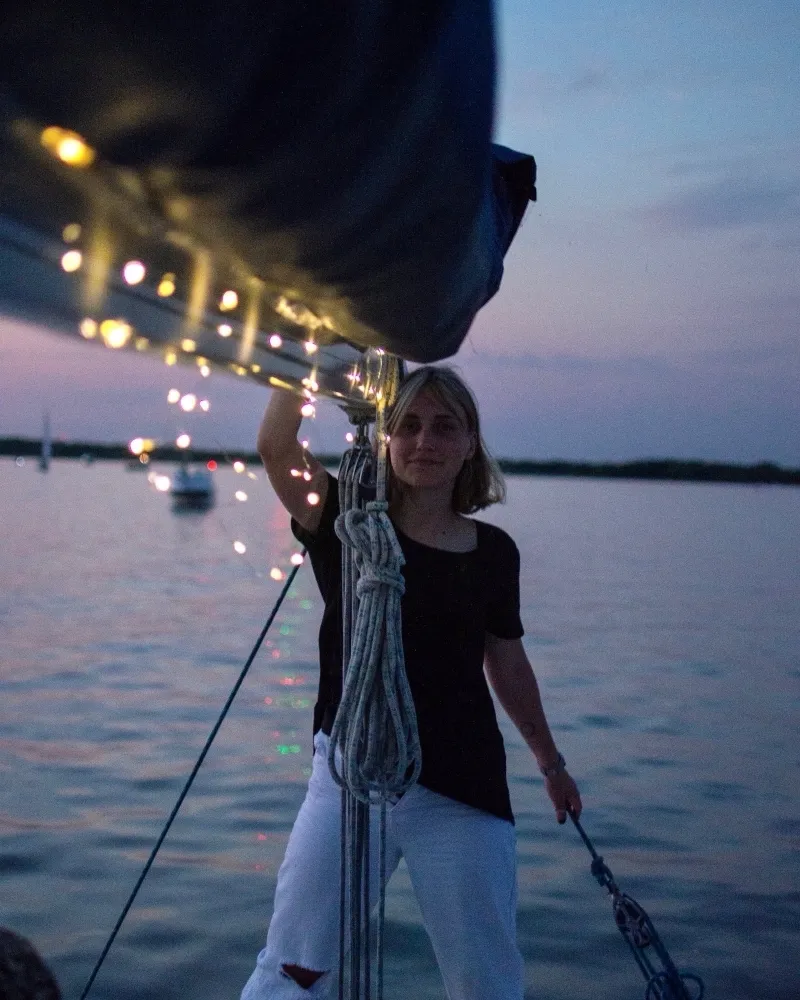
That Atlantic crossing in 2024, with over two months on board, completely changed my life. It filled me with questions and opened countless doors. I quit my job to go, even though I wasn’t sure I’d actually be able to do it. Yago gave me a trial period of a few weeks, and then, seeing that it worked out, he let me stay. We sailed, collecting microplastic samples and promoting the project. Yago sailed the entire way from Barcelona, but I bought a one-way ticket and boarded in Gibraltar. We finished fine-tuning some things, like the solar panels, bought a Starlink cable (which was just launching at the time), and went to the Canary Islands.
We spent two weeks fine-tuning more things, and then we sailed to Cape Verde, in Africa, and crossed over to Fernando de Noronha, in Brazil. We collected samples on all these legs: out of 25 (maintaining a constant course and speed), only two showed no traces of plastic. Only in Ecuador, where the currents flow outwards, did we find the sea to be clean. In the rest of the water, which was the majority, we always found plastic.
Which ones do you still have to do, which ones would you like to explore?
I’d love to cross the Pacific and go to Polynesia. I’d also really like to visit Antarctica. I pretend to be adventurous, but then I get scared: I don’t know, there’s something strange about sailing, you freeze to death, you get soaked, it’s crazy, I don’t know, but you always want to come back (laughs).
What was your experience like at the Buenos Aires-Rio de Janeiro regatta last February?
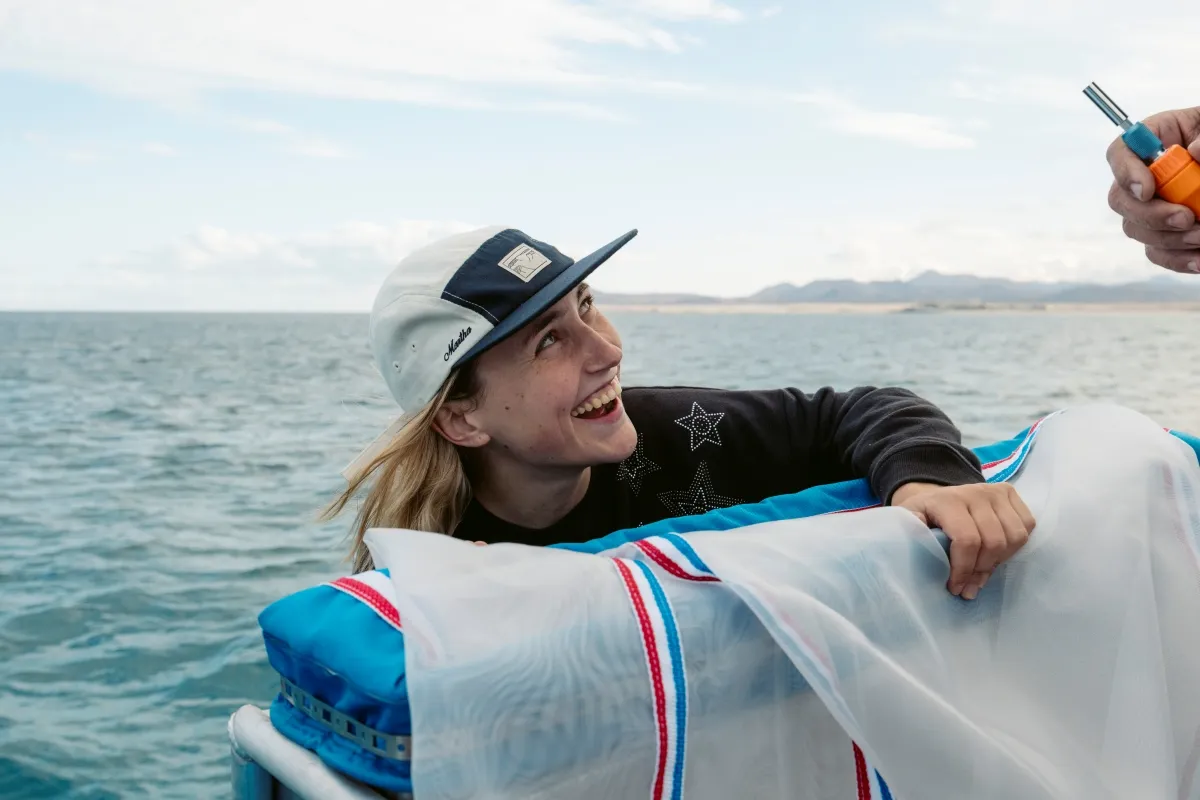
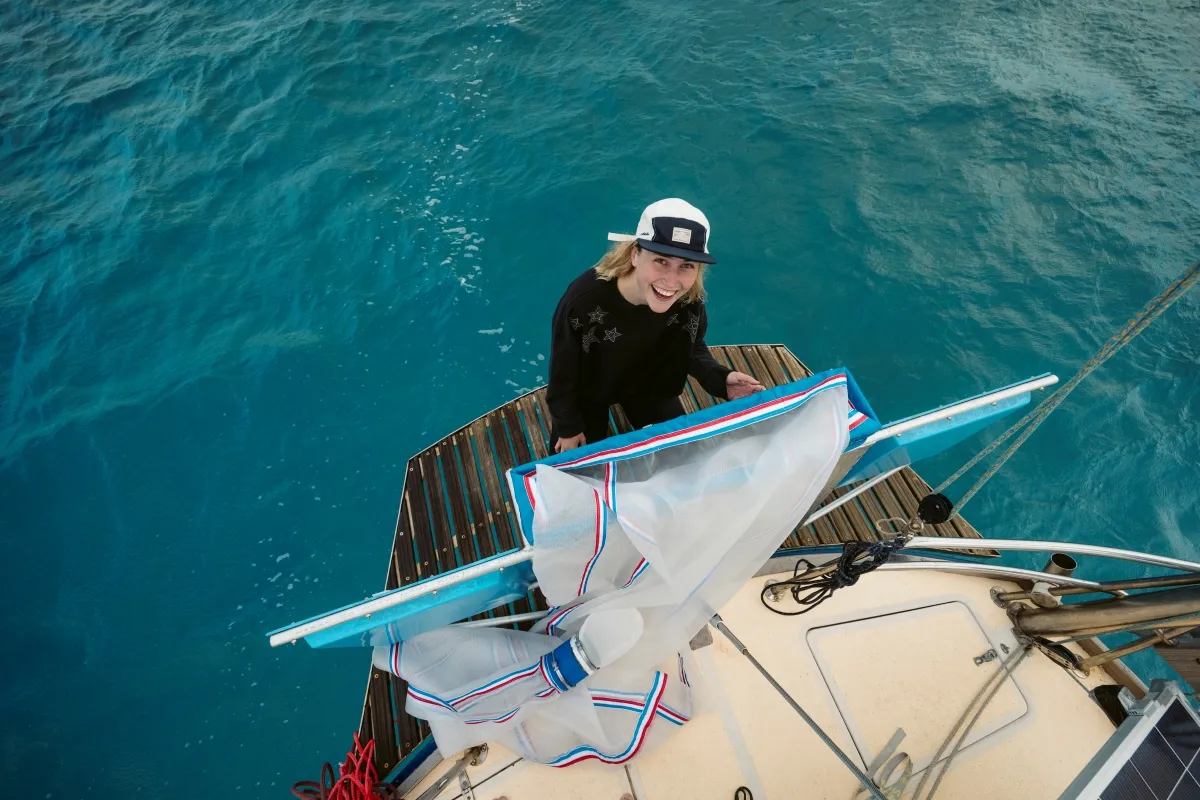
That regatta had been on my to-do list for some time: even after we crossed the Atlantic, I was left wanting to connect Argentina and Brazil. I did this experience on the same training boat we used for the regattas in Buenos Aires, the Naútico 2, a beautiful 60-foot Frers design, the only one of its kind. On the river, it’s a sight to behold; when the spinnaker is raised—for example—with the club’s flag, it’s quite a sight. At the club, they put together the crews from among the people who sign up, taking into account the helmsmen’s characteristics, their skill, and their sailing experience.
In the end, I made the team, which consisted of eleven people in total. I was also scared because they require us to take a certain number of courses, and I had to do an ocean survival course at the Naval Prefecture where they covered everything from rafts to dismasting, man overboard rescues, firefighting, and how all the radio systems worked, with crews who had already raced that regatta before. I was already signed up, but I started wondering if I really wanted to go (laughs).
What was the weather like?
In this regatta, the wind always blows from the north, so you’re sailing close-hauled and it’s awful. But finally, we had fantastic weather and that didn’t happen. The start from Buenos Aires was horrible, close-hauled, with quite a few waves; we were all soaked as soon as we set sail. But after that, we sailed across the wind. The first night, nobody wanted to cook; we were all exhausted. We had seven or eight days ahead of us. For many of us, this was our annual vacation, and we couldn’t believe we were spending it like this (laughs), but after that, it was great. That’s the thing about regattas: you can’t set sail when the forecast is favorable; you have to figure out what you’re going to do that day…
Then we had very little wind, and this is a big, very heavy boat, so it was very difficult in the calms. All the other sailboats kept passing us. The watches were six hours long, and at night, every four hours. But on the last night, we all stayed outside in case we arrived early. At the entrance to Rio, a tropical storm hit, and we all ended up soaked. At one point, I was so tired that I fell asleep in my wetsuit, gloves, boots, the light on my vest flickering, everything covered in water.
The arrival—finally—was iconic: there was no wind at all, but it was dawn, more than twelve hours from the entrance to the bay to the marina at the club. It was very mystical, Christ the Redeemer, the hills, with the sunrise. The club is divine, and besides, I hardly knew Brazil, and I loved everything I saw.
Your relationship with caring for the environment led you to promote a plastic-free life. How did your daily life change as a result of these actions?
At one point, between volunteering on house construction projects and collecting trash from the river, I realized that garbage doesn’t disappear. You live in the city, you put out your trash, the truck takes it away, and you don’t see it. But it’s not like that. I’ve had to go and build houses where 25 years’ worth of garbage had accumulated, and we couldn’t even put in a single foundation post.
But I started to grasp what that meant. I began to develop my own habits to avoid plastic: from carrying a water bottle everywhere or going to the supermarket with a cloth bag, to buying food by weight in my own container (so they wouldn’t use disposable trays). Later, I stopped going to the supermarket altogether and only shop at greengrocers or health food stores. Now, I also work in the Communications department of Parley, an NGO that develops initiatives for ocean protection.
What do you think are the micro-actions we can all take to care for the environment or maintain a plastic-free world?
I talk about single-use plastic, but I know it’s a challenge to eliminate it completely in everyday life. What interests me is that people can incorporate it, at least in small ways, by reusing things. It’s quite a task because we live in a system where everything is marketed that way and isn’t designed for us to be free of single-use plastics. On the contrary, everything is disposable.
But I started looking at how I could take these small steps, and at home, for example, I have a compost bin and there isn’t even a trash can. But I do have recyclables that I put out all together: that’s the case with the yogurt, which I make at home, so I have to throw away the pouch. There are things that are hard to replace, and at one point, I was so obsessed that if I couldn’t recycle it, I wouldn’t even buy it (laughs). Now I’m not so extreme: I think we have to find a balance.
The same thing happens to me on the boat: I think about what I have to take, but also what has the least amount of packaging possible because I don’t want to keep that plastic for two weeks at sea. If you carry cardboard, it gets damp, and so on. That’s why I created a waste separation manual for boats, which I hope will also help us think about what we do with these materials while sailing. Ultimately, it’s millions of decisions we make every day: from riding a bike, eating healthier, sailing, to living a slower life.
Enlaces:
Página: https://www.merysinplastico.com/
Instagram: https://www.instagram.com/merysack_/
Pódcast: PODCAST
From “Navegantes Oceánicos” we thank Mery Sackmann for her collaboration and for sharing her sailing experiences and projects in this interesting interview.
We wish you the best of luck in the future, fair winds and following seas!

