Diego Ciscaro, from Córdoba, Argentina, is getting closer to embarking on the most important voyage of his life and fulfilling his greatest dream.
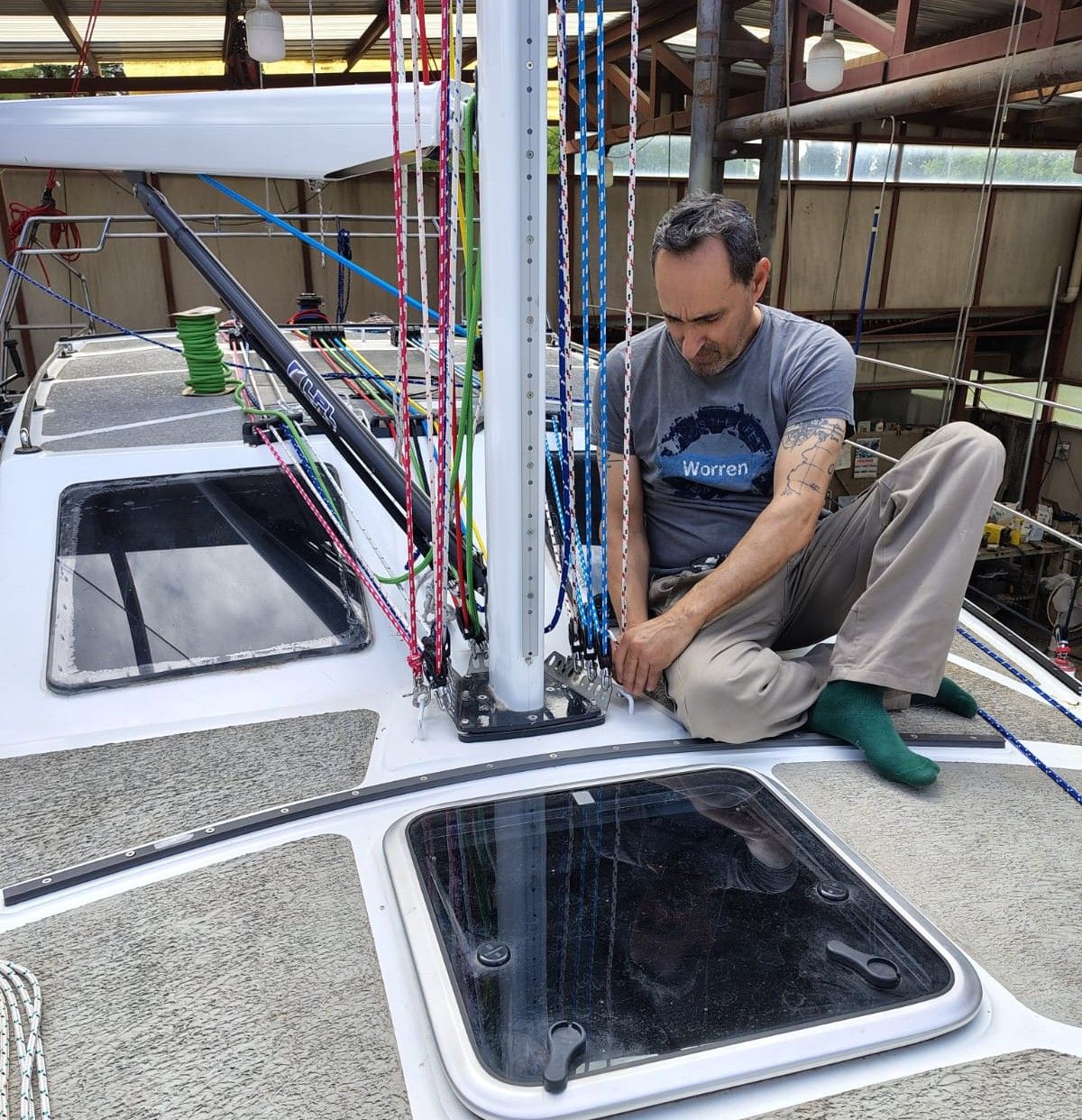
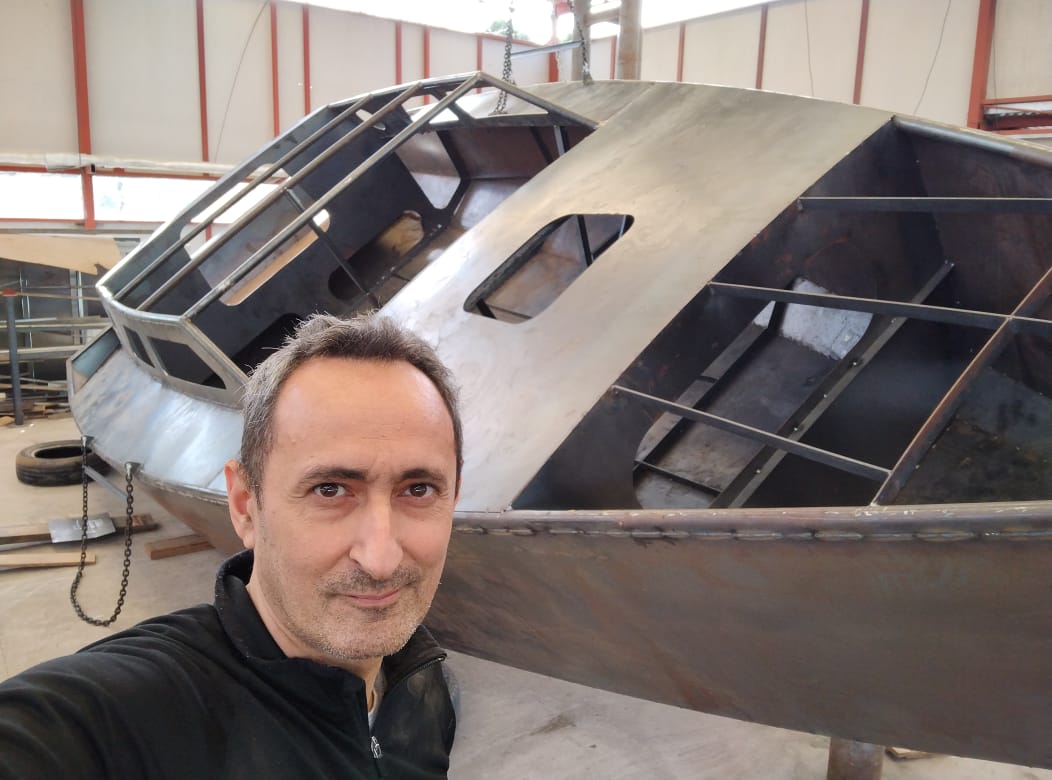
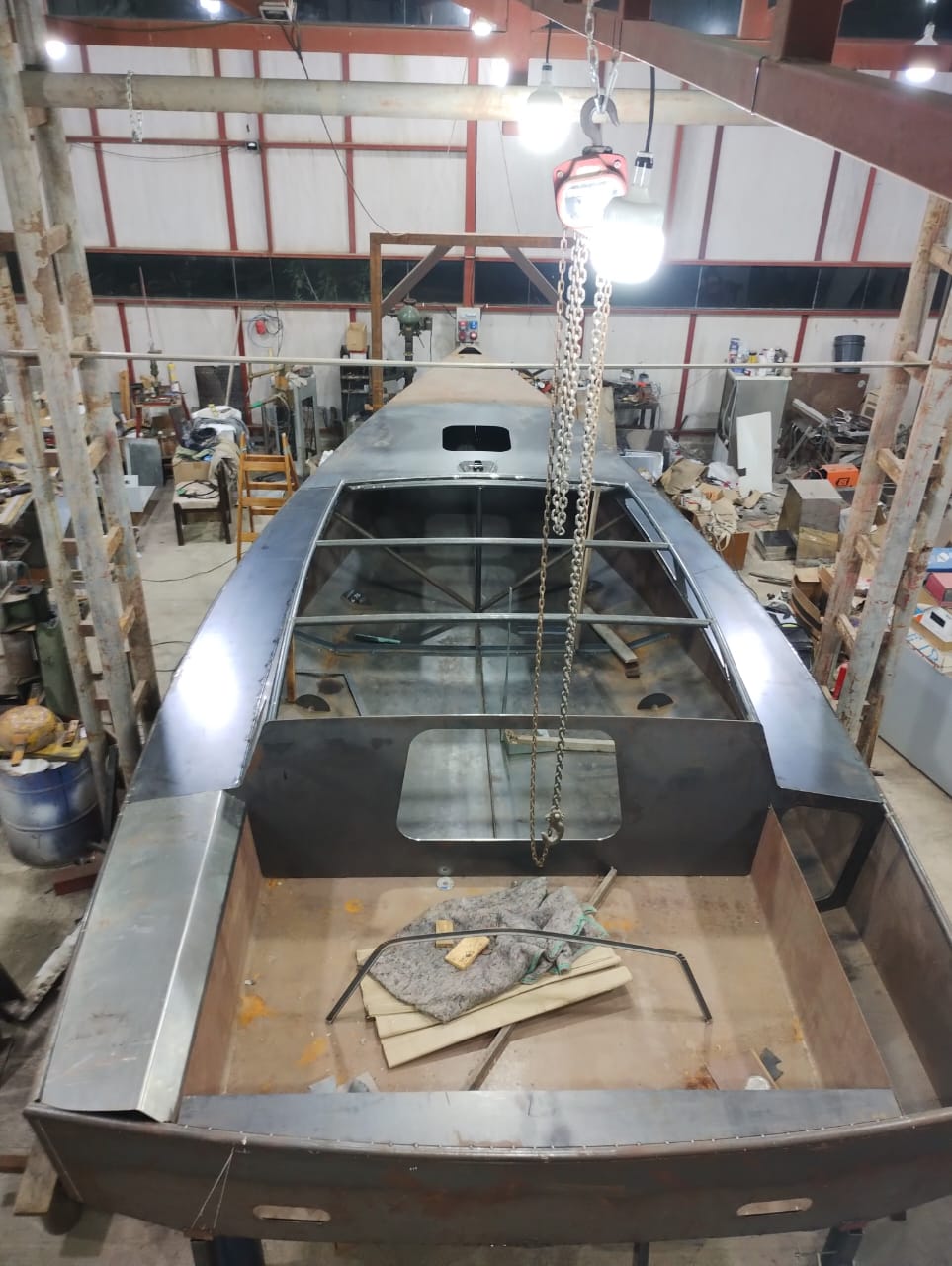
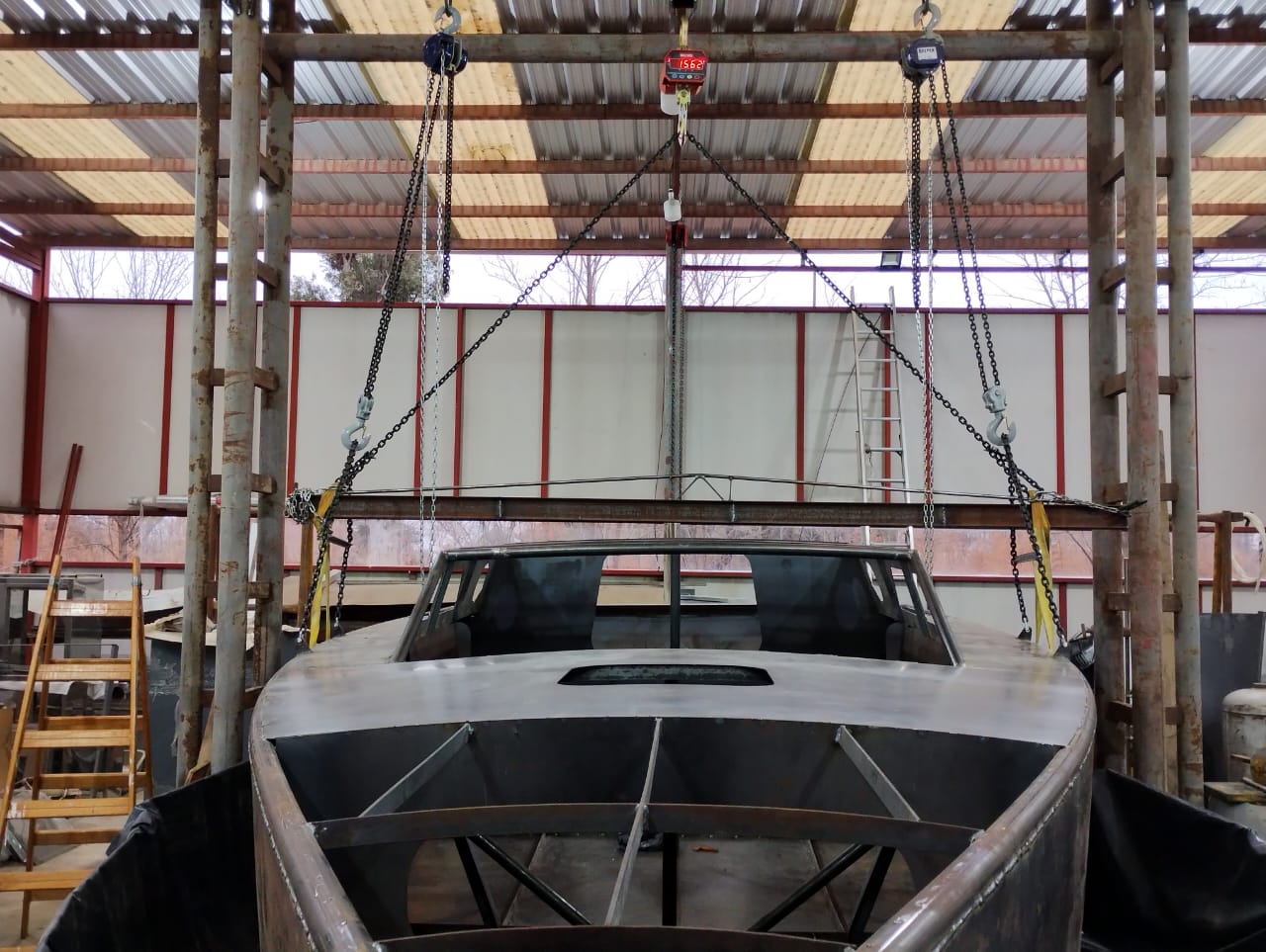
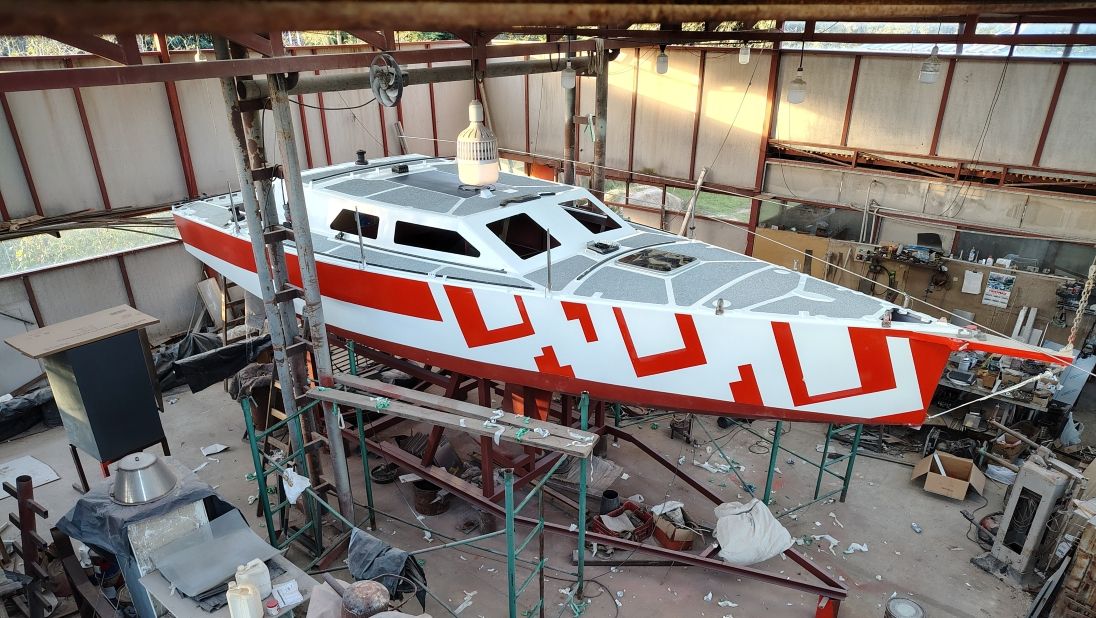
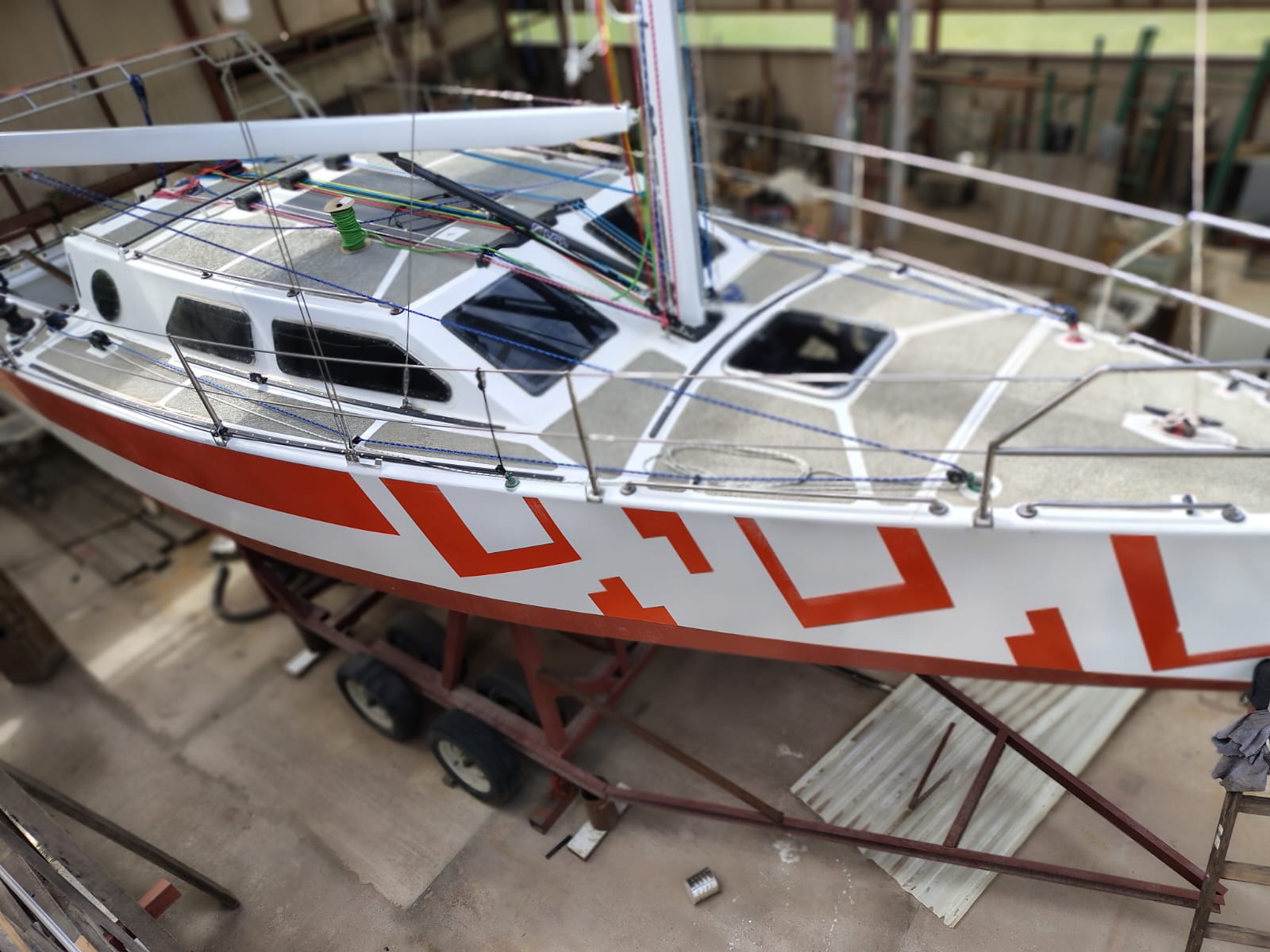
After designing a small steel-hulled sailboat with the help of his children, he has spent approximately four years building it, including welding the hull plates, painting it completely, and installing the mast and rigging. He is currently finishing the interior, installing the auxiliary engine, and completing the outfitting.
Once construction is complete, he will move the sailboat to the Río de la Plata region, aiming to set sail in 2026. The plan is to cross the Atlantic Ocean solo to the Mediterranean and, after a few brief stops, reach Rota Greca, Italy, the birthplace of his grandparents.
In this interview, Diego shares his experience building the boat and the most important aspects of this personal project and great adventure.
Diego, when did your relationship with the sea and sailing begin?
My connection to the world of sailing dates back to 2015. At that time, I worked in metalworking. One day in October, my business partner brought me a project to build a small sailboat, the POP 21, designed by B&G Design. It was a student hull commissioned by the owner of a well-known vacation and nautical complex in Los Molinos.
I started working on the construction, which I found more than interesting. I was amazed to see a handful of sheets of metal and profiles transformed into a modern sailboat.
It was truly a good job, finished in a short time, but it left a lasting impression on me, which, without my knowing it then, would later shape my passion for sailing.
A few days after launching it, Nicolás invited me to go sailing. I accepted with some reluctance, as I didn’t know how to swim—in fact, I still don’t—so I put on a life jacket, and off we went.
The first impression was extraordinary, moving across the water’s surface with such elegance, without the roar of an engine or any sense of vertigo, propelled by a gentle breeze that, despite blowing almost directly in our faces, allowed the skipper’s great skill to guide us along our chosen course. That was my first encounter with the world of sailing.
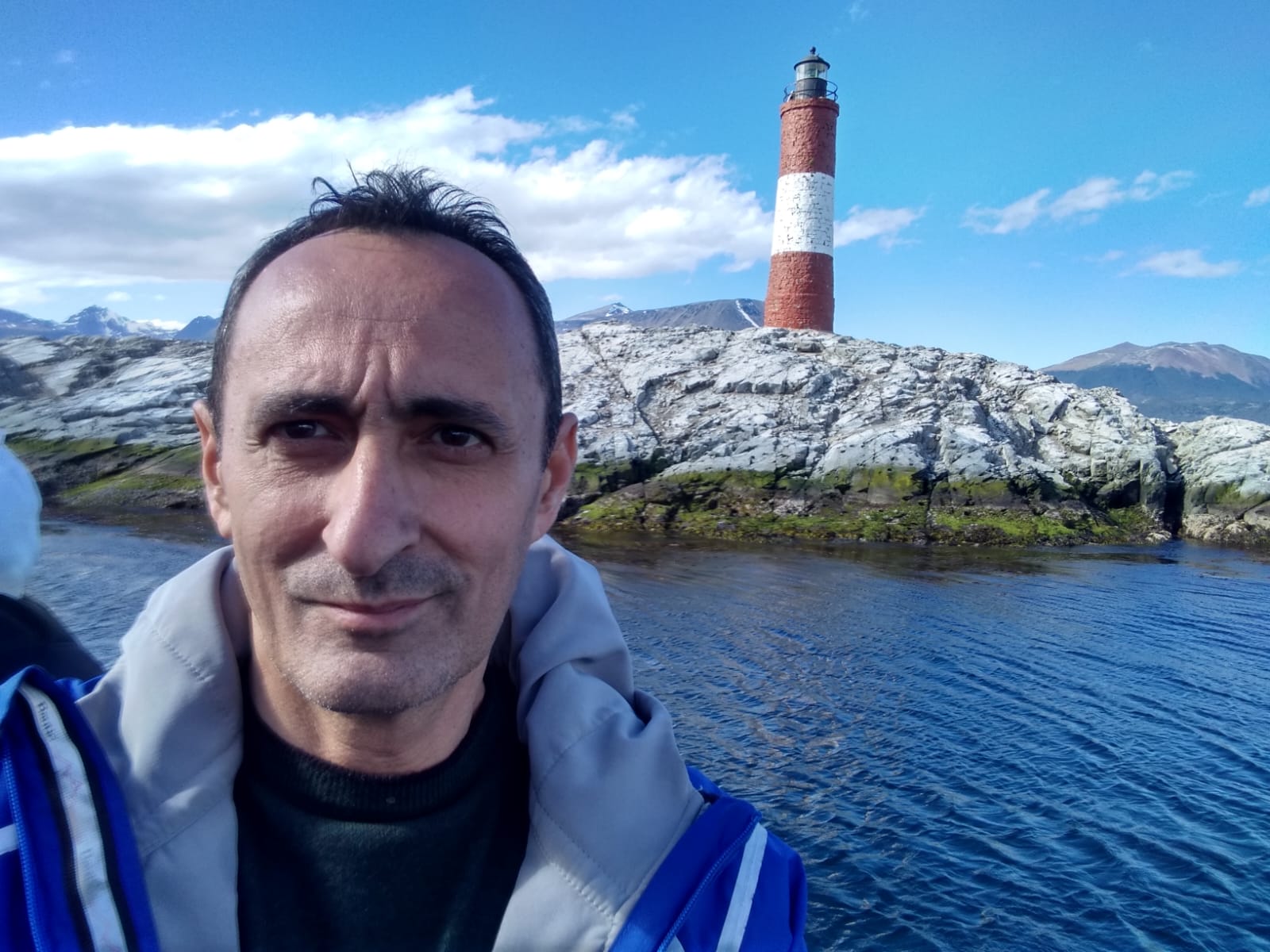
Then, after only a few days, I took a sailing helmsman course, and since then I haven’t stopped sailing and improving. Later came experiences on the Río de la Plata and the Argentine Sea, as far as the Beagle Channel, which sparked a new passion in me: to sail on the open sea.
How did the project to build a sailboat to cross the Atlantic solo come about? What motivates you to take on this great challenge?
As I mentioned, sailing the Beagle Channel was a different and challenging experience. By then, I already had my own sailboat, a micro-class, very fun and seaworthy, but with many limitations for my ambitions.
I sold it, and shortly afterward, with limited resources, I began building a sailboat that would allow me to cross the Atlantic with some degree of safety, thus fulfilling the strong impulse I felt after reading about the experiences of great sailors like Suso Leiro, Dumas, Moitessier, and so many others—experiences that motivated me to sail in that world of solitary days among the sea and the stars.
What is the sailboat you have built like—length, materials, etc.? What qualities did you look for?
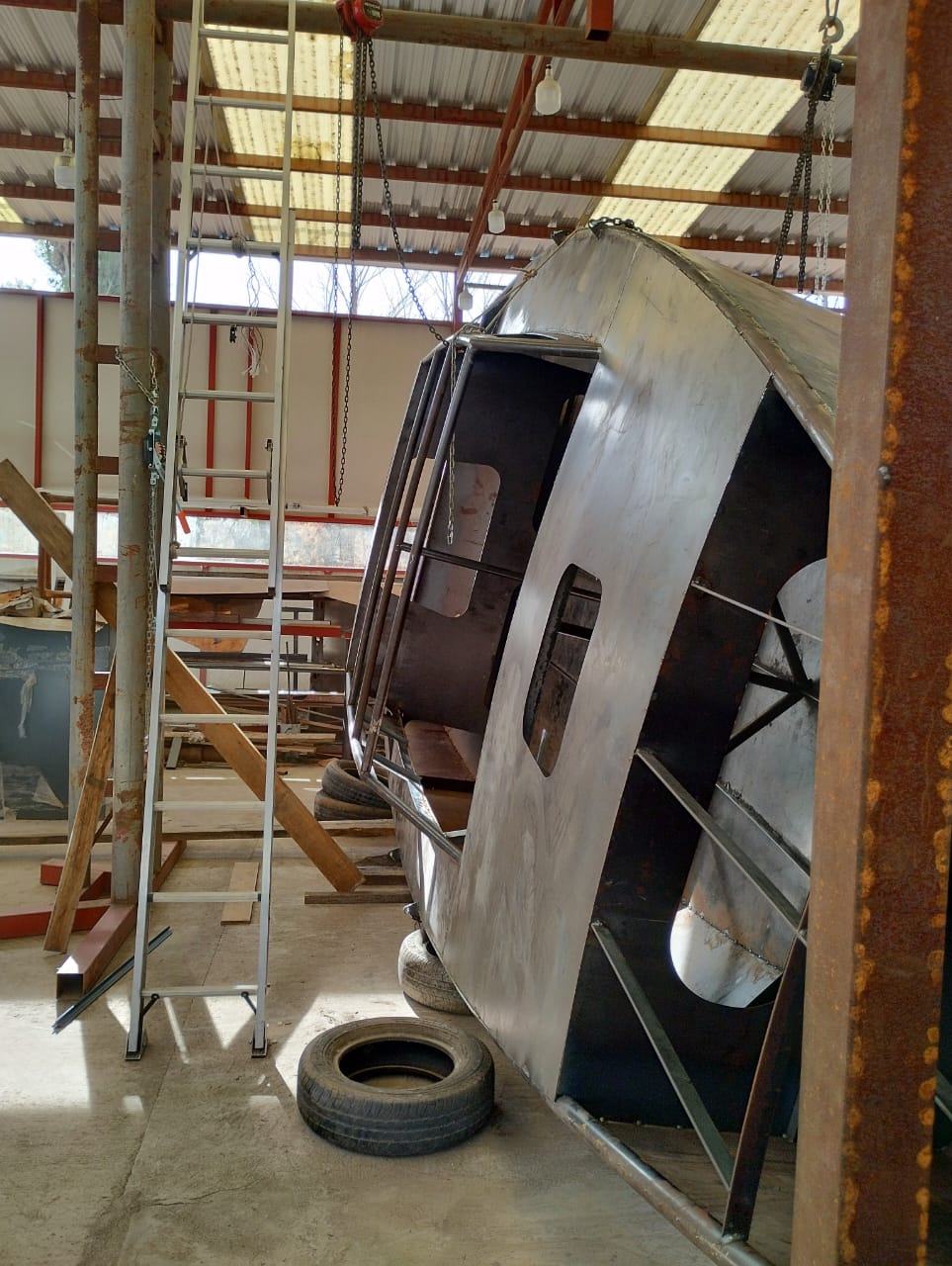
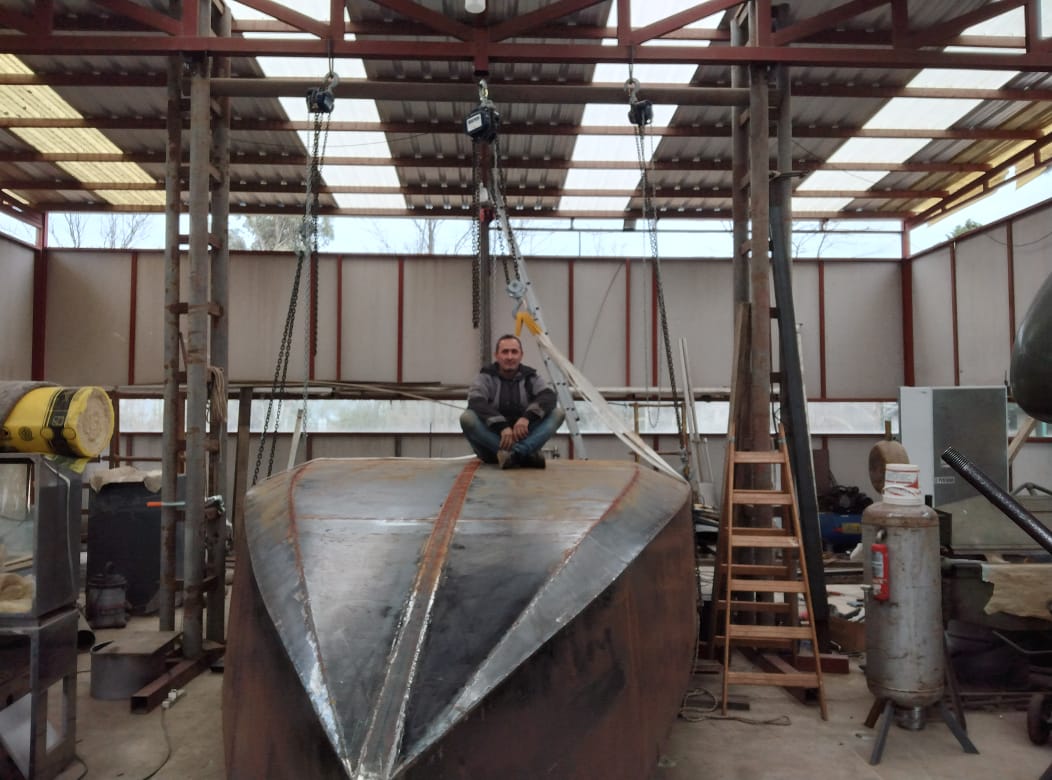
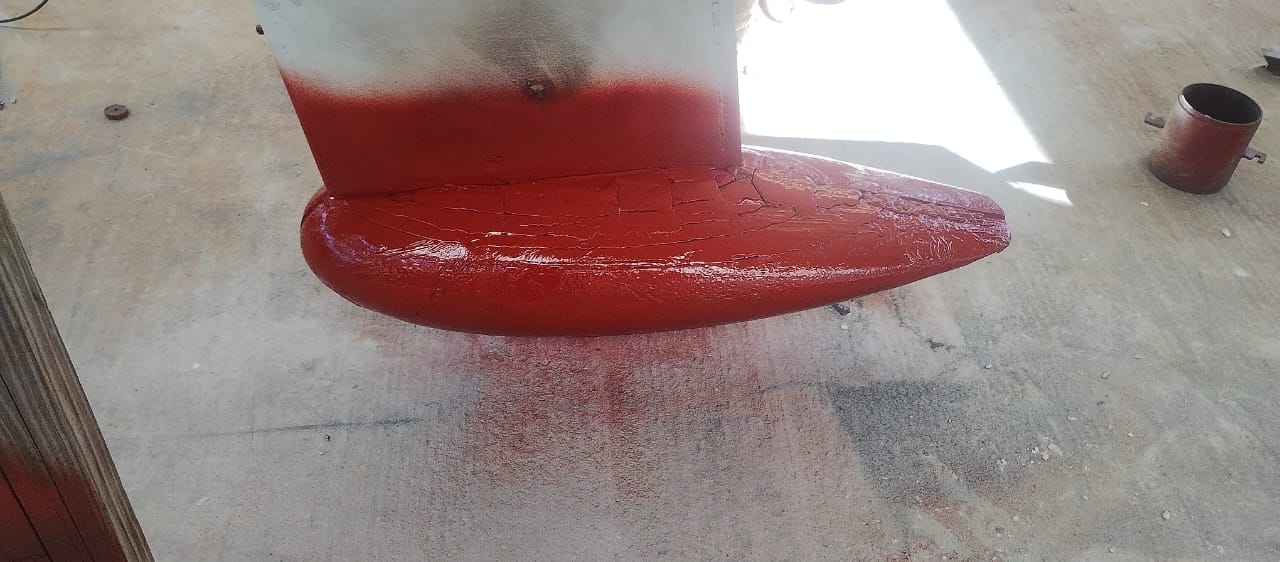
The sailboat is small, barely 7.7 meters long with a beam of 3.3 meters, a steel delta hull, very stable with a 2-meter draft and ballasted with a lead bulb.
The interior is very spartan; the maximum headroom is 1.4 meters, so you must remain seated or lying down.
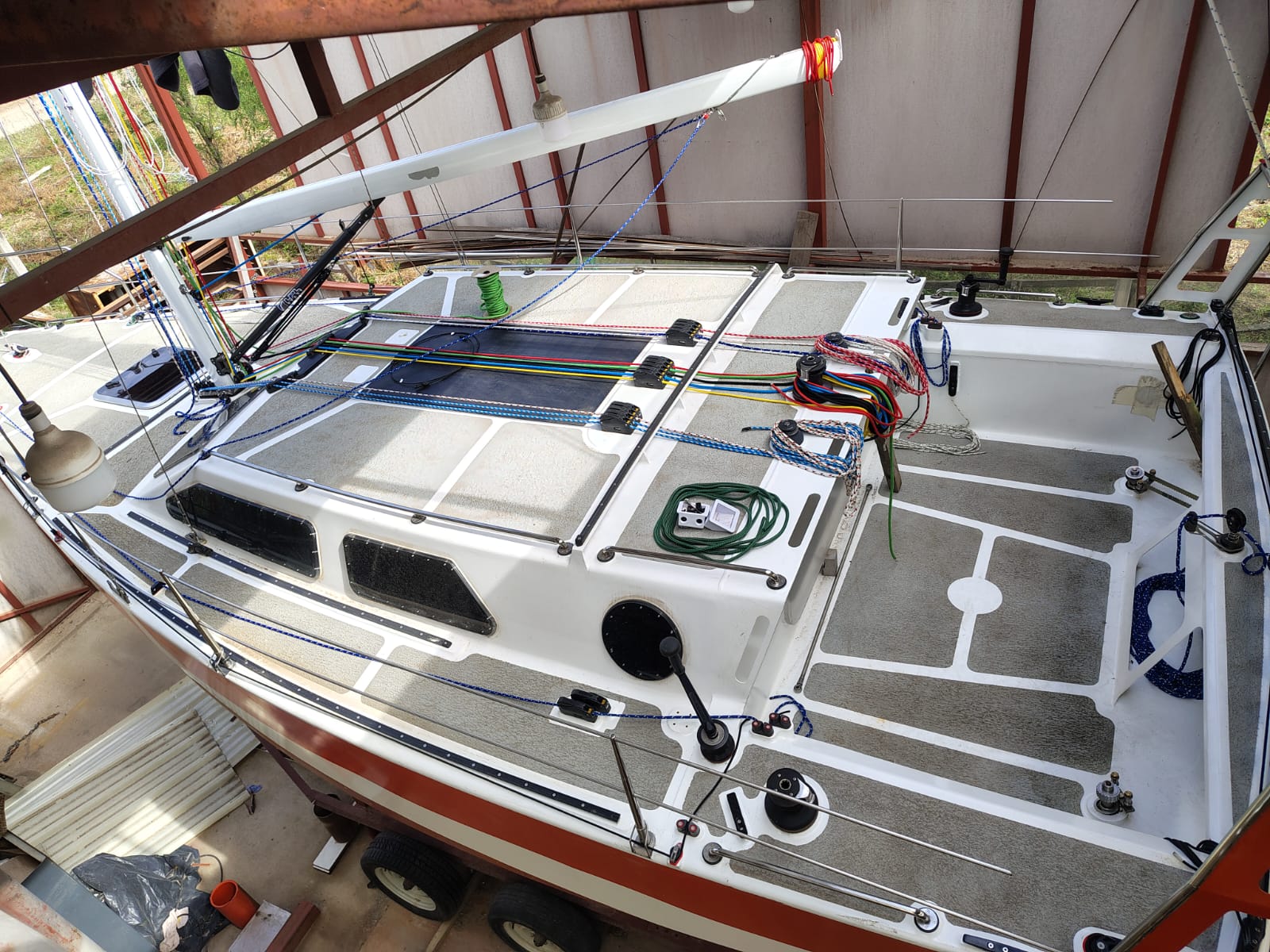
All the rigging is led aft to the cockpit, which makes it safer in bad weather, and even more so when sailing alone.
For me, safety is paramount. The hull’s robustness was the most important factor, along with its ability to regain buoyancy thanks to its watertight compartments, which makes it unsinkable.
Can you tell our readers about the design and construction process of the sailboat?
When I built my first sailboat, I thoroughly enjoyed the process. Since buying one from a shipyard was out of reach, and there weren’t any suitable boats on the local market at a reasonable price, I decided, without much hesitation, to build it myself.
During the pandemic, I had studied the subject, dedicating a lot of time to understanding the laws governing hydrodynamics and hull structure: the optimal ratios of wetted surface area to forward area, upright angle, heeling angle, stability, and so on.
Influenced by the designers of modern flat-bottomed delta hulls, like those of the Mini 6.50, I got to work with the help of my sons, who are very skilled with 3D design software. After several months, I achieved what ultimately became a hull that combined all the characteristics and seaworthiness I was looking for.
I immediately built a scale model using the same materials I would use to construct the original hull. The result was better than I expected. Once in the water, the waterline and stability were exactly as shown on the computer.
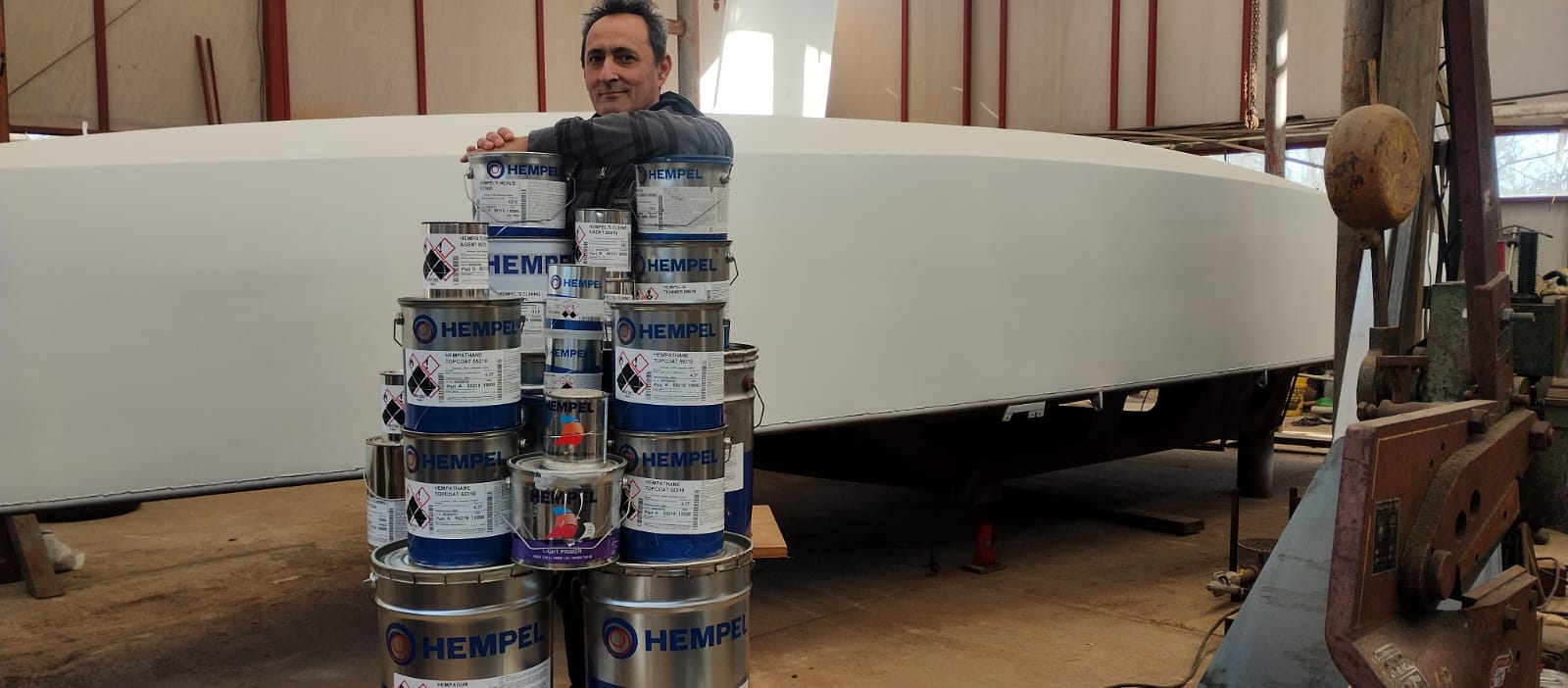
Without wasting any time, I acquired the plates already cut with high-definition plasma cutting on CNC pantographs. This saved me a lot of time; the plates fit perfectly and didn’t need adjusting.
We performed the welding using a method that allows for high-precision welding without overheating the material, thus avoiding the stresses and deformations inherent in the welding process for steel.
What support have you had for this great project?
Frankly, I didn’t seek them out; I took it very personally. My goal is to set a good example of perseverance and tenacity. I’d like someone to feel motivated in the end, to know that despite the difficulties and how hard it may seem, it’s possible!
It’s difficult to find someone to financially support a project of this nature, at least here in Argentina—well, that’s what I think.
However, from the beginning, I had the support of my current partner and my children, who worked many hours alongside me.
We also had to deal with the indifference, criticism, and mockery of those around me who saw me almost as a madman, a somewhat unruly dreamer. I remember some of my friends, even my ex, recommending that I see a psychologist.
Obviously, it took a lot of time and sacrifice. For someone without many resources, a small project becomes a huge challenge.
What electronic navigation and communications support equipment will you have on board?
The idea is to carry no electronic equipment, just a compass, a stopwatch, and a sextant.
I also have a wind autopilot.
And safety equipment?
In this case, I do carry the required equipment: a life raft and basic emergency gear.
I want to experience sailing in its purest form. I believe that by not relying on so many instruments, a more intimate connection with the boat and its surroundings develops.
What is the route you are going to take and in which ports do you plan to stop?
The route I’ll follow is to depart from the port of Rosario and then sail up the Río de la Plata estuary into the open sea, searching for the most favorable currents and winds. For this, I’m using pilot charts. I only have a small auxiliary engine for entering and leaving port, so I’ve thoroughly studied the route, as I depend entirely on the prevailing winds and currents in each sector of the Atlantic.
The first port I hope to reach is in the Balearic Islands. Then, if everything goes according to plan, the idea is to visit the town of Rota Greca, in Cosenza, where my grandparents were born. Barcelona, Sicily, and Greece are also some of the destinations I’d like to visit.
Regarding the crossing of the Atlantic to the Strait of Gibraltar, how have you planned it and what route do you have planned??
The route described on the chart is an almost perfect S-shape between the Río de la Plata and the Strait of Gibraltar. This is due to the prevailing currents and winds. The plan is to sail nonstop to the Balearic Islands—well, that’s my intention, anyway. The weather and sea conditions will determine if it’s possible.
Finally, Diego, what are the biggest challenges you’ll face in this great adventure?
I have a deep respect for the sea. I’m aware that my sailing method is somewhat daring, but I don’t see it as a challenge; quite the opposite. It’s the sea, the wind—the elements—that will truly guide my course.
I’m prepared to face and manage whatever arises at every mile. I firmly believe that this is the essence of sailing.
I hope to intensely experience the intimate connection that solo sailors feel when they set sail, with no other aim than to navigate the open ocean, with all the challenges that entails.
From “Navegantes Oceánicos” we thank Diego for his collaboration in this interesting interview.
We hope he can complete the outfitting of his sailboat without difficulty and begin his great solo Atlantic crossing adventure whenever he deems it most appropriate.
We’ll be in touch. Fair winds and following seas. Best of luck, Diego!