Introduction.
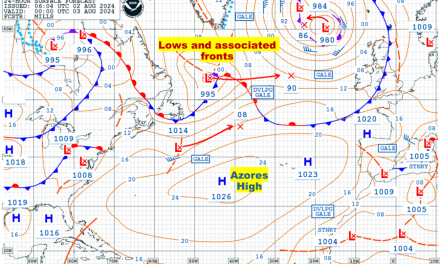
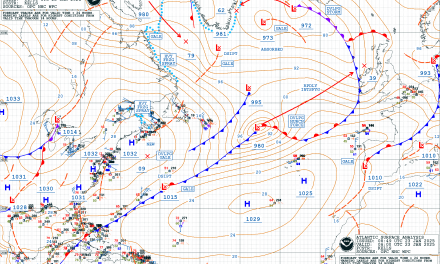
Probably one of the most critical pieces of information a sailor needs is the weather forecast for the next few hours/days and how it will affect their route; that is, their planned voyage. Atmospheric pressure is undoubtedly the most important variable in meteorology. The vast majority of weather maps are based on it, and it is especially important for sailors, since wind speed and direction are directly dependent on the pressure distribution at sea level.
It wasn’t many years ago that sailors based their weather forecasts on the frequent observation of pressure, looking at the sky and clouds, and adjusting their sails when a rapid drop in pressure indicated the arrival of a storm with its associated fronts. Although today we have many more means of obtaining weather forecasts on board at sea, observing pressure remains a valuable complementary tool that is worth knowing and being able to interpret.
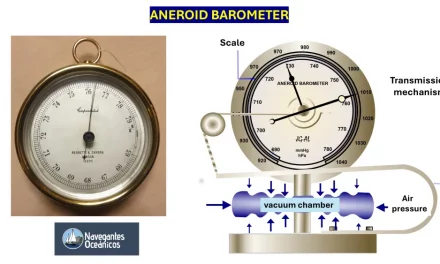
When it comes to knowing if bad weather is approaching our boat’s position, one of the simplest tools, if you know how to use it, remains the barometer. This is a basic instrument that should be on board any ocean-going sailboat, and it complements modern means of receiving weather information at sea (satellite, GRIBS, etc.).
In simple terms, which we all understand, bad weather is usually associated with low-pressure systems (a low-pressure system or depression). However, a rapid change in pressure indicates that the air is moving quickly, which will mean strong winds and, consequently, rough seas in the coming hours.
This pressure change, combined with the effects of the barometric tide, will determine whether we are going to encounter a manageable weather situation or a potentially dangerous one. Therefore, it is important to understand the fundamentals of what a change in pressure at sea implies.
In this new chapter of the online book “Meteorology and Oceanography for Navigators,” we will cover the following aspects related to atmospheric pressure:
– Units of measurement for atmospheric pressure.
– The barometer.
– The barometric tide.
– How to measure pressure trends with a barometer.
– General considerations for interpreting weather with a barometer.
– Weather forecasting with a barometer.
– Considerations regarding wind speed and pressure trends. Efecúe Log In para desbloquear.Este contenido solo está disponible para subscriptores de navegantesoceanicos.com