Giants of the sea in Rio de Janeiro: the return of humpback whales to Guanabara Bay
Scientists recognize that these mammals are the true “engineers” of the ecosystem and that the seas depend on their survival. They also consider the possibility of witnessing one of the most magnificent migrations taking place on the planet today. For all these reasons, they emphasize that beyond sightings in regions where they once seemed extinct, these sightings remind us that their continued existence underscores the urgent need to protect our oceans.

The sea, the silence, the wind, the waves: all set against the backdrop of a city of nearly seven million inhabitants. Sailing in Rio de Janeiro is one of those experiences that completely transforms your view of the ‘Cidade Maravilhosa’ (Marvelous City), as André Filho called it in his song. Morro dos Deus Irmãos (Two Brothers Hill), Sugarloaf Mountain, Pedra Bonita (Beautiful Stone), Corcovado – with its iconic Christ the Redeemer statue, magnetic from above – Pedra da Gávea, the Cagarras Islands, and the beaches of Copacabana, Vermelha, and Ipanema are all transformed from the ocean. The Sleeping Giant—or Stone Giant, as it’s also known in legends—is perfectly outlined by the mountain range that runs through the city, its colossal silhouette resembling a reclining man stretching some 20 kilometers and passing through seven neighborhoods. It’s the story of this mythological being who suffered heartbreak while defending Guanabara Bay and lay down on the shore where, eventually, he was petrified over the centuries.
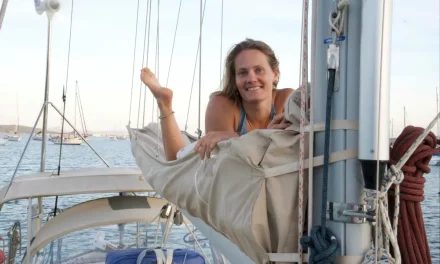
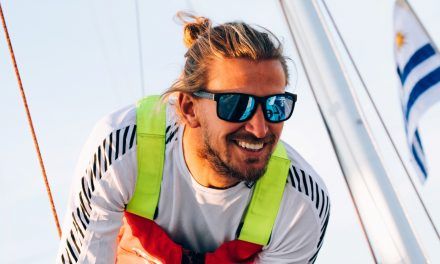
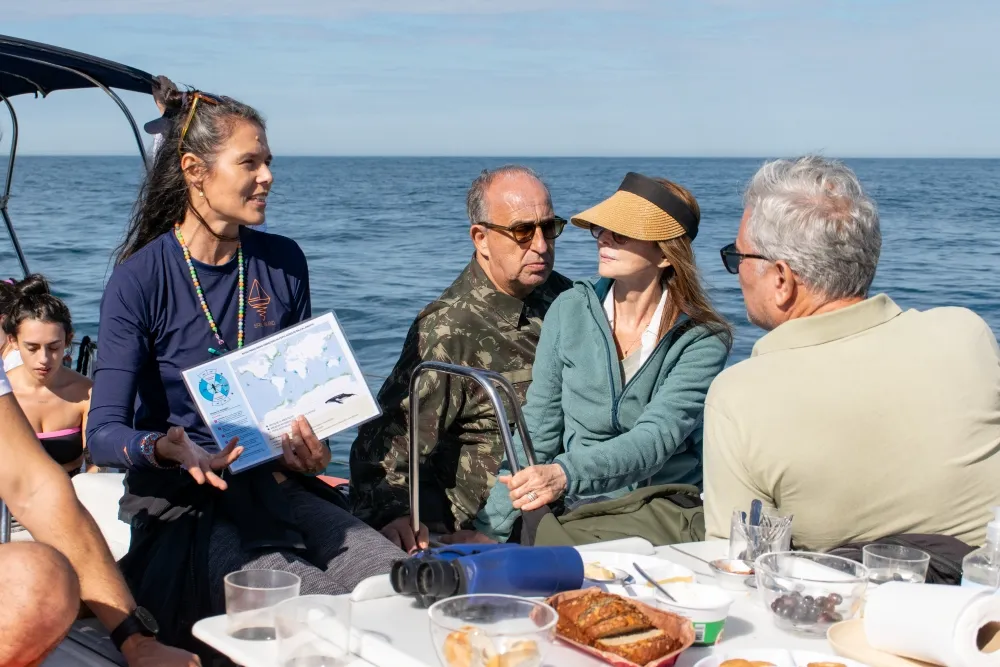
Facing this sleeping giant, right on the Rio de Janeiro coastline, in the beautiful Guanabara Bay, with the Cagarras Islands archipelago as a backdrop, an ocean route that crosses an imaginary line from Antarctica to Northeast Brazil becomes a prime location for observing humpback whales (baienas jubartes in Portuguese) that migrate through this corridor between July and August in search of warmer waters. Sail in Rio, in addition to offering sunrise and sunset cruises and coastal excursions from Marina da Glória, has capitalized on the abundance of marine giants that frequent this coastline. They’ve transformed their passion for sailing into a way to share the experience with other travelers: a father, Cassio Gurjão, and his son, Daniel, aboard two sailboats—a 40-foot Fast and a 50-foot Bruce Farr—offer whale watching tours. These excursions allow participants to feel the wind, pilot a boat, and connect with nature, offering a unique way to experience the city and its marine giants: from the water. They are accompanied by a group of captains and crew members, including biologists on board, to complete the experience. Beyond whale watching, these tours can also include sightings of dolphins, fish, and sea turtles that inhabit the bay.

The large number of whales frequently seen off the coast of Rio de Janeiro during their south-to-north migration in July and August is due to the recovery of the species’ population, which was once endangered. Over the last forty years, the humpback whale population has grown from 2,000 to 35,000 in the Atlantic Ocean alone.
“It’s an important testament to conservation efforts, a reminder of the fragility and beauty of marine life,” says Sail in Rio, which also recalls how Arpoador Beach, between Ipanema and Copacabana (its name comes from the word “harpoon”), was used as a lookout tower by fishermen between the 16th and 17th centuries to spot and hunt whales with their harpoons.
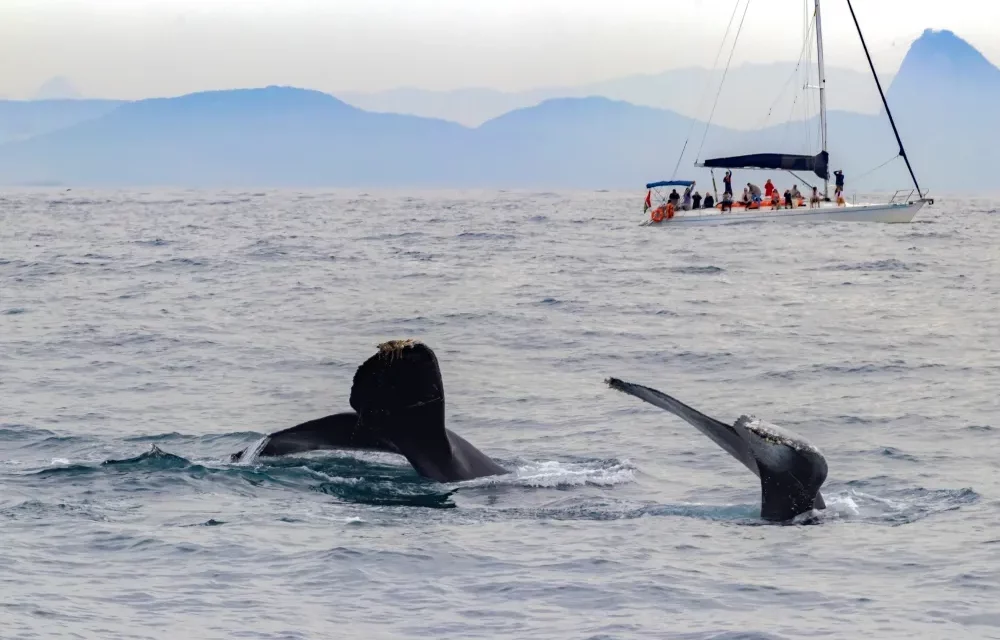
Now, sightings from these sailboats involve whales displaying themselves from the water: their behavior includes breaching, showing their heads and peering out slightly above the surface, exposing their pectoral fins, beating their tails, and spouting air. Another interesting fact is that they feed in cold waters: their prey consists of small fish or the krill that thrives in Antarctica.


“The return of humpback whales to the coast of Rio de Janeiro is a remarkable success story in marine conservation worldwide. Until the mid-20th century, commercial whaling drastically reduced populations of this species globally. It is estimated that the population in the western South Atlantic dwindled to around 450 or 500 individuals in the 1950s. Thanks to the ban on commercial whaling imposed by the International Whaling Commission (IWC) in 1986—along with the creation of marine protected areas, scientific monitoring, and public awareness—this population began to recover. Today, the population that migrates between Antarctica and the Brazilian coast is estimated at around 35,000 individuals,” explains Maria Salomé Rangel, one of the marine biologists accompanying the expedition.
“This recovery has allowed Rio de Janeiro to once again become a key stopover point for humpback whales during their reproductive migration. It is now possible to observe these animals close to the coast—even within Guanabara Bay—something that was extremely unusual just a few decades ago. This reunion between people and whales demonstrates that well-implemented conservation policies can yield concrete and inspiring results.”

The whales swim alone or in pairs. In fact, although we traveled more than 10 miles out to sea to find their route, on our way back to port, we saw a small calf right inside Guanabara Bay. Apparently, they only form larger groups when they are in more specific areas for feeding or breeding. However, their songs, which are sometimes mistaken for the coming and going of the sailboat, can be heard almost 20 kilometers away.
“The whales raise their tails out of the water before diving to the bottom, where they can remain for at least 30 minutes, but on average their dives only last about 15 minutes,” explains Fernanda Gularte, another of the biologists on board.
The spray can reach up to three meters high. That’s why when one surfaces from the waves, it’s possible to follow it for a few moments until its next breath. The greatest dangers facing humpback whales today are fishing nets, collisions with ships and boats, marine pollution, indiscriminate hunting, climate change, and noise pollution.
Along their thousands of kilometers of migration, the grandeur of Rio de Janeiro also encompasses the entire Cagarras Islands, a source of such great biodiversity that the whole region is utilized by the mammals. Rangel recognizes the importance of these islands off the coast of Ipanema:
“The Cagarras Islands are part of an important ecological corridor used by humpback whales during their migration along the Brazilian coast. Although they don’t use the Cagarras as a feeding ground—since most of their feeding takes place in the krill-rich waters of Antarctica—the archipelago offers a relatively calm environment, protected from heavy coastal traffic.
It’s common to see whales moving north, socializing, or even exhibiting behaviors like breaching and slapping the water with their flippers and tails near the islands. Females with calves can also take advantage of these calmer waters during migration, as they offer a safer environment for the first months of their calves’ lives. Furthermore, the Cagarras are part of an exceptionally rich marine ecosystem that supports a high level of biodiversity—including seabirds, dolphins, turtles, and a wide variety of fish—which underscores the importance of comprehensive conservation for this environment.”

Families visiting Rio de Janeiro for school holidays, tourists, and scientists alike converge on the coast to enjoy sightings of these mammals, which follow routes learned from generation to generation. These giants of the sea, which can measure up to 16 meters and weigh 40,000 kilos (their hearts alone weigh 200 kilos, like three adult men!), undertake epic journeys during the Southern Hemisphere winter: they swim 9,000 kilometers round trip between the icy waters of Antarctica, off the coast of southern Argentina—where they feed—and the warmer waters of northeastern Brazil.
Their main destination is Banco dos Abrolhos, in southern Bahia and northern Espírito Santo (in northern Brazil), a coral reef ecosystem where they rest, give birth, and nurse their calves, in one of the areas of greatest marine biodiversity in the South Atlantic. Rangel acknowledges that, both personally and professionally, her years working with Sail in Rio as a biologist and humpback whale-watching tour guide left a lasting mark on her for several reasons:
“It’s incredibly rewarding. We have the privilege of observing them up close and witnessing one of the most magnificent migrations currently taking place on the planet. The imposing size of these animals reminds us how small we are; an awareness that is sometimes crucial for understanding that we are but a small part of the vast machinery of life on Earth and that we play an essential role in its conservation.”
The scientist also highlights how moving it is to observe the reactions these ocean giants evoke in people:
“We often receive visitors who are venturing out to sea for the first time or who are fulfilling a lifelong dream: seeing whales in their natural habitat. Sharing this moment with them makes the experience even more special. During my three years with Sail in Rio, we have had the privilege of observing whales performing more than eight consecutive breaches, newborn calves in the waters near Rio de Janeiro, whales within Guanabara Bay, competing groups of up to seven males, and countless other behaviors typical of the species’ breeding season. We are witnessing the recovery of historic breeding grounds along the Brazilian coast, the result of decades of conservation efforts. This is deeply inspiring, but it also carries a great responsibility. Each excursion represents an opportunity to awaken a sense of wonder, share scientific knowledge, and raise awareness about the importance of conserving whales and our oceans.”

Last but not least, Rangel also recognizes the importance of whales in the marine ecosystem as “true engineers” of the oceans:
“Whales play a much more important role than simply delighting those who have the opportunity to observe them, because they are true engineers of marine ecosystems. By feeding in Antarctica and migrating to tropical waters, they transport nutrients between different regions of the ocean. Their waste is rich in iron and nitrogen, elements that stimulate the growth of phytoplankton, those microscopic organisms responsible for producing nearly half of the planet’s oxygen and capturing enormous quantities of carbon dioxide (CO₂).
Furthermore, when a whale dies naturally and its body sinks, it transports tons of carbon to the seabed, where it can remain stored for centuries. This process contributes to global climate regulation. For all these reasons, protecting whales also means protecting the health of the oceans, marine biodiversity, and the ecosystems on which all of humanity depends. Therefore, every whale-watching excursion Whale watching conducted responsibly offers the opportunity to bring people closer to nature and transform admiration into a commitment to conservation.”

Links:

Website: https://www.sailinrio.com/
Instagram: https://www.instagram.com/sail_in_rio/?hl=es
e-mail: info@sailinrio.com

From “Navegantes Oceánicos” we thank “Sail in Rio” for their collaboration in facilitating the creation of this article and the use of their photographs.
We wish you the best of luck with this important project!