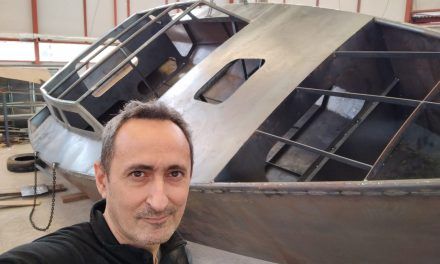
Esther Tejedor and Aurelio Muñoz are currently sailing around the world in stages aboard their sailboat, “Tuvalu,” as part of an exciting project titled “Almirante Cervera Circumnavigation.” They are currently in Bundaberg (Australia).
In Part I of this interview, they shared how they first got into sailing, the keys to thoroughly preparing their boat for ocean voyaging, and how this round-the-world project came to be.
In Part II of the interview, Esther and Aurelio discuss how they planned their circumnavigation, their experiences sailing and living aboard so far, and the challenges that lie ahead.
Interview with Esther & Aurelio (Part II)
Esther and Aurelio, how have you planned the route, and what are the main stages of the circumnavigation?
Our route is structured—as it inevitably must be—into a series of major, sequential stages. Since we are both still of working age, I have my teaching commitments to attend to, and my wife, who is a lawyer, must ensure all her professional matters are wrapped up. Consequently, our professional schedules entirely dictate our sailing periods, forcing us to break up the circumnavigation and align our ocean crossings with our vacations and leave.
We completed the first stage in August, taking advantage of the summer break by sailing from Cádiz to the Canary Islands, with a technical and rest stop in Funchal (Madeira). From that point on, the global map is divided into the following major strategic segments:
1. Crossing the Atlantic: Canary Islands – Caribbean – Colombia
– Strategy and Dates (November – December): We leave the boat in the Canary Islands, waiting for the official Atlantic hurricane season—which runs from June 1st to November 30th—to conclude. We begin the Atlantic crossing in late November or early December. Choosing this timeframe not only ensures we avoid the risk of tropical cyclones, but also allows us to take advantage of the established, steady northeast trade winds.
The sailing strategy involves heading south from the Canaries (aiming for the band between 15° N and 18° N, near Cape Verde) to catch the “trade wind highway.” This allows us to cross the ocean, propelled by favorable winds from astern or the quarter, until we reach land in the Lesser Antilles. As previously mentioned, due to specific circumstances, we did not head that far south on our own crossing; instead, we opted for a more northerly route.
– Shelter and Storage (May – Summer): After exploring the Antillean archipelago throughout the winter and spring, we must seek a safe haven by May, ahead of the start of the new hurricane season. The strategy is to head toward the southern Caribbean—specifically the former Dutch Antilles (the ABC islands: Aruba, Bonaire, and Curaçao). Located south of 12° N latitude, these islands lie outside the typical hurricane belt. From there, we sail to Colombia (Cartagena de Indias or Santa Marta) to leave the boat secured in a marina or boatyard while we return temporarily to our professional commitments. We left our *Tuvalu* in Santa Marta, at its excellent international marina.
Crossing the Pacific: The “Great Leap”
– Strategy and Dates (February – May): Once the hurricane season in the Caribbean has ended, we resume our voyage by crossing the Panama Canal. The Pacific crossing requires timing our departure for sometime between March and April.
– The Route: After passing through the Galápagos archipelago, we undertake the longest leg of the project—the journey to the Marquesas Islands in French Polynesia (a passage known as the “Puddle Jump” or “The Big Leap,” spanning nearly 3,000 nautical miles in a straight line).
– Tactics: The route involves seeking out the belt of the southeast trade winds in the Southern Hemisphere. Crossing between March and April allows us to arrive in Polynesia just as the South Pacific cyclone season (which runs from November to April) comes to an end, providing the optimal weather window before we continue our journey toward Australia.
3. The Crossroads in Australia: The Two Options for Returning
Upon arriving in Australia, we find ourselves at a critical juncture where the geopolitical situation in the Middle East will determine which of the two routes we choose to complete our journey around the world.
Option A (The chosen one, provided geopolitical security allows it): Via the Suez Canal and the Mediterranean
This is our preferred option, as we have a keen personal interest in sailing the Mediterranean—a sea that, paradoxically, we have yet to explore under sail.
– Indian Ocean Strategy (April – July): We will cross the Indian Ocean, departing from Australia/Indonesia between April and May, just as the South Indian Ocean cyclone season concludes. The strategy involves leveraging the southwest monsoon or the southeast trade winds to traverse the northern part of the ocean, reaching the entrance to the Gulf of Aden and the Bab-el-Mandeb Strait.
– Red Sea Passage: This should be undertaken in early summer, requiring patience to navigate the northerly winds typical of the northern Red Sea before entering the Suez Canal.
– Mediterranean Strategy (June – September): Entering the Mediterranean in the height of summer allows for visits to key mainland and island destinations. The planned route includes stops in Turkey, Greece, and Croatia. The approach here is to sail from east to west, taking advantage of calm periods or summer thermal breezes—while remaining particularly vigilant regarding the *Meltemi* (strong northerly winds that blow across the Aegean Sea in July and August)—and seeking shelter within the archipelagos before setting a final course for Spain.
Option B (Alternative route): Via Cape Town and the South Atlantic
If a blockade or instability in the Bab-el-Mandeb Strait or the Suez Canal prevents safe passage, we will activate our second option: sailing around the African continent.
– Strategy and Timing: We would depart from Australia or Indonesia, crossing the South Indian Ocean toward South Africa to round the Cape of Good Hope during the austral summer (December to February). This is crucial for avoiding the severe storms that occur at high latitudes in the Southern Ocean during the Southern Hemisphere’s winter.
– The Return via the Atlantic: Once in the South Atlantic, the route heads north, propelled by the southeast trade winds, with a stopover on the island of Saint Helena, a call along the eastern coast of Brazil, and a northward leg toward the Caribbean. From there, the return to Spain would take place between May and July, following North Atlantic sailing tactics: heading up toward Bermuda or the Azores to catch the westerlies, which will push us back toward the Iberian Peninsula.
We sincerely hope that the international situation will allow us to carry out “Option A”—completing the circumnavigation by returning home via the Mediterranean.
In essence, the strategy for a voyage around the world is to be in the right place at the right time; this allows for ocean crossings to be undertaken with the greatest possible safety, minimizing—though not entirely eliminating—the risk of encountering bad weather.

So far, during this voyage around the world,
what has been the most special moment at sea? And the toughest? Do you have a favorite place?
On this answer, we are both in complete agreement. When you sail as a couple for thousands of miles, the most intense experiences become indelibly etched into the memories of both of you.
The toughest moments: When the ocean puts body and mind to the test
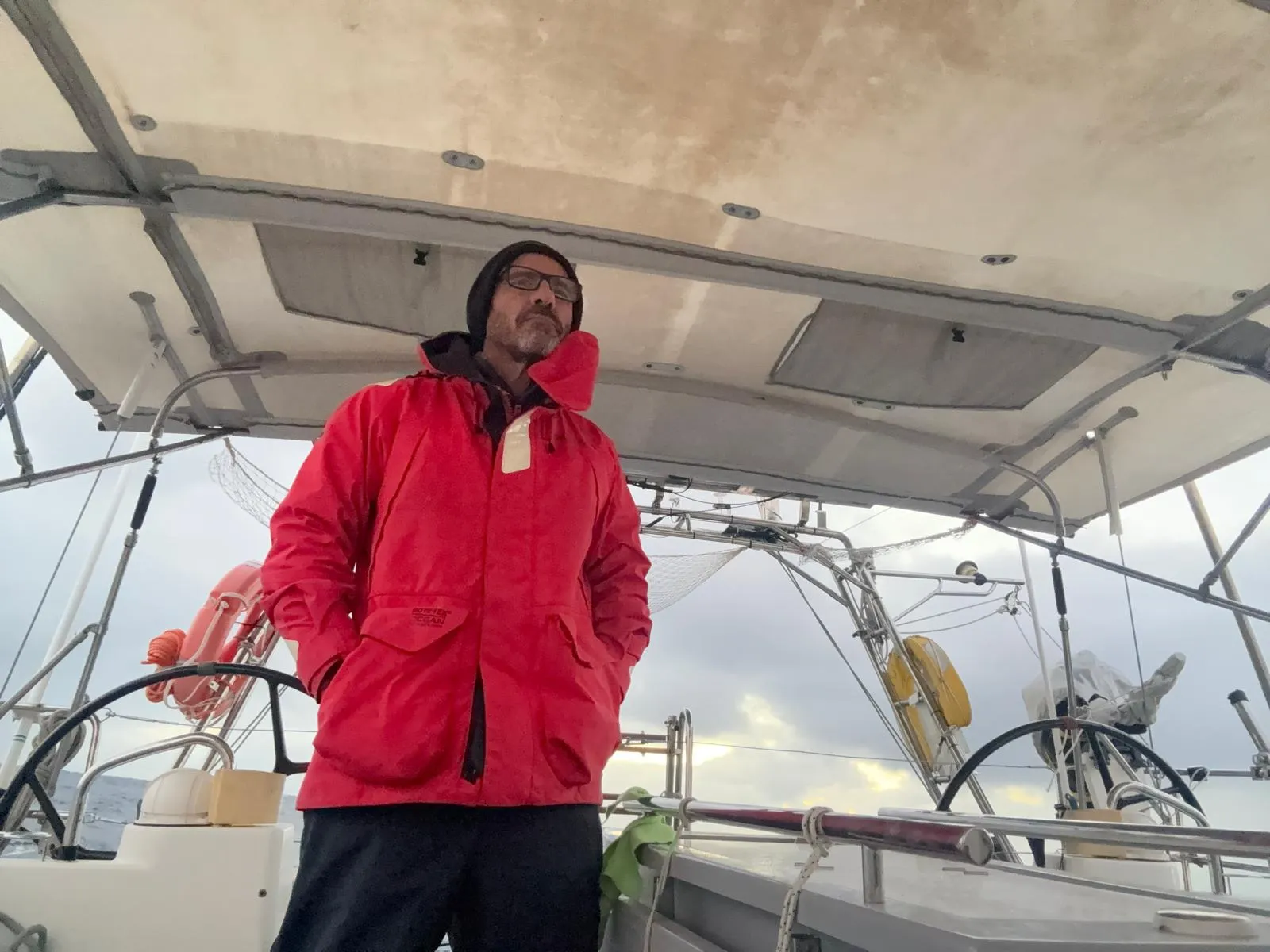
The toughest days are, without a doubt, those when sailing through heavy weather seems to drag on forever—days when sea conditions completely strip away any chance of a comfortable life on board.
Many assume the Pacific Ocean earned its name from a state of constant calm, but on the long voyage from Panama to the Galápagos, then on to the Marquesas Islands and eventually to Australia, the reality is often quite different. Across this vast expanse, complex ocean currents—such as the Humboldt Current—intersect with shifting wind systems and intertropical convergence zones, which are prone to sudden, intense squalls. Meanwhile, the swell generated by distant storms in the Southern Hemisphere creates steep, crested waves that crash aboard with immense force.
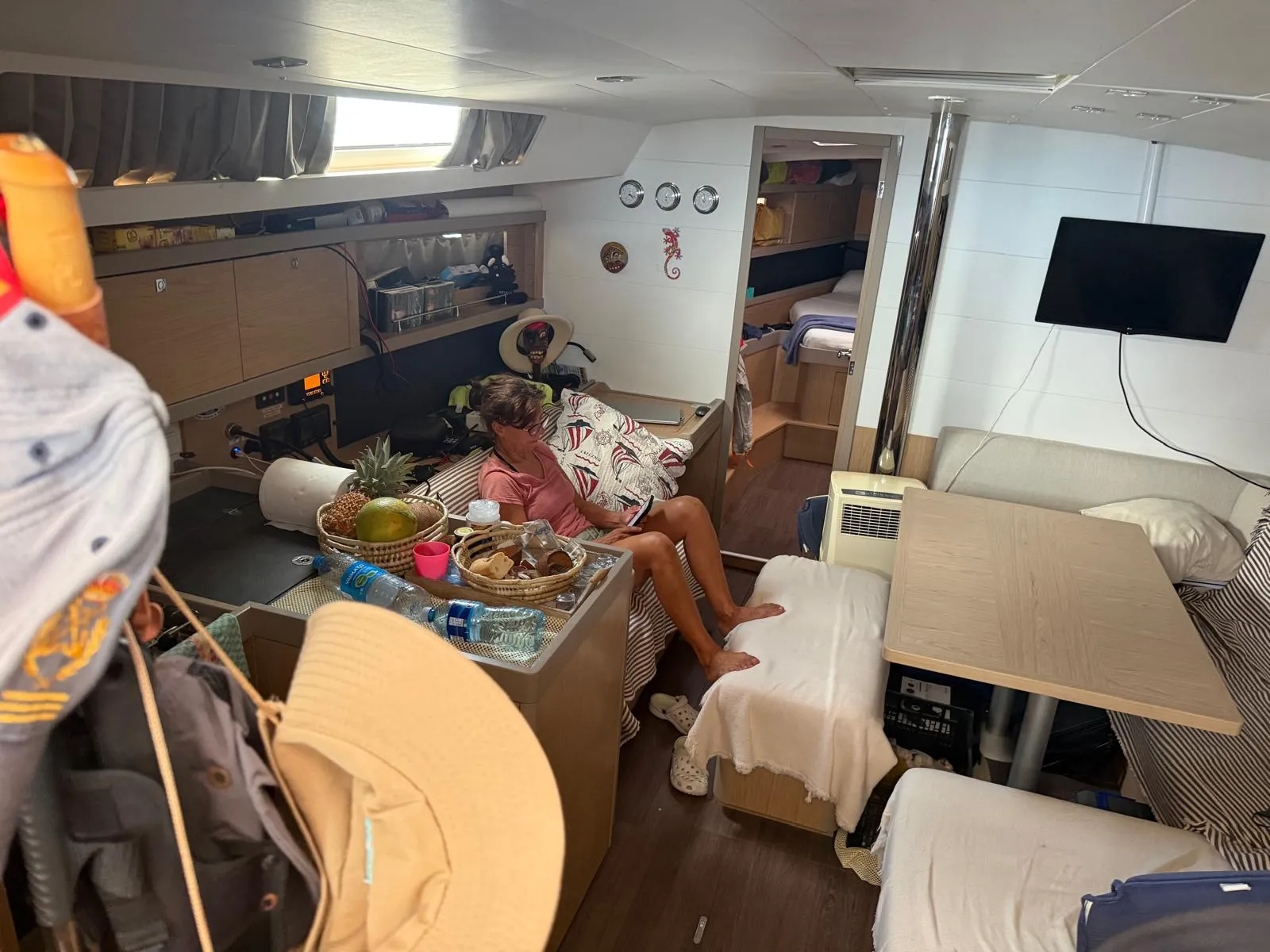
In such conditions, the vessel is subjected to constant, violent motion. Waves break over the deck, sweeping from bow to stern and forcing you to remain confined below. Dampness permeates everything—bunks, clothing, the galley—leaving you perpetually soaked and caked in salt. You are constantly struggling to keep your balance to avoid being thrown against the interior, while physical exhaustion mounts with every passing hour.
Compounding this is the indelible memory of our time in the Atlantic, where we faced the most terrifying day of the entire voyage: a sudden, violent lurch—a broach—during a storm that pushed us to the brink and nearly caused us to capsize. These are moments of pure adrenaline and genuine fear, where you come to understand the true power of nature. As the saying goes: “If you don’t know how to pray, sail the oceans—you’ll learn soon enough, without anyone ever having to teach you.”
Why is ocean sailing so tough?
People often ask me why offshore sailing is so grueling, given how much we love the sea. The answer lies in the unrelenting nature of the effort. On land, after an exhausting day, you can go to sleep and switch off. At sea, there is no such respite:
– Watches and fragmented rest: At best, you might manage no more than two or three hours of continuous sleep at a time—for weeks on end.
– Constant psychological tension: The mind never fully rests; your ears remain perpetually attuned to the sound of a flapping sail, the creaking of the rigging, or a shift in the wind’s intensity.
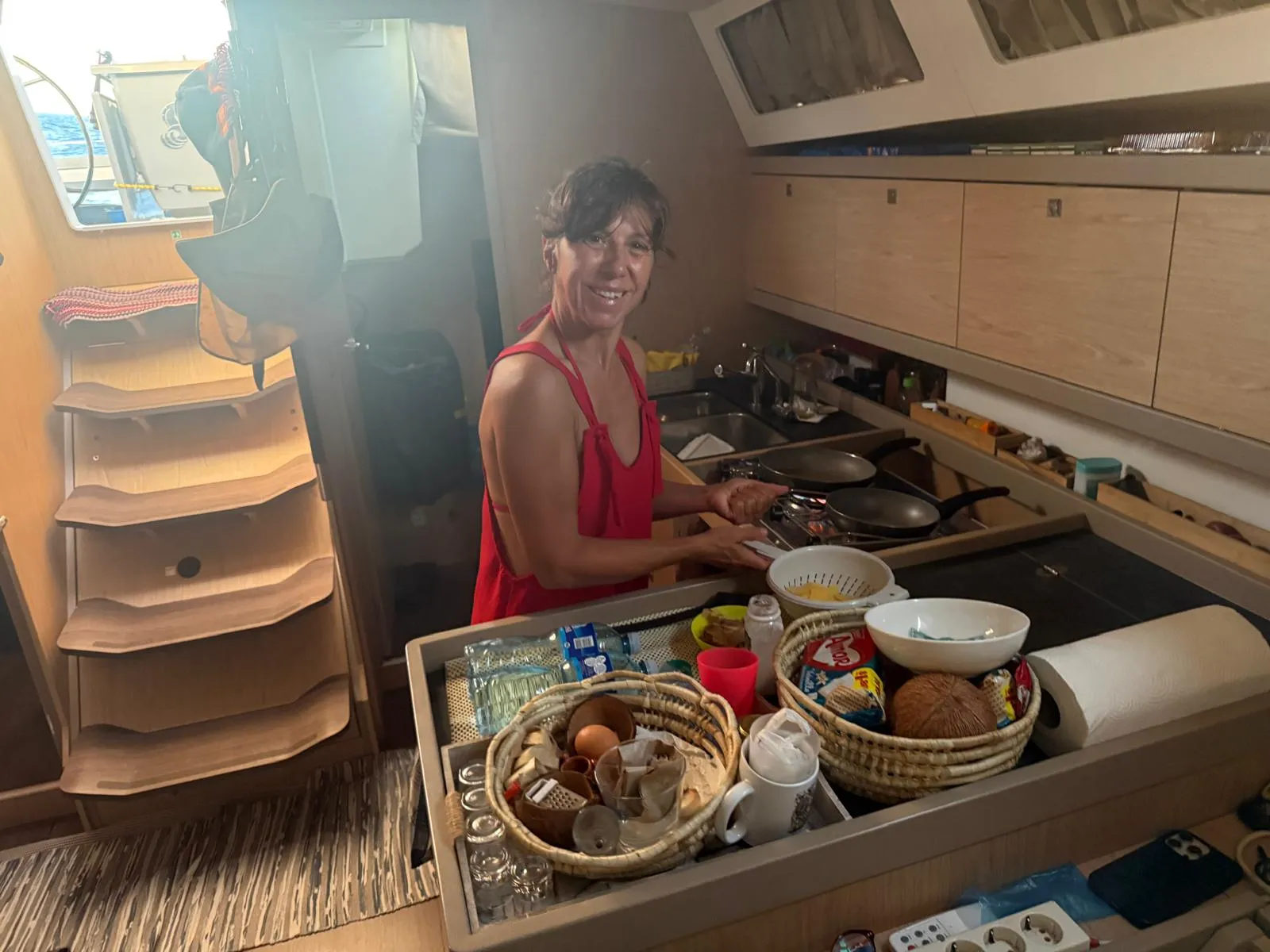
– Isolation and physical discomfort: Simple tasks—making a cup of coffee, taking a shower, or getting dressed—demand an immense amount of concentration and physical exertion when the floor beneath you is in constant motion.
Fortunately, the human mind possesses a remarkable self-protection mechanism: over time, it tends to soften the memory of suffering, fading away the pain or fatigue, while bringing only the most beautiful moments to the surface. Were it not for this capacity to forget the hardships, no sailor would ever set out to sea again.
The most special moments: The majesty of nature and the silvery silence
We have experienced countless magical moments, but there are two scenes that still stir our hearts deeply:
– Encountering whales: The emotion we feel when a massive whale emerges just a few meters from the boat is indescribable. Hearing its blow break the ocean’s calm and watching its giant back cut through the water in complete freedom fills us with a sense of sacred awe. It serves as a humbling reminder that they are the true masters of the ocean, and we are merely guests.
– Emerging from the doldrums: After days spent in an agonizing, dead calm or battling rough seas, the moment the water finally settles and a gentle beam wind begins to pick up is pure poetry. Watching the boat come to life in just a 10-knot breeze—settling into the water and beginning to glide smoothly and silently at 6 knots—evokes a feeling of absolute freedom.
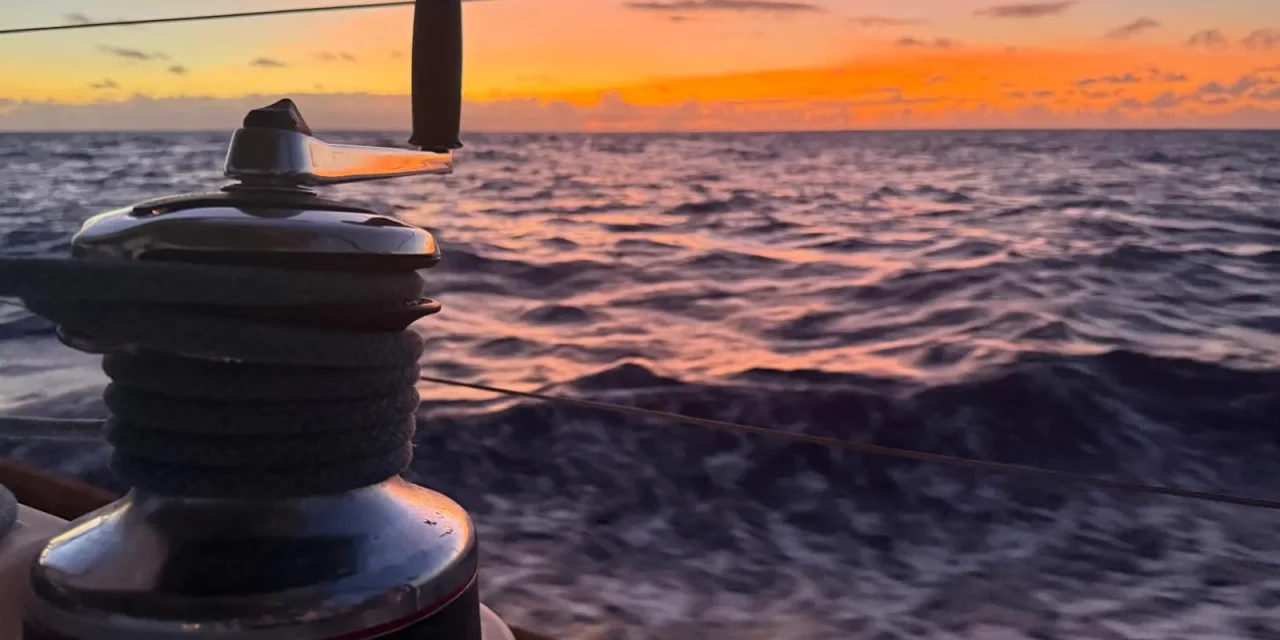
I remember one night, sailing under those ideal conditions, quite vividly. The sky was completely clear, and a magnificent full moon reflected off the water, transforming the ocean into a vast, silvery blanket.
Amidst that silence—broken only by the boat’s wake—I looked at my wife and said, “Look at this… Days like today make all the suffering worthwhile.”

Our favorite place: The Galápagos Islands
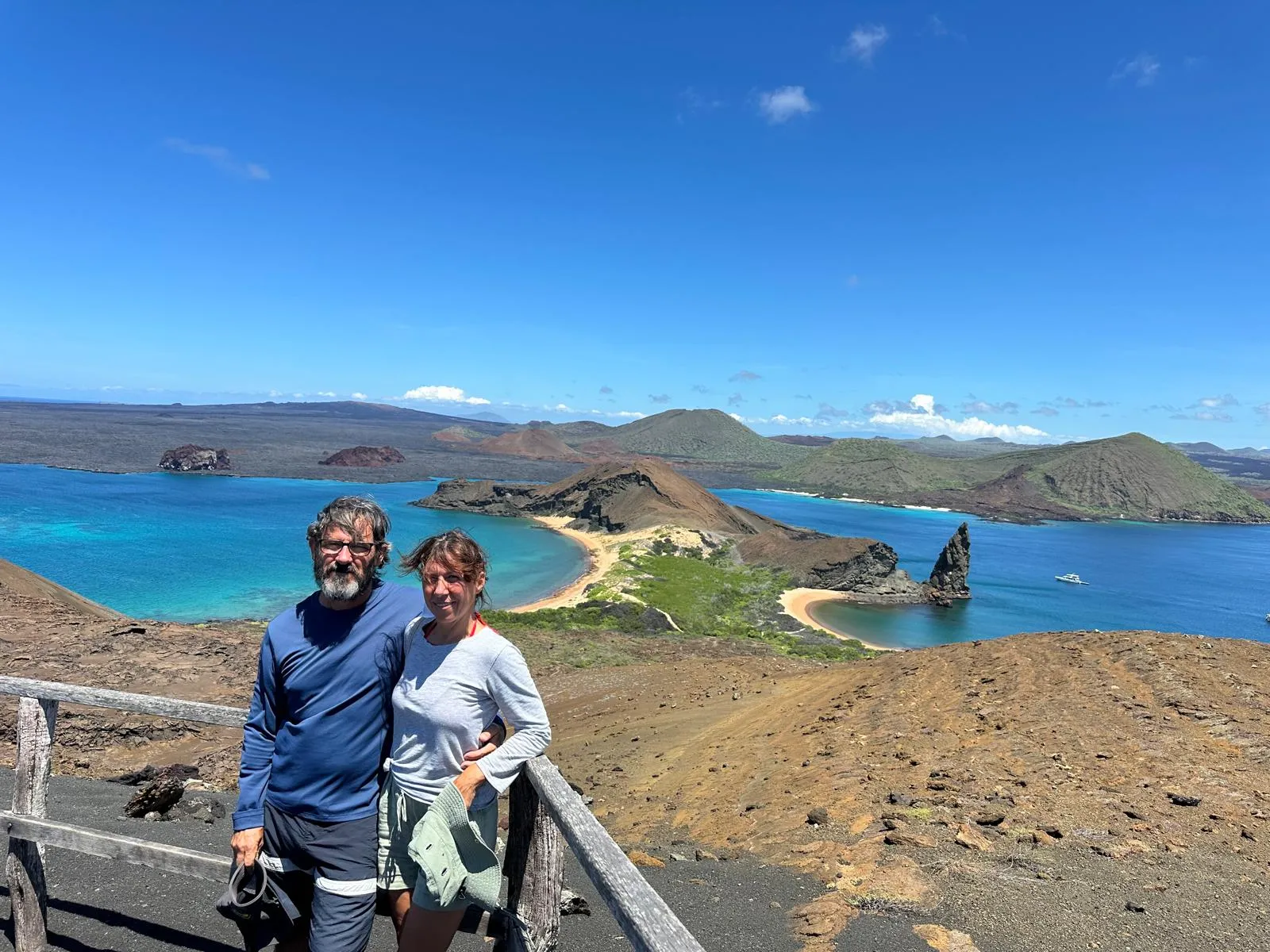
On this point, we have no doubt whatsoever. For both of us, the place that has served as an unparalleled turning point in our circumnavigation so far is the Galápagos Islands. Sailing through this archipelago and exploring it via various excursions feels like entering a world apart—a place where time seems to have stood still.
We were fortunate enough to thoroughly explore the four inhabited islands open to visitors, each boasting a distinct personality and a dazzling wealth of biodiversity:
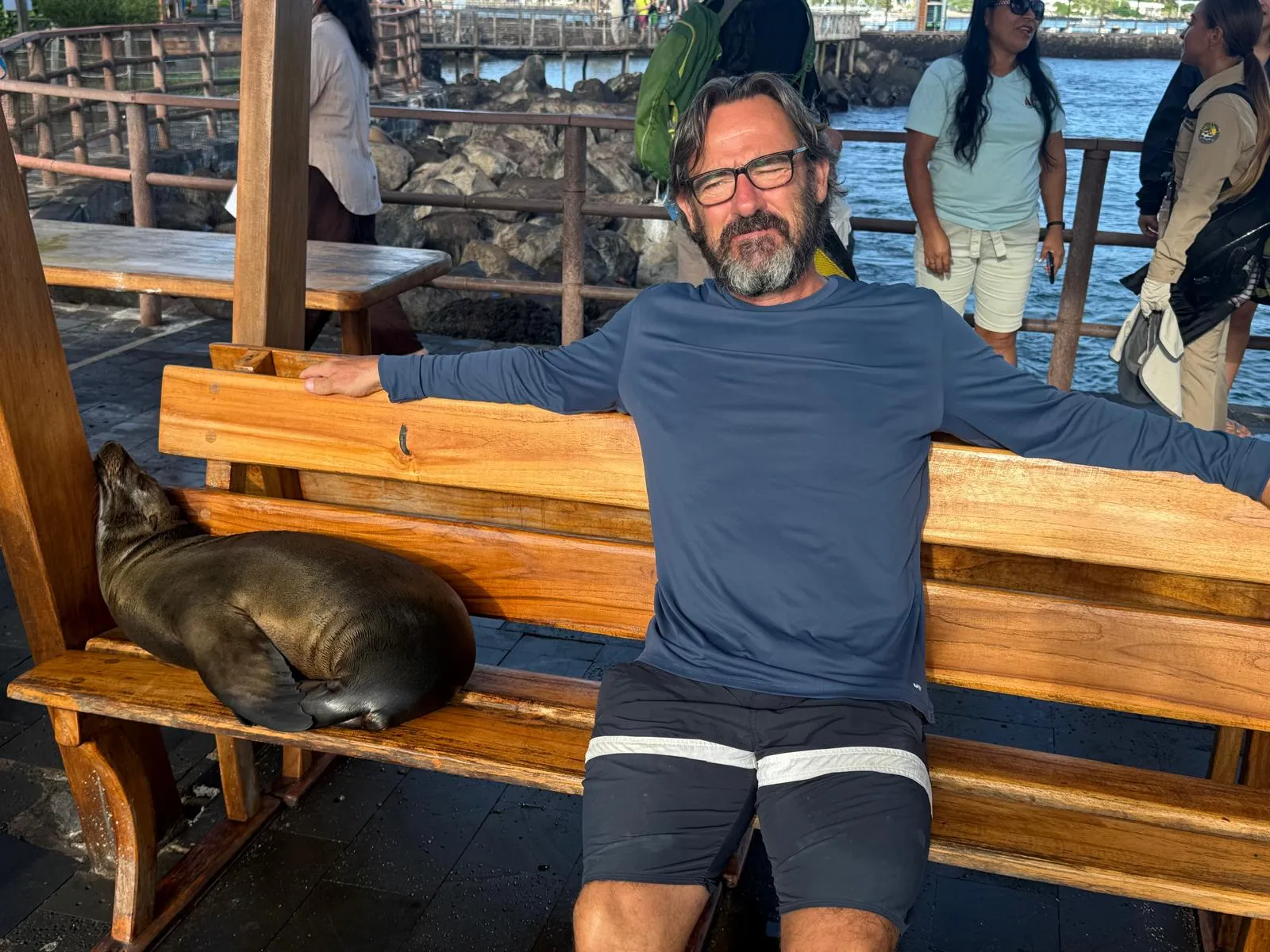
– San Cristóbal: The maritime gateway. Its capital, Puerto Baquerizo Moreno, welcomes you with a scene unlike any other in the world: sea lions are the true masters of the town, lounging on urban beaches, benches along the waterfront, and even on the decks of boats. From here, we took an unforgettable excursion to León Dormido (Kicker Rock)—a massive, obelisk-like rock formation rising from the sea—where we snorkeled surrounded by Galápagos sharks, eagle rays, sea turtles, and blue-footed boobies nesting on the cliffs.
– Santa Cruz: The beating heart of the archipelago and its logistical hub, centered in Puerto Ayora. A visit to the Charles Darwin Research Station offered a living lesson in evolution. But the most magical experience was heading up to the island’s “highlands”—walking through lush volcanic vegetation while encountering, just meters away, the legendary giant Galápagos tortoises living in the wild. Furthermore, spots like Las Grietas—a chasm of crystal-clear water framed by lava walls—offer an unforgettable swimming experience.
– Isabela: The largest island in the archipelago, with its striking seahorse-shaped silhouette dominated by active volcanoes like Sierra Negra. Isabela is nature in its purest form. In sanctuaries like Los Túneles or La Concha de Perla, you can find Galápagos penguins—the only ones in the Northern Hemisphere—along with marine iguanas swimming to feed on algae, and whitetip reef sharks resting in underwater volcanic crevices.
– Floreana: an island steeped in mysticism and maritime history. Here, we visited the famous Post Office Bay, where, since the 18th century, British and American whalers would leave letters in a wooden barrel; other ships heading home would then pick them up and deliver them to their destinations—all without the need for postage stamps. Floreana offers absolute tranquility, complemented by a sublime snorkeling experience.
We left feeling deeply enamored. The Galápagos truly live up to their historic nickname, the “Enchanted Isles”: the local wildlife shows no fear of humans, allowing you to coexist with some of the most pristine nature remaining on the face of the Earth.
Are you carrying out any scientific or environmental collaborations during your trip around the world? What do they entail?
Yes. For us, this journey is not merely a nautical adventure or a sporting voyage; it is a genuine, mobile scientific expedition.
I serve as the Principal Investigator (PI) and head of Research Group TEP-136, part of the Andalusian Plan for Research, Development, and Innovation (PAIDI). Our group focuses on research, development, and innovation within the fields of engineering and technology as applied to naval architecture, production engineering, and materials science.
When I am not teaching in person at the University of Cádiz, I am on a research leave. This allows me to fully integrate my remote teaching and research responsibilities with my deep passion for the sea, effectively transforming our sailboat into a floating observatory.
Throughout this circumnavigation, we have been—and continue to be—involved in three key research projects:
1) Project SEALAB (Finalized in 2024)
During our Atlantic crossing, we transformed the vessel into a genuine oceanographic laboratory to collaborate with the SEALAB project.
This international initiative focuses on monitoring the quality and health of ocean waters along routes rarely traversed by traditional research vessels. Our work on board was a daily, highly disciplined routine: twice a day, we collected ocean water samples, conducted physical-chemical analyses on board, and transmitted the resulting data electronically to the project’s headquarters. Although our direct collaboration with SEALAB concluded successfully in 2024, the data contributed from the equatorial Atlantic region are now part of its climate databases.
2) Project SEABED 2030 (Nippon Foundation – GEBCO)
We are currently fully engaged in the international project SEABED 2030—a global effort coordinated by Japan’s Nippon Foundation and GEBCO (General Bathymetric Chart of the Oceans, operating under the auspices of UNESCO and the International Hydrographic Organization).
– What does the project entail? Despite technological advances, more than 75% of the planet’s seafloor remains unmapped at high resolution; we actually know more about the surfaces of the Moon or Mars than we do about the floor of our own oceans. SEABED 2030 has the ambitious goal of mapping 100% of the global seafloor by the year 2030.
– Our contribution: We utilize onboard sonar technology and satellite positioning systems to continuously record bathymetry (the depth and topography of the seafloor) in remote oceanic regions, such as the Pacific or the waters surrounding isolated archipelagos. All the bathymetric profiles we record are processed and contributed to the global catalog, helping to update nautical charts worldwide and provide data for ocean circulation models.
3) In-house project TEP-136: Environmental Monitoring and Vessel Engineering
The third project is an initiative of my own, which I have been developing with my research group for several years, using our voyage as a unique, real-world test bed. It focuses on studying habitability, comfort, and the behavior of materials aboard ocean-going sailboats.
We have installed a network of sensors on board that continuously and automatically records variables such as light levels, temperature, and relative humidity—both inside and outside the hull.
This data collection serves two primary scientific and naval engineering objectives:
– Structural and thermal performance: To gain a quantitative understanding of how mass-produced sailboats are constructed and how they thermally withstand the extreme humidity and temperature conditions encountered during ocean crossings (ranging from the sweltering heat of the Caribbean tropics to the damp environments of the Pacific).
– Comparative study of shipyards: We have been gathering and comparing measurements not only from our own vessel but also from sailboats of various brands, models, and price points that we encounter in ports and anchorages around the world. This allows us to establish objective metrics to determine whether there are genuine qualitative and quantitative differences—in terms of insulation, ventilation, and comfort—between mass-produced commercial sailboats and vessels built by high-end shipyards or those specifically designed for blue-water (ocean) cruising.
In this way, every mile sailed not only brings us closer to our next destination but also contributes to scientific knowledge, the stewardship of our oceans, and the advancement of future naval design.
What are the main challenges you face in the upcoming stages of the round-the-world journey?
The challenges involved in an undertaking of this magnitude always fall into two categories: the logistical maintenance of the vessel while on land, and the meteorological and navigational difficulties encountered at sea.
We are currently in Bundaberg, Australia. Although this area is not typically prone to direct hits from major tropical cyclones, it can still be affected by the fringes of intense storms and heavy rainfall during the Southern Hemisphere summer. For this reason, we have left the sailboat completely “stripped down” and “lashed down”—we have removed the solar panels, the wind generator, all the running rigging (ropes, halyards, sheets), and any other components that could catch the wind, in order to prevent damage from violent gusts.
The first major challenge will be getting the vessel ready again after a six-month hiatus, during which we were away for work commitments in Spain:
– Maintenance and reactivation: In ocean sailing, there is an indisputable rule: “a boat that sits idle deteriorates faster than one that is actively being sailed.” Upon our return, an exhaustive process of inspection and recommissioning awaits us. After six months of disuse in a tropical/subtropical climate, it is inevitable that we will encounter issues such as seized pumps, electronic components malfunctioning due to marine humidity, a watermaker requiring chemical preservation, or through-hull valves that have become stuck. It will take days of meticulous work to ensure the vessel is ready and safe for sailing once again.
Challenges at sea: The Indian Ocean, the Red Sea, and the Mediterranean
1) The typhoons of the Indian Ocean
Crossing the Indian Ocean is a true puzzle of timing. We must carefully synchronize our passage to avoid tropical cyclones in both the South and North Indian Ocean:
– In the South Indian Ocean: The cyclone season runs from November to April (during the Southern Hemisphere summer). These storms form due to high sea-surface temperatures (26.5°C or warmer), creating large-scale disturbances that rotate clockwise and move westward, accompanied by destructive winds. To avoid them, we must depart from Australia no earlier than April or May, once the waters begin to cool and the atmosphere stabilizes.
– In the North Indian Ocean (Arabian Sea and Gulf of Aden): The dynamics here are shaped by the transition between the winter monsoon (from the northeast) and the summer monsoon (from the southwest). Tropical cyclones in this region typically form during these transitional periods (May–June and October–November). We must cross the northern Indian Ocean within a specific window—between May and June—just before the southwest monsoon sets in with full force, bringing rough seas and intense winds.
2) The Red Sea comeback: The Most Complex Challenge
If the geopolitical situation allows us to choose this route, navigating the Red Sea will be a challenging milestone in our voyage.
The Red Sea is a narrow channel hemmed in between two vast, desert-like continental landmasses. For most of the year—especially in the northern section—both the prevailing winds and the ocean currents flow strongly from north to south; in other words, directly against our intended course.
Beating into the wind within a relatively narrow channel—with gusts frequently exceeding 25–30 knots, short and steep, highly uncomfortable waves caused by the shallow depth and the confined space, and currents hindering the vessel’s progress—imposes an immense strain on both the crew and the boat’s structure. It will demand a great deal of patience, the ability to identify windows of calmer weather, and a very strategic use of both the engine and the sails.
3) Crossing the Mediterranean in late summer
Once we reach the Suez Canal and emerge into the Mediterranean, there will be a psychological sense of relief: we will be “at home,” in familiar waters, surrounded by a recognizable culture and the comforting proximity of the Iberian Peninsula. However, one should not underestimate sailing in the Mediterranean.
If we cross the Mediterranean toward the end of summer (August–September), we will have to contend with its treacherous weather:
– Thermal contrasts and severity: After months of intense summer heat, the Mediterranean Sea has accumulated a vast amount of thermal energy. As summer draws to a close, pockets of cold air begin to descend from the upper atmosphere (known as *DANA* or “cold drops”). The combination of a very warm sea and cold air in the upper atmosphere triggers extreme instability: severe downpours, waterspouts, and violent local winds—such as the *Tramontana*—that can shift from total calm to a full-blown storm in a matter of minutes.
Undoubtedly, the combination of the vessel’s refit in Australia, navigating the cyclone-prone Indian Ocean, the grueling upwind slog through the Red Sea, and the notoriously fickle weather of the Mediterranean makes these upcoming legs the true test of our circumnavigation.

Esther and Aurelio, to wrap up, what advice would you give to a couple who might be thinking about embarking on an adventure like yours?
Esther and Aurelio: Our first and clearest piece of advice is simple: the sooner you begin this adventure, the better. Ocean sailing is physically demanding, and as the years go by, health issues tend to appear uninvited. You have to seize the moment.
While sailing around the world in one go might seem like too daunting a goal to start with, undertaking a major voyage—such as crossing the Atlantic—is by no means an unreasonable ambition for a couple. It is a perfectly achievable objective, provided you approach it with the right mindset.
Furthermore, we would like to dispel a common myth: you don’t need to wait for the “perfect” boat or a custom-designed “blue-water” vessel. Having crossed the Atlantic three times (twice outbound, once returning) and completed a major Pacific crossing from Panama to Australia aboard our *Tuvalu*, we have confirmed one key principle through our years of sailing the world: any production sailboat—from any manufacturer—can safely undertake ocean crossings, provided it is well-prepared and thoroughly inspected.
Taking the plunge relies on two fundamental pillars: the technical preparation of the boat (investing in training, thoroughly checking the rigging and engine, and installing every possible safety system—always prioritizing redundancy) and the preparation of the crew. Beyond that, it’s just a matter of summoning the courage to cast off the lines.
To this, we would add something that experience has taught us over thousands of miles spent together: the importance of living together and working as a team. At sea, there is no escape; the boat becomes a small, self-contained universe where communication, mutual trust, and a clear division of roles are just as vital as the helm itself. Knowing how to support one another during moments of fatigue and celebrating small, daily achievements together is what transforms a couple into a truly invincible crew. Given all this, our practical advice is: create a plan, follow it rigorously, and take small, incremental steps toward your goal. You will find that, eventually, you will feel fully prepared. And—very importantly—mark a date on your calendar. Crossing the Atlantic, for instance, is entirely feasible even for those who haven’t yet retired; you can simply make use of your vacation time. Do not put it off indefinitely.
Ocean sailing is undeniably demanding—we won’t pretend otherwise—but the profound sense of personal achievement and the immense joy that washes over you when the silhouette of long-awaited islands emerges from the mist after weeks at sea is truly unparalleled. It is an intimate, indescribable emotion.
Set a date, prepare your vessel, trust in one another, and take the leap. You won’t regret it—and we can assure you that you will have wonderful stories to tell for the rest of your lives.
The ocean doesn’t belong to extraordinary boats, but to determined people: set a date, cast off your lines, and let the wind write your own legend!


At “Navegantes Oceánicos,” we thank Esther and Aurelio for sharing with our readers their exciting journey—from preparing their sailboat and planning the voyage to offshore sailing, life on board, and the challenges that lie ahead as they embark on the “Almirante Cervera Circumnavigation” of the globe.
Best of luck, fair winds, and calm seas! We’ll be following your journey!