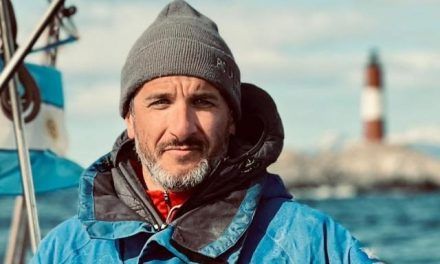
Ayelén Cvrkovic: “My main driving force is bringing people closer to the Río de la Plata so they can get to know it.”
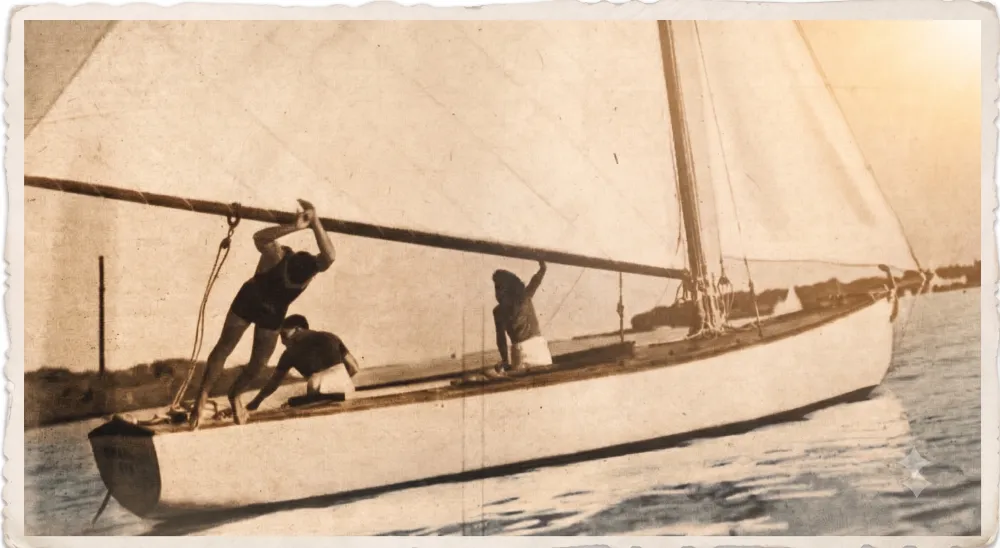
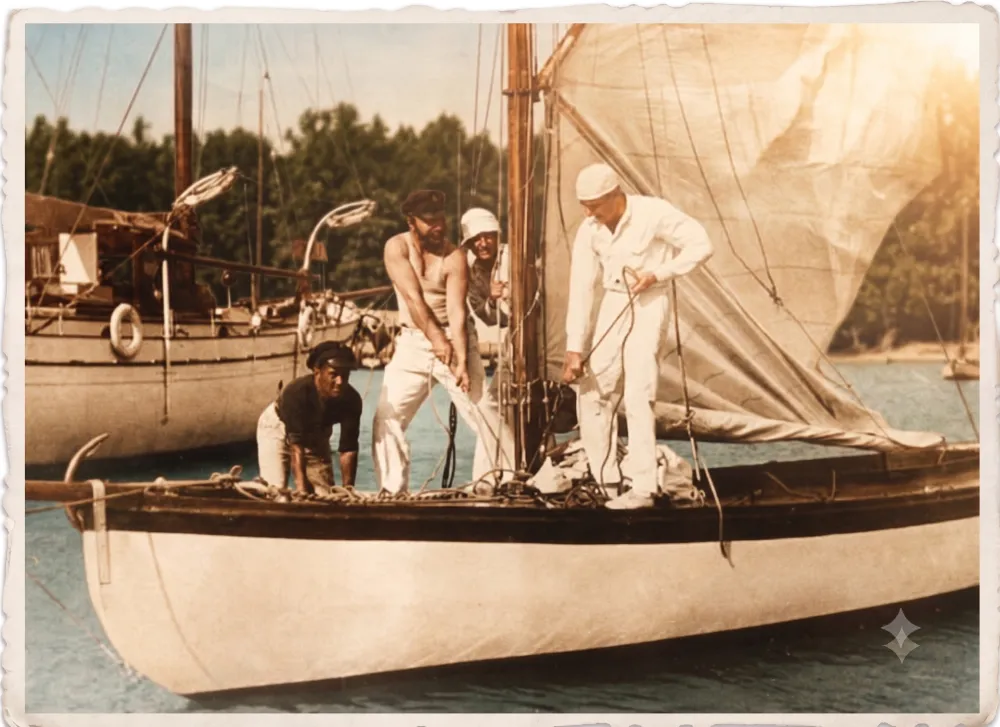
This young captain grew up aboard a classic sailboat: the *Río de la Plata*. After years of neglect, she decided to restore her father’s vessel—which was over a century old—enlisting the expertise and craftsmanship of some of the region’s finest shipwrights. It was a feat of rescuing the history and adventures of one of the key boat models that pioneered yachting in Argentina in the early 20th century: “A wooden boat is a work of craftsmanship.”
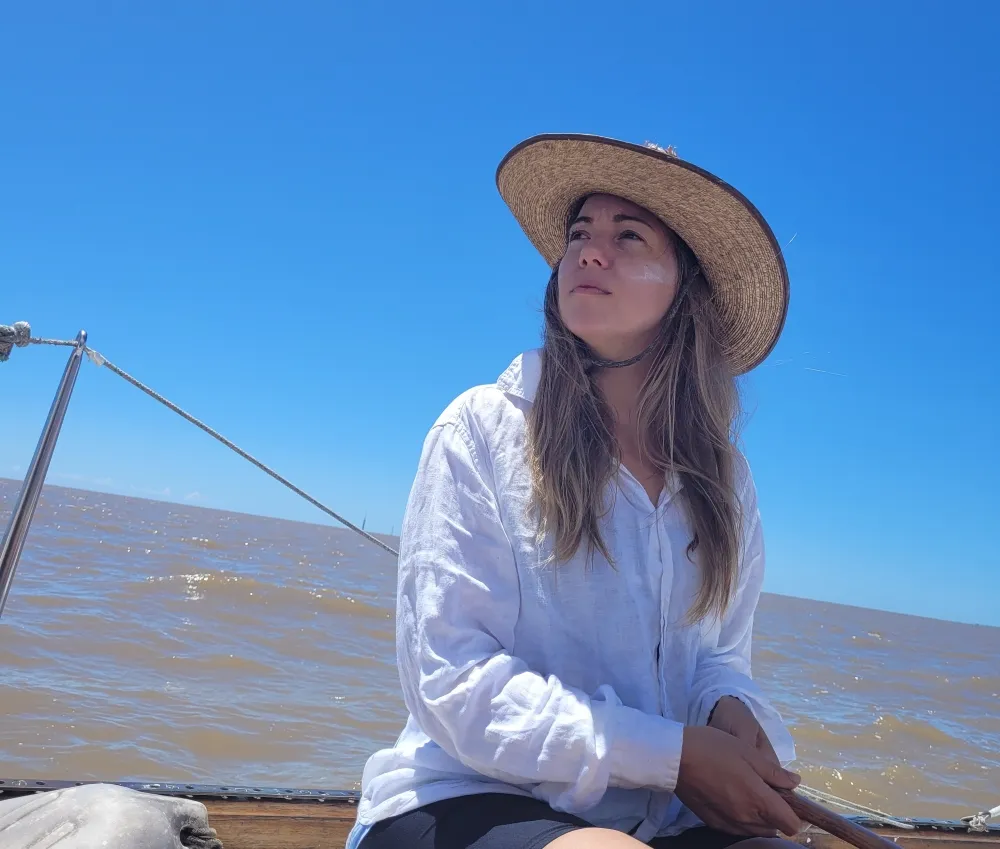
The boat was heeling sharply, passing so close to the water that Ayelén Cvrkovic could touch it with her small hand. Her father, at the helm, kept asking her not to lean so close, warning that she might fall in. Then, in a split second—while he was busy tying off a line—his attention wavered:
*Splash!* came the sudden sound.
Ayu had fallen overboard, but she was already afloat and swimming in the waters of the Río de la Plata.
“Le Corbusier wrote that Buenos Aires was a city that turned its back on the river. He had a wonderful plan to reorient everything toward the water and foster an interaction with it. Sometimes I don’t understand the *porteños*; they think that because the water is brown, the river is dirty and murky—yet they have no idea what they’re missing. Perhaps it’s a matter of history: people used to go to the river to wash their clothes. But it’s a world unto itself; there is a huge range of sports and activities to enjoy there. My main driving force is bringing people closer to the Río de la Plata so they can get to know it,” she says now, sitting in the old tavern at the Club Náutico Azopardo in San Isidro—north of Buenos Aires city. She is surrounded by dogs, facing a large window that looks out onto a boatyard filled with sailboats, and sitting near a wood-burning stove that isn’t smoking, as winter is on its way out.
After those early dips in the water from the sailboat, her parents realized Ayu was fascinated by the water and decided the best course of action was to teach her to sail. She started out in an Optimist sailing school, where she learned the mechanics of sails, currents, wind, and tides. However, during her teenage years and early adulthood, she stepped away from sailing to focus on her career in the fashion industry and interior design; she only returned to the water years later—this time on a stand-up paddleboard. One day, his father reminded him that the old wooden boat was sitting abandoned at the very club where he rowed and was about to be donated to a boatbuilder; it was the *Ñahatí* (Guarani for “dragonfly”), a Río de la Plata class sailboat launched in 1920 and designed by Alfred Mylne in Scotland. “A wooden boat is a work of craftsmanship,” he says now. He decided to undertake a massive, almost immeasurable task: he wanted to restore it—or rather, rebuild it—so it could return to the water.
Its description can be clearly read on the Scottish shipyard’s website:
“The *Ñahatí* is a sailboat built to A. Mylne & Co. design number 166—known as *Aurora & Brisa*—created in 1909. The vessel was built by Martínez in Argentina. Originally named *Ahati*, this small cruising or day-sailing boat reflects the refined proportions characteristic of Mylne’s early 20th-century designs.”
Entrevista a Ayelén Cvrkovik
Ayelén, how did you get started in sailing??
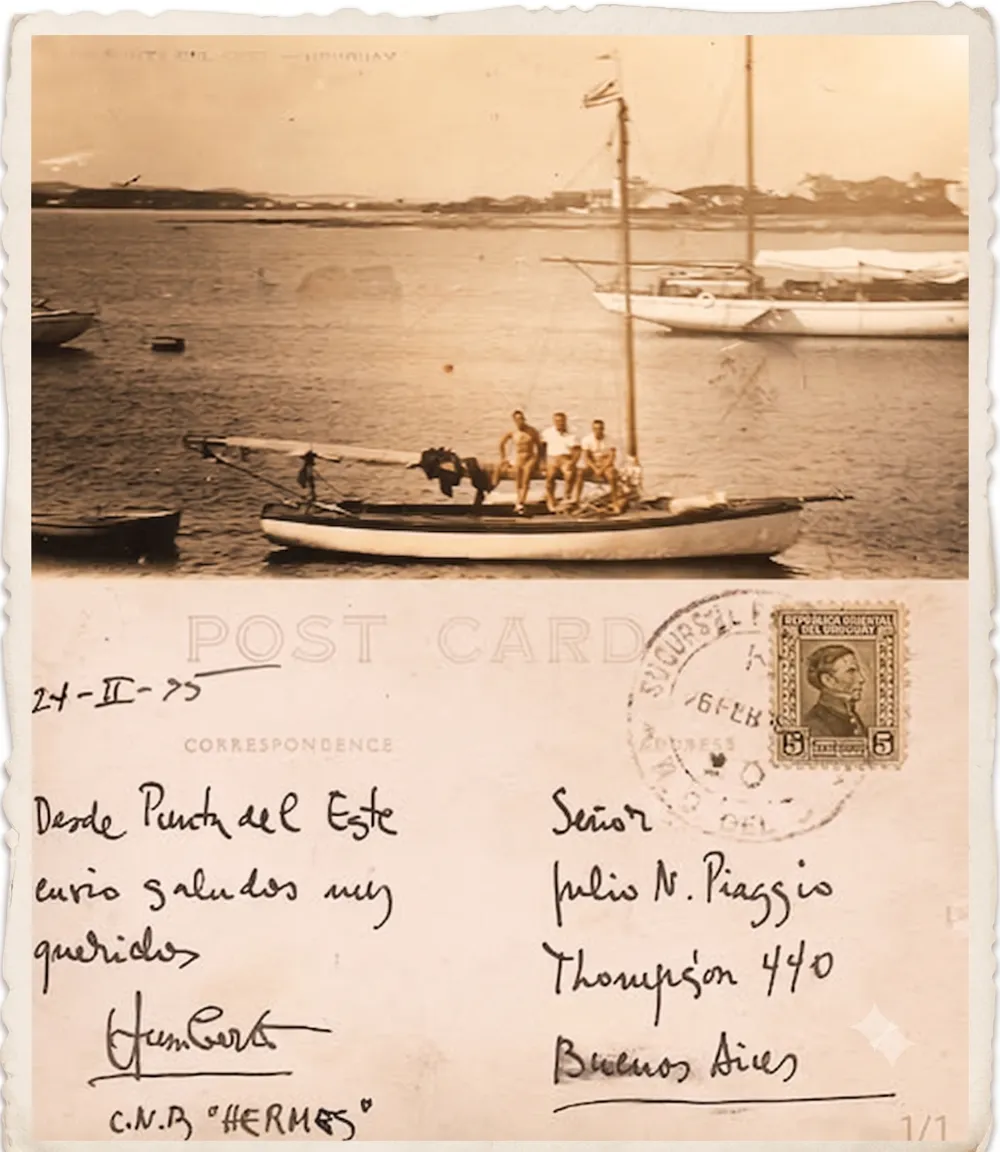
I started sailing with my dad. He began when he was young and fell in love with the sport; he went on to get his helmsman certification, followed by skipper and yacht pilot qualifications. The first boat he bought was made of wood, and later he acquired this classic *Río de la Plata* model. My family and I would always go sailing on that boat, and I was fascinated by it from a young age; I formed an instant connection with the river—an uncontrollable passion, like the time I jumped into the water to swim even though I’d been told not to.
That experience planted the seed that helped shape the woman I am today, and I’ve always been grateful to my father for introducing me to sailing. Later, they enrolled me in Optimist sailing because they saw how much I loved it; I used to come to this very club every Saturday and Sunday—from eight in the morning until five in the afternoon—to sail all day long. It was a time when the discipline was very rigorous, too. Yet, my eyes light up whenever I see one of those boats, and I think: I’d give anything to sail one of them again. It was wonderful—floating out in the middle of the river gave us a sense of freedom and responsibility at such a young age; it was amazing.
What happened next?
During my teenage years—around 2001—Argentina was in the grip of a severe social crisis; my parents divorced, and I stopped sailing. The boat was left abandoned at the club due to financial issues, and I lost touch with the boating world. A few years ago, I returned to the river with a SUP board. I took some lessons and bought my own board, bringing with me the knowledge gained from years of sailing here—knowing how to stay safe on the water and, above all, having no fear.
How did the creation of this class of sailboats come about? Is it true that it was brought over from Scotland on a coal ship?
In the early 1900s, an Englishman in Buenos Aires wanted to sail the Río de la Plata. At the time, however, there were no boats suited to the yachting culture—despite the tradition already existing in England. Consequently, a naval engineer was commissioned to design and build a boat capable of handling the river’s specific wave patterns; these waves create a type of swell that is not easily navigated. John Hilditch’s shipyard produced two one-design models, which were tested in a regatta before being shipped to Buenos Aires.
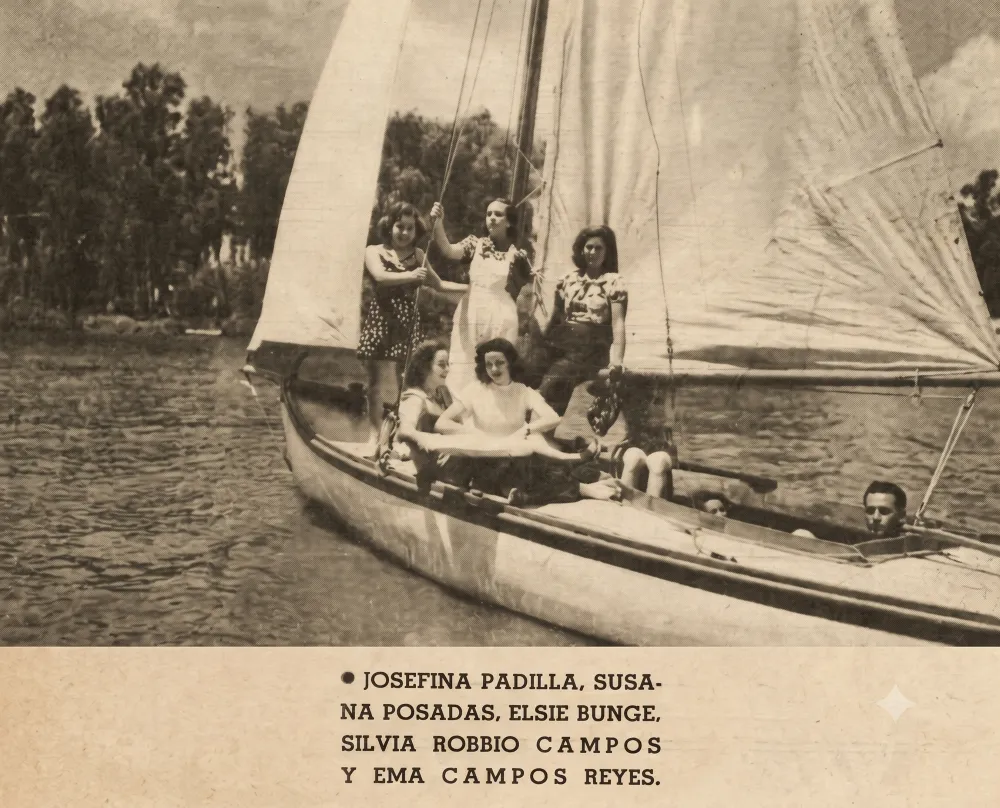
Thus, the first “Río de la Plata” class sailboats were born in 1909 in Carrickfergus, Northern Ireland. Designed by the aforementioned Scotsman and designated as the “Hilditch’s 25,” the fleet’s first two hulls arrived in Argentina late that same year. Named *Aurora* and *Brisa*, they reached Buenos Aires on October 12, 1909, aboard a coal freighter—reportedly as “contraband” cargo; it appears the shipment was arranged to utilize the British merchant vessel’s hold.
They competed in their first regatta on January 6, 1910. Following the arrival of these first two boats, neighboring clubs enthusiastically joined the initiative to establish their own fleets. Interest in competition drove rapid growth for the class, expanding the fleet and multiplying the number of championships; for many, these sailboats served as an entry point into the sport of sailing. In a sense, then, recreational sailing here was founded by the Río de la Plata class.
What are the technical specifications of this boat?
It is a 26-foot wooden sailboat with a full-length keel. It has a very refined silhouette and, to my mind, is one of the best-sailing boats on this river. It is very easy to handle. Furthermore, it has a maximum draft of 90 centimeters, though it sails at 70 centimeters when heeled over. It is interesting that the builders took the depth into account, given that this is an estuary with a very shallow bed. One of the most wonderful things about it is its whale-like silhouette; it is very stable, even though it always sails heeled over.
There is a historic rivalry between two local designers—Frers and Campos—stemming from the fact that one liked to eat his soup while on board; he didn’t want to sail a boat that was constantly heeling over, preferring instead to sail one that remained more stable. I, on the other hand, love being right close to the water with the boat heeled over. A wooden boat is also a work of craftsmanship; it has a completely different vibe compared to a fiberglass one. It feels like being atop a tree trunk—using wood that is over a century old, which truly comes back to life the moment it touches the water. In these modern times, where everything is about immediacy, I find that poetic.
How did you come up with the idea of rebuilding this wooden sailboat—a classic with over a century of history that dates back to the origins of the sport on the Río de la Plata?
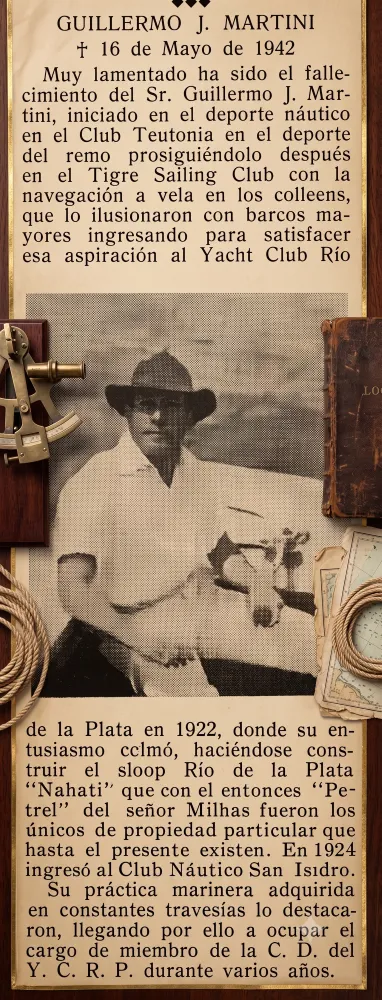
My sailboat was built in 1925. It was commissioned by its first owner, Guillermo Martini—I believe at the San Fernando Yacht Club (I would love to meet the family). It had several owners after that. In the 1990s, it came into my father’s possession and became the boat I sailed on throughout my childhood. After the 2001 crisis, the vessel was left forgotten in the boatyard. One day, Luis—a boatbuilder passionate about our region’s classic boats—showed up at my father’s house. Recognizing the boat’s historical value, he pleaded with my father not to let it die, asking him to give it away so it could be restored. “Vladimiro, the boat is dying, and it’s an Argentine sailing classic; let’s not let it be abandoned. Please, I want you to give it to me, and I’ll handle the restoration.”
This went on for ten years: every so often, he would drop by my father’s house and bring up the same request. My father always refused; he couldn’t quite let go, believing that, somehow, he would bring it back to life himself. After a hospital stay, he realized that wasn’t going to happen. He asked me for the paperwork—which I held onto due to various moves—intending to give the boat away. I asked him why and refused to hand it over, but I made a counter-proposal to the boatbuilder: if he helped me, the two of us could get it back in shape together. That was when the magic that was Luis truly shone through. For two decades, my father had shut the door on his requests; while I was weighing what to do with the boat, I asked Luis directly what had motivated him to be so stubbornly persistent for so long. Luis offered no explanation.
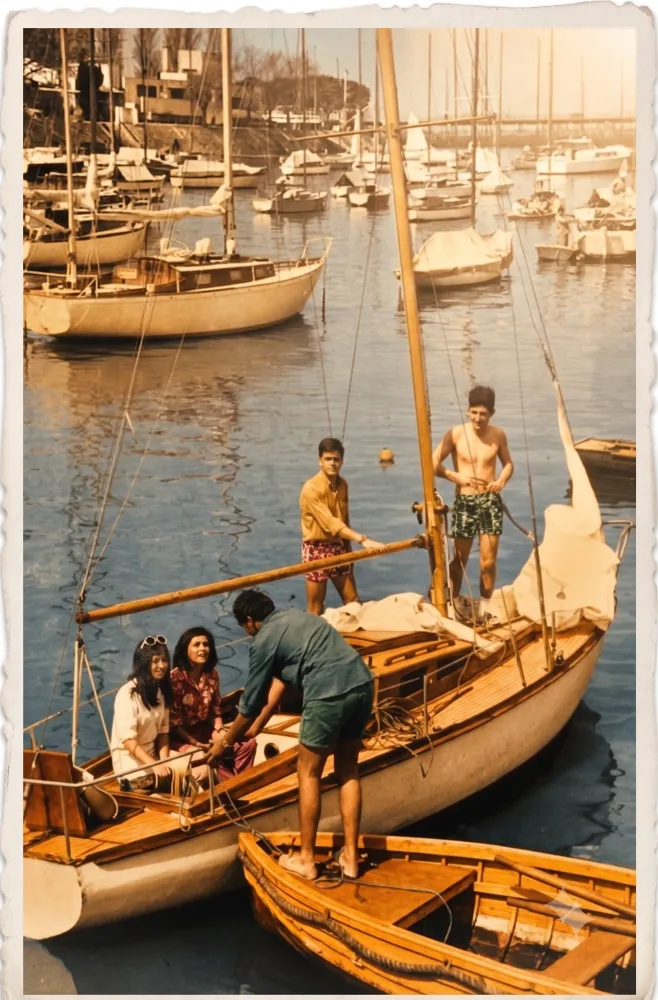
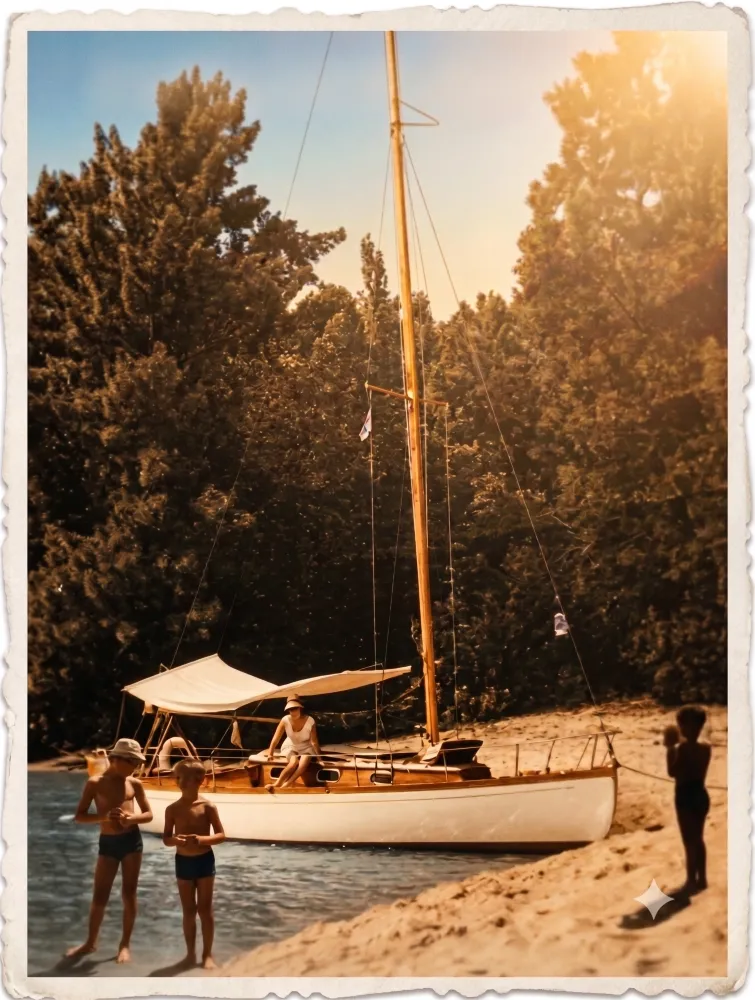
He simply said, “Come here, kiddo; I’m going to show you something.” One day, I went to the Buchardo Yacht Club, and a 72-year-old man appeared; he was limping and looked as though he might fall. We boarded his boat, and from the depths of the stern locker, he pulled out a bag and handed it to me. When I opened it, I found a stack of small, old black-and-white photos: they showed him and his siblings spending their childhood summers aboard the *Ñahatí*. Nothing more needed to be said. In that instant, I understood everything: at some point in history—between the 1950s and the 1970s—this sailboat had belonged to Luis Cueto’s family, and those had been the happiest moments of his life. “We can fix it up together, kid; we’ll take it one step at a time…” was his reply. And so, in 2023—three years ago—we began the restoration of the *Ñahatí*.
What were the main challenges?
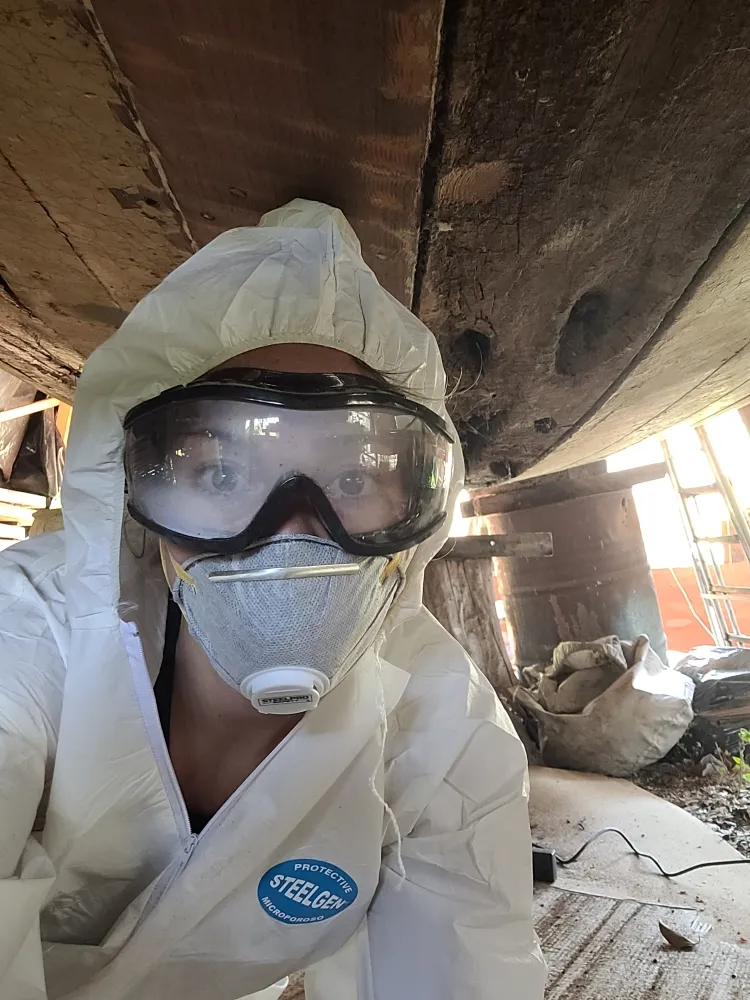
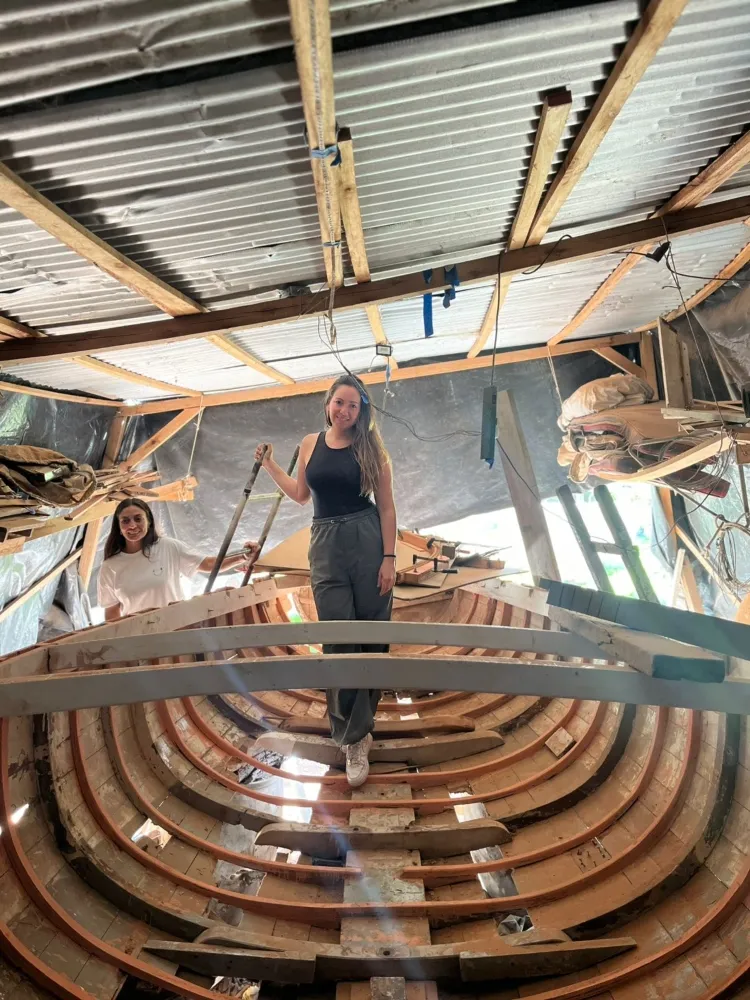
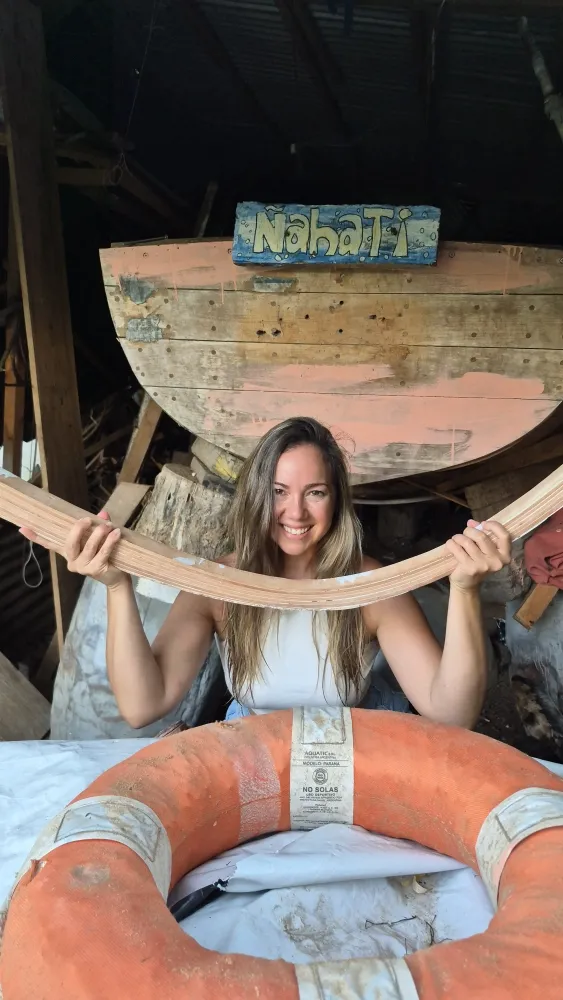
The first major challenge was building a workshop shed, since the club lacked covered spaces, and the project was a massive undertaking that required protection from moisture. We also handled the transfer paperwork—since my father was in poor health, the boat was put in my name. With the logistics sorted out, we had a truckload of select cedar timber shipped in from Misiones. At the same time, we began dismantling the sailboat, which was in an advanced state of decay. It was a highly complex task. We completely removed the deck, the frames, the ribs, the keel shoe, and the ballast keel.
One of the main obstacles was the stream of “nos” I encountered along the way; yet, I knew—somehow—that I would manage to get it all done. At a certain point, the whole process costs more than buying a fiberglass boat, and it certainly involves a lot of hard work, but I’m taking it one step at a time. Whenever I hit a “brick wall” and don’t know how to proceed—and I’ve hit several that made me doubt how to go on—I look for those “little windows” of opportunity to come up with a solution. Today, the main structure is being reborn with entirely new components: sleepers, deck beams, frames, ribs, and the keel shoe.
The next step will be tackling the construction of the deck, closing the hull, and then the lamination process. People in the various trades were always telling me: “Watch out with the angle grinder,” “Don’t touch that,” or “Be careful with this.” Luis was the only person who always told me: “You can do it.” After all, the two of us were restoring the boat from our childhoods; two years went by, and we worked on it during the week, on weekends, and in every spare moment—always just the two of us.
What were some of those very difficult tests?
I think the most significant hurdle was that Luis—the person with whom I started this project, who was the driving force behind the initiative and brought all his knowledge and expertise as a boatbuilder—died following an accident. I was left on my own. On top of that, we were friends, so I had to grieve his loss. The second major obstacle I faced was the Argentine economy; the situation is so volatile and unpredictable that it complicates the work. For instance, without Luis, I had to pay wages to someone skilled in boatbuilding to continue the restoration—we have to rebuild 70 percent of the boat from scratch because we dismantled the entire thing, right down to the keel. Nevertheless, I am constantly looking for possible solutions.
Why is its name in Guaraní?
Series were produced—some featuring native trees, others local birds—as the aim was likely to give it a distinctive local character, given that the design and model originated in Europe.
This year, you also applied to the Women and the Wind project fund; what was that experience like? And when will the results of the competition be announced?
Yes, a friend told me one day that I had to see that movie. I watched it and loved it. The first part really resonated with me because it’s the story of my life: they fixed up a boat, thinking it would take a certain amount of time, but it ended up taking twice as long… plus, it was women carrying out the task, with environmental concerns as the backdrop. I had always thought of the *Ñatahí* as being more than just a boat. That’s why, when they launched this contest, I submitted a project to complete the restoration of that wooden sailboat.
Seven hundred women entered; I think there are only two of us from Argentina, but we’ve formed a really important community, and there’s a huge variety of backgrounds: one of the women chases tornadoes, another follows the migration paths of manta rays, and one swims with sharks. The organizers set up a Facebook group, and we’re all in touch, creating other projects together as well—it’s fantastic. Even if we don’t win the contest, other initiatives linking sailing and the environment have already sprung up around the world. I felt so proud to be one of the few South Americans to submit a project and to help gain recognition for the Río de la Plata’s importance, since it sustains a massive ecosystem. Also, because of the way Buenos Aires “turns its back” on the river, we miss out on enjoying it and forget to take care of it.
What is the project you presented about?
It was work done exclusively by women—though men certainly participate, such as the boatbuilders who truly know the craft and pass that knowledge on to me so I can learn. Furthermore, the initiative has an environmental focus: raising awareness about the plastic-laden currents reaching our shores. What happens in Buenos Aires is that all the river currents end up on this side, causing sediment and pollution to accumulate here. This differs from the situation in Montevideo, where other factors are at play; in Buenos Aires, every *Sudestada* (southeasterly gale) brings in tons of trash. You don’t see people constantly dumping waste into the river; rather, it is the currents themselves that sweep the debris in.
Ultimately, the project aims to launch an expedition up the Río de la Plata and the Paraná River to identify pollution hotspots and track how currents transport this waste. We also want to explore the communities living along the riverbanks and understand how they interact with the plastic and the water. That is why I loved how the project took shape: I never envisioned it as something just for me and my boat—it was always meant to be an environmental and community-oriented endeavor. That’s the essence of it: a boat can set so much energy in motion and make magical things happen.

Is it true that you asked the shipyards in Scotland for a guarantee to undertake this project?
And what does the volunteering for your project involve?
Among my recent initiatives was the launch of a volunteer program for people who wanted to help build the boat. I was truly surprised by the response the initiative received on social media; suddenly, a lot of people who were eager to help started following me. It was a wonderful surprise to see so many people wanting to do their part in restoring the boat—I even received messages from other countries! (laughs)
That gives me the confidence to keep going with the project, despite all the challenges. It is more than just a sailboat; that is why I believe that, much like life itself, this boat has gone through different stages. The first was with Luis—and I will always be grateful for that—and the second was with Walter, another shipwright who was Luis’s apprentice and learned the craft from him. Now, it is time to bring more women on board for this community-led reconstruction.
To wrap things up, Ayelén—what does your father say about the restoration of his old wooden sailboat?
He is a bit eager because he wants to sail it. This is a boat that might well outlive me by another hundred years; that is why I want it to be my—humble—legacy.
Links:
Instagram : https://www.instagram.com/unveleroclasico?stkn=MTg1MWppNmxhM24xYg==
Myline / Nahatí: https://www.mylne.com/yacht-register/yachts/nahati-2272/
El Pampero, sobre la clase Río de la Plata: https://elpampero.com.ar/notas/clase-rio-de-la-plata/
We at “Navegantes Oceánicos” thank Ayelén for her contribution to this interesting interview and wish her the best of luck with the restoration project of the classic sailboat “Ñahatí”—which we hope to see sailing on the Río de la Plata soon.
We’ll be following your progress!