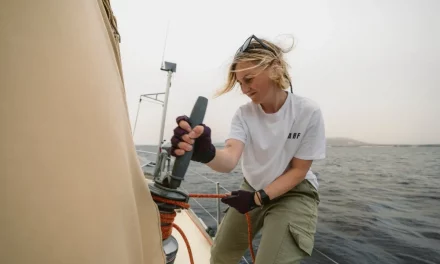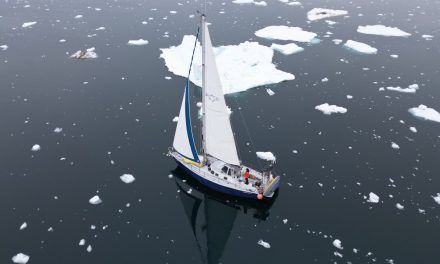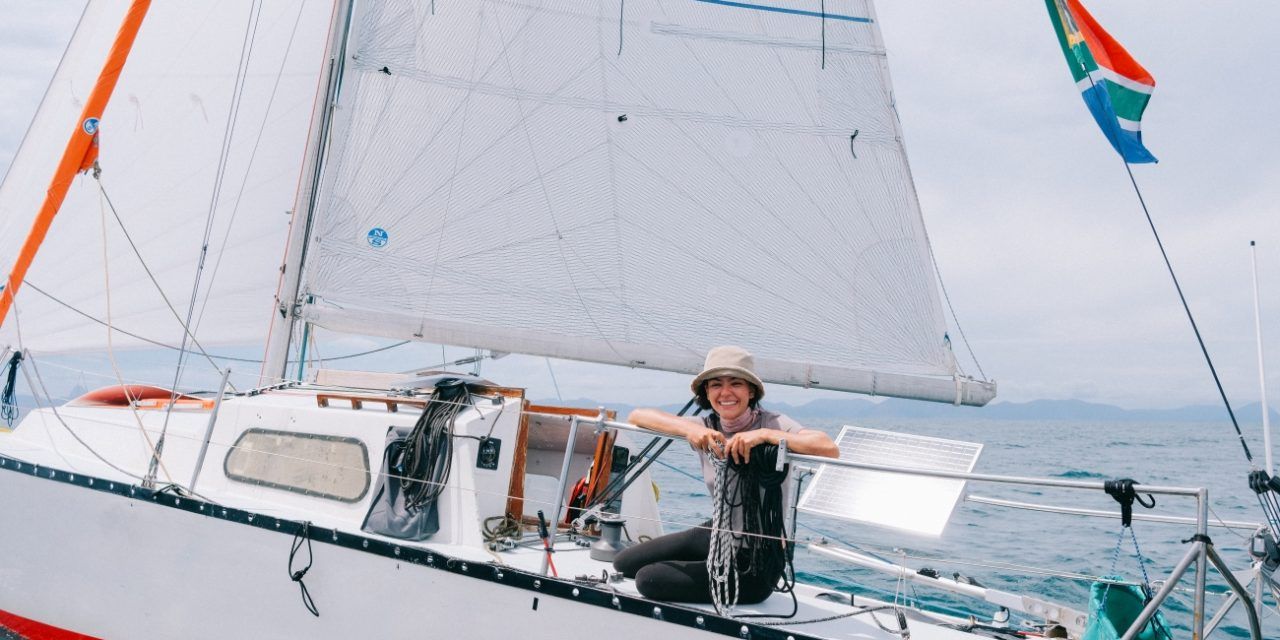
Theodora Prado was the first woman to complete this traditional race solo, starting in Cape Town, Africa, and finishing in Rio de Janeiro, Brazil. The iconic Cape to Rio Yacht Race—also known as the South Atlantic Yacht Race—covers between 3,400 and 4,500 nautical miles and began almost fifty years ago to encourage South African sailors to attempt ocean crossings.
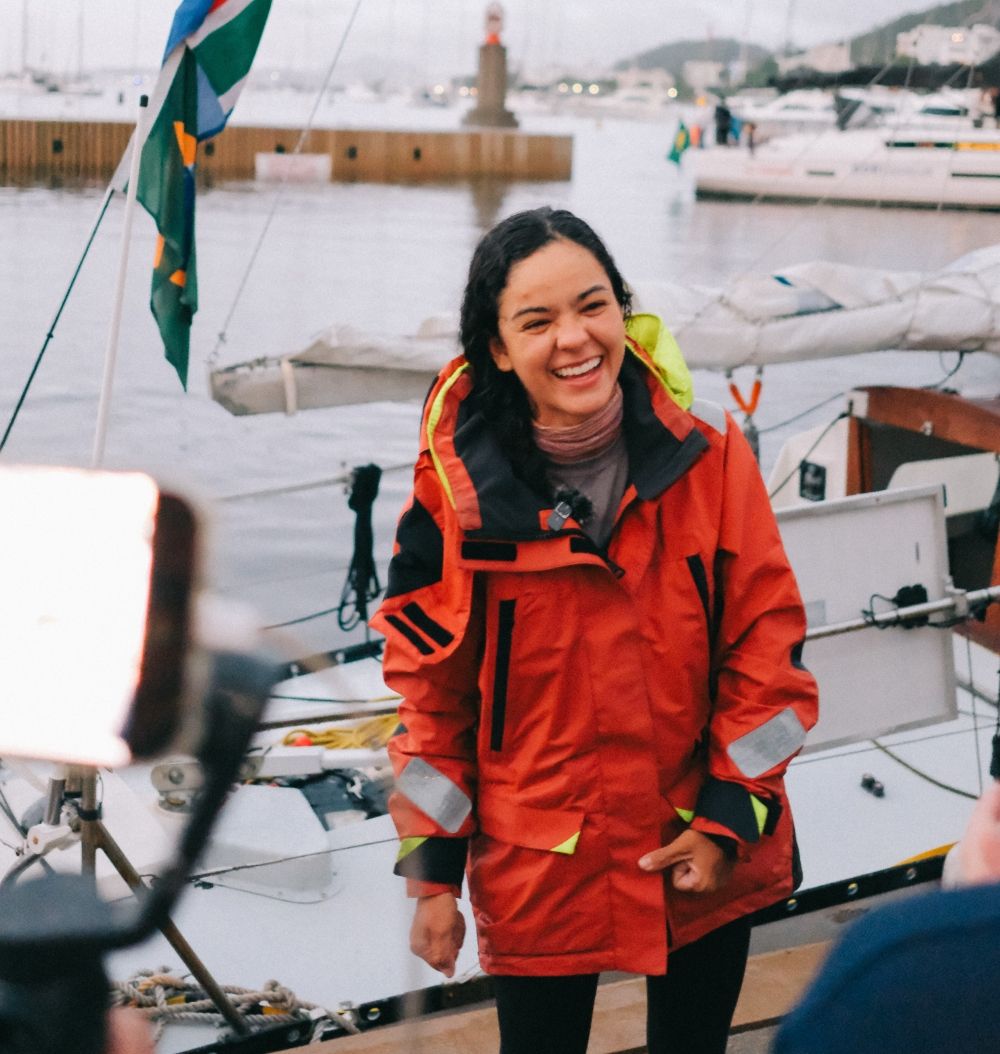
Theodora Prado began taking surf lessons after the COVID-19 pandemic, riding the waves of Ubatuba, on those paradisiacal beaches nestled between the hills and the warm, turquoise-green sea of central Brazil. Sailboats passed close by, and she dreamed of boarding one of them. However, she never imagined that, at 28, she would become the first woman to complete—solo—one of her country’s most demanding and traditional races, the Cape2RioRace, which covers the route from Cape Town, South Africa, to Rio de Janeiro, Brazil, a journey of between 3,400 and 4,500 nautical miles.
The young woman, who had originally studied Finance and worked for a company in São Paulo, achieved this feat with only a few years of experience in ocean sailing. The entire voyage took her just a month aboard her 31-foot sailboat, the Suidoos 2 (which means Southeast in African languages, referring to a type of wind in this region of Cape Town that can reach up to fifty knots for a week). During this crossing, she had to navigate everything from the approach of a fishing boat (on a very uncommon route) to the eye of a cyclone shortly after arriving near Cabo Frio, very close to Rio de Janeiro. “Now you’re in the lion’s den, you’re going to have to hold on a little longer, it’s the worst place you could ever be,” a very frank friend told her after witnessing the region’s weather firsthand.
The Cape2RioRace has been running for over fifty years, having begun in 1971. From the outset, it attracted significant international interest, as it is a fascinating and tactical race that demands both seamanship and knowledge of weather conditions, and is the longest race in the Southern Hemisphere. After departing from Cape Town, participants head northwest towards Ilha Trindade, and from there southwest towards South America. As they approach the coast, skippers must decide whether to take the longer route—with strong winds—or a more direct route—with light winds.
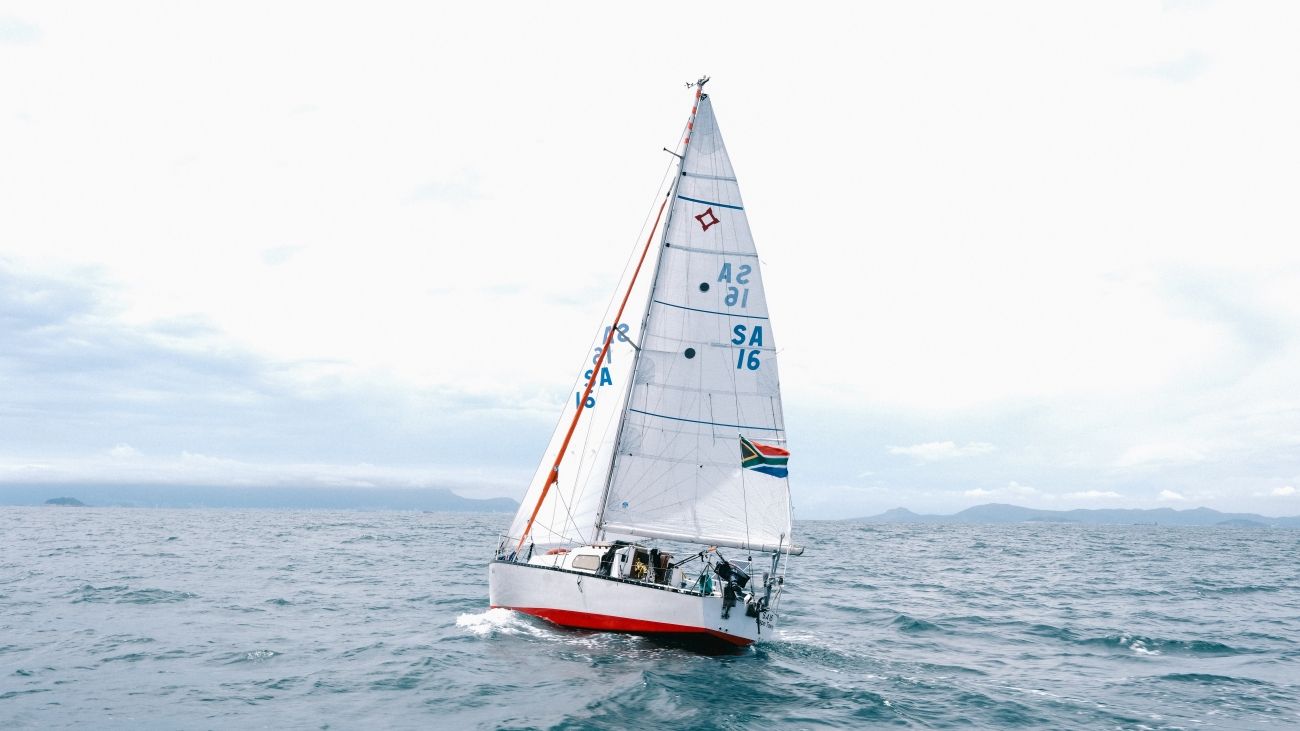
Theodora, How did you get started in sailing?
I started sailing in Ubatuba, in the state of São Paulo, Brazil, which is the city where I currently live. That was about six years ago. Until then, I worked in finance in São Paulo, and after my first ocean voyage, I decided I couldn’t go back to living in a city like that: it was impossible in that chaos.
After that, I started researching and working in nautical-related fields to gain more experience as a sailor. I met with more experienced sailors to learn from their knowledge. That’s how this dream of a solo voyage also came about.
But did your family come from the nautical world or did you have prior knowledge?
No, not at all. My family lives in the interior of São Paulo state. I worked on a farm, lived a very simple life, rode horses and raced them. They had no connection to sailing. I used to surf on the beach, watch the little boats, and think I wanted to be there too. I didn’t know anyone. I also thought sailing was only for people with a lot of money, rich people, with fortunes, but then I discovered that it’s an expensive sport, but it’s also possible for people like us if you focus on achieving it.
The way I found to get into this sport was by working: it was the only option I found to be able to live and sail at the same time, perhaps also because I started late in the sport, at 23. I wasn’t going to become an athlete at that age, so I started working as a sailor, as a captain in Europe, or with a contract I got with a ship in the United States. But my focus today is on long voyages.
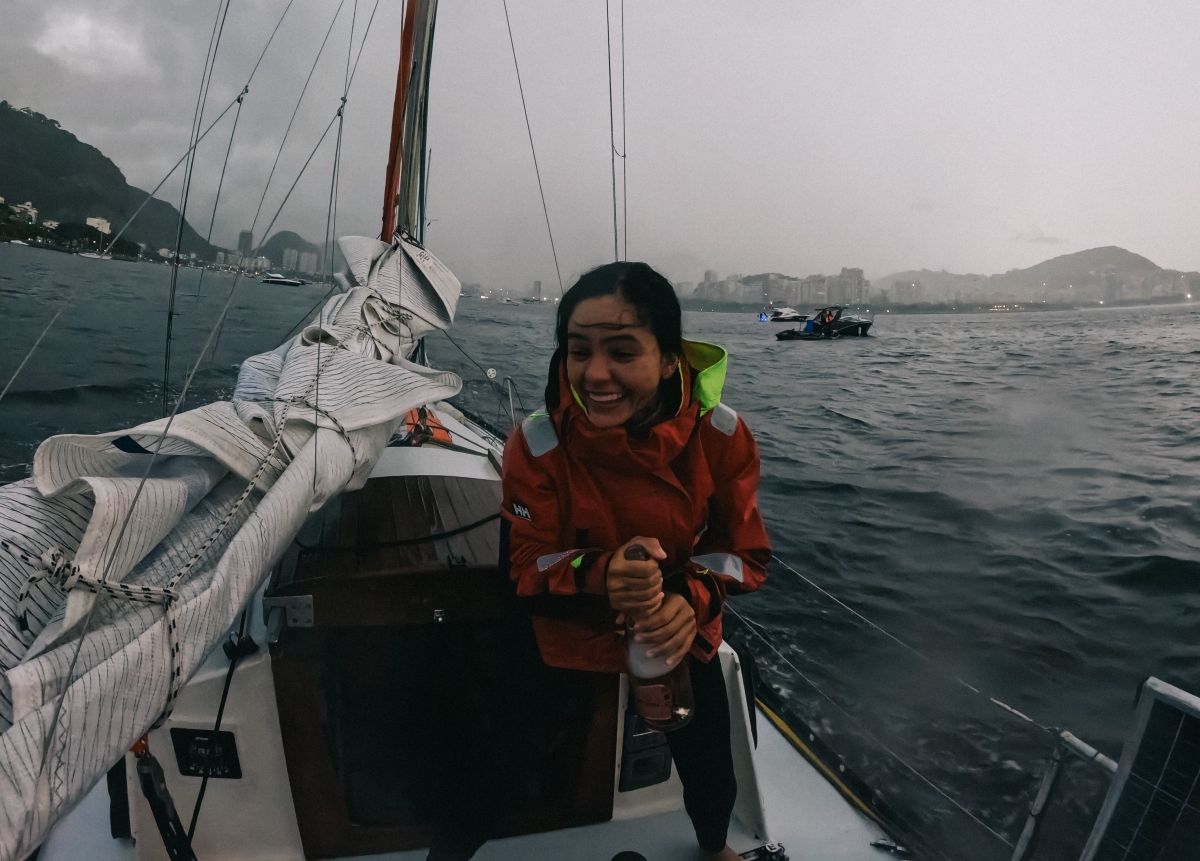
A real career change
Yes, I believe that if you focus and work at it, you can achieve it. I have a background in administration, economics, and finance; I worked with companies. In fact, all this background I have in the corporate world helped me a lot in developing a business perspective, because I mentally prepared myself for what I wanted to do in the coming years, what the path would be, and how to achieve it. For example, the sailing scene in Europe is completely different from that in Latin America. The boats are newer, there’s a nautical culture, and you don’t need to be rich to own a boat.
On the other hand, here in Brazil, it’s very different, and that’s why I saw all of this as an opportunity to start working in that area. I began doing full seasons, some voyages, chartering boats, and I managed to cross the Atlantic several times, and the entire Indian Ocean once, always working in this capacity.
How would you define what this regatta consists of and why it is so important for sailors?
It’s a very traditional race, over fifty years old, and has had many renowned sailors in its time. It even has a very rich and beautiful history. I think it’s been somewhat lost, but one of the things I love most about sailing is precisely its traditions, which is why I think it’s so important to know what this race is all about and why it’s so wonderful to sail. My first crossing was from Cape Town in 2022, and I was captivated by the city, the people, their customs, their vibe, but from the other side of the Atlantic. The only problem was that it’s a bit cold for us (Brazilians).
I really wanted to do a solo sailing from Cape Town because it’s a route with very strong winds (more than forty knots constant) all year round, so I wanted to learn to sail in these seas and at these latitudes. I really enjoy competitions (I’ve always raced horses), and this also makes things much easier because you’re being monitored from land. I knew that if I had an emergency, they would come to help me. It wasn’t the same doing it on my own.
How did you prepare the ship for this voyage?
The idea of sailing solo was always a dream; perhaps unlike my other jobs, this was a personal project. People looked at me like, “What a crazy idea! You haven’t been sailing for very long, and you already want to do a crossing completely alone!” (laughs). However, I gathered all the necessary safety equipment to make the crossing safely and with peace of mind, even though it wasn’t easy: I prepared for almost a year. It also took me that long to get the boat ready the way I wanted. So, I chose to do this regatta at a time when I already had confidence in myself and knew what the main problems were that I might encounter.
What features does this sailboat have for solo sailing?
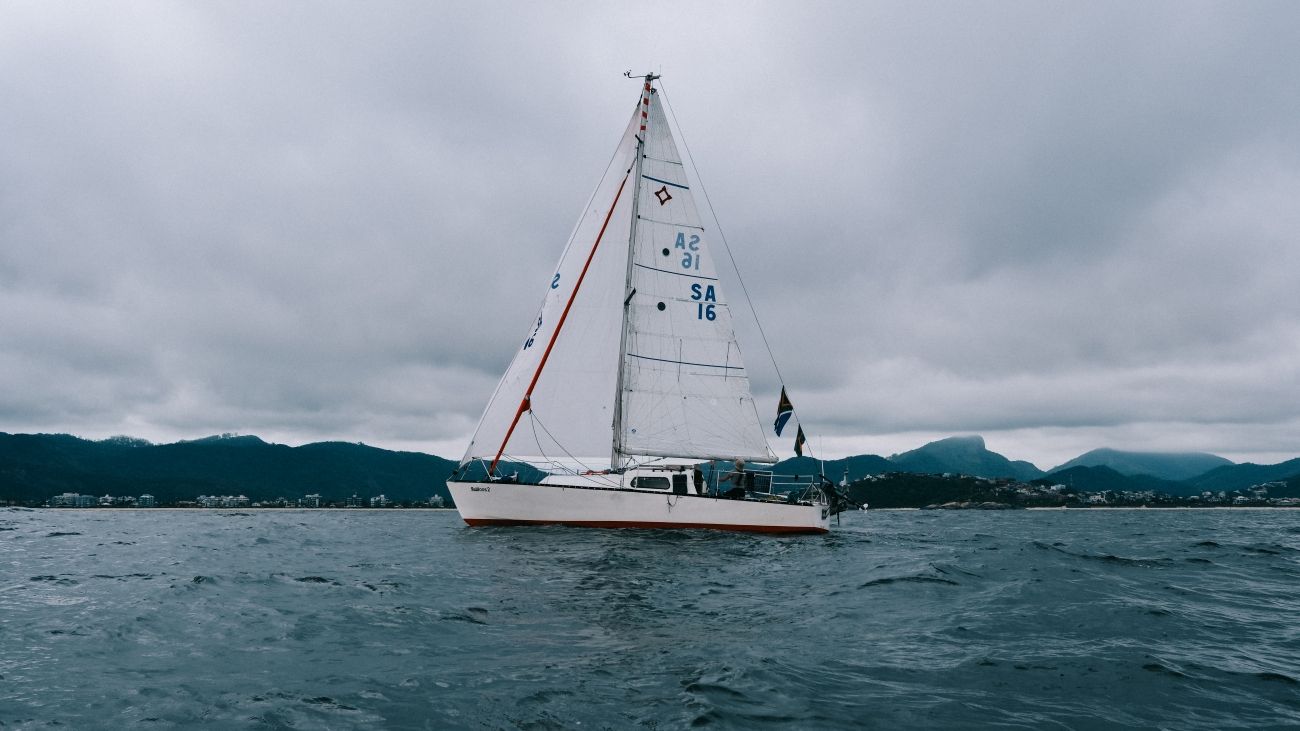
One of the things that gave me confidence is that my boat is very simple; it doesn’t need many things, and there wasn’t much that could break. It’s a sailboat, it doesn’t have an engine, so I don’t have to do much maintenance. I don’t have electrical equipment, or what I do have is very basic (just an autopilot and AIS). It’s perhaps less troublesome than other boats. It’s a sailboat that was designed in Cape Town; it’s 44 years old, a classic boat that has already raced twice and won both times in its class.
It’s a small sailboat with a very long keel (1.80 meters). I have Genoa sails, a headsail, and a classic mast. The system is very simple and easy to handle because it’s an old boat, so it doesn’t have the technology that exists today. It’s not very comfortable, even though I’m small; it only has a seven-meter beam, so it’s quite narrow. I think it helped that it’s a very sturdy boat, really made for long voyages.
What were your routines like during this month of the regatta?
One of the main issues was that few people knew about my idea to do this crossing. Until three months before, I hadn’t said much about it; I didn’t want to make a big fuss if I was going to change my mind and not go. I thought I’d be sad because I’m a very sociable person. However, I loved being alone, and it was magical. In fact, on most of my sailing trips, I’m always with men, so I could relax in my swimsuit (laughs). When sailing solo, if you don’t do things yourself, no one else will: so you have to be connected all the time. I felt like the boat was an extension of my body.
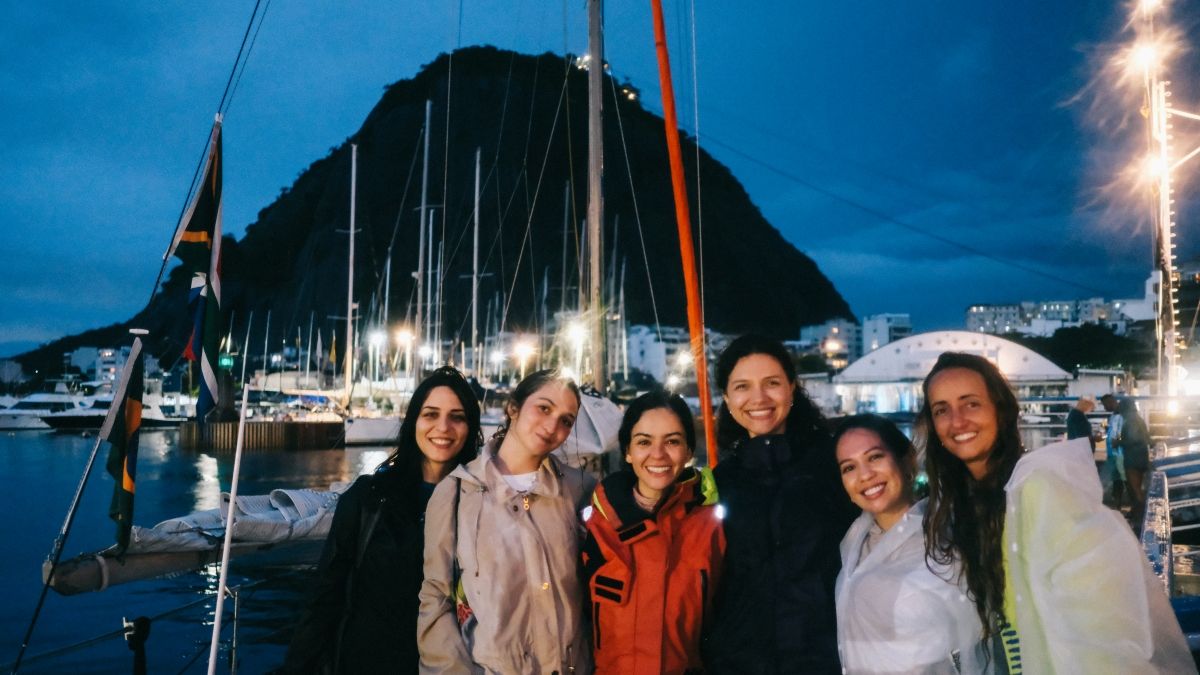
Every day I slept in the morning (to have more energy at night) and broke up my sleep into twenty-minute intervals, woke up, and continued like that for an hour to make sure everything was okay. I also ate a lot of dehydrated or canned food (which isn’t so good for your health) and had some really wonderful moments. There were even times when I doubted my abilities. Until shortly before leaving, I was still wondering if I should go, if I would be able to do it, after a year working on the ship and… What I learned from all of this is that you have to free your own mind, surround yourself with people who believe in you, who care about you. So, while I was wondering if I would go, I was also remembering all the people who helped me in this process. It wasn’t just my dream anymore; I also had to honor those who collaborated to make it possible. One of the most beautiful feelings was arriving in Rio de Janeiro; it was truly a very special moment.
What were the main difficulties you faced? Is it true that your pilot’s suit broke once the race started?
Yes, it was shortly after leaving port. We left Cape Town with 40 knots of wind, which was a lot for my boat because it’s a very light sailboat. It was bouncing around. However, since it was a tailwind, it handled very well. I had to stop nearby and then continue sailing. I made some tactical decisions that I don’t know if they were very good, but I gained experience from it.
The most dramatic thing was that a week before arriving, near Cabo Frio, a north wind came up, which pushed me away from Rio. The wind was completely against me and wouldn’t let me reach the city. The waves were three or four meters high. It lasted four days in total. Later, when I could check the weather forecast, I was in the middle of a cyclone. The problem was that if I headed for Rio, the mast or something else would probably break. So, I reduced the sails, tried to sail downwind, and thought I was going to end up in Uruguay or Rio Grande do Sul (in southern Brazil) (laughs). Those were the four hardest days. I had no way to charge my batteries because of the lack of sun, and it rained a lot: my hair, my clothes, the mattresses, everything was wet. The sun is truly essential!
And what happened?
The first day I was scared, the second I tried to relax a bit, and by the fourth I was already filming: I had done everything I could in that situation. I lowered the sails, changed course, checked everything. After that, all I could do was wait; there was nothing more I could do until it was all over. It’s a very tough part, but it also has its beautiful side: hearing the strong wind, seeing the huge waves, the power of nature—few people experience this. You have to accept your limits. The birds are wonderful: I watched them fly by as if everything were normal.
After that very strong storm, the sea looked like a lagoon, and I started drifting toward the offshore oil platforms. I spoke with a guy on one of them to see what the weather forecast was (you couldn’t check the weather outside unless authorized by the race committee), and on one of the platforms, they told me it was going to pick up to about 15 knots. It was six in the morning and I couldn’t find the wind and couldn’t head towards Rio, even though I was very close, until finally the wind arrived at 11 a.m.: that was the best sail of my life. But with only 300 meters to go from the finish line, the wind died and I was left adrift. I thought I was going to give up, I couldn’t go on, and then a very strong wind came from the mountains, from Petrópolis (on the mountain range, on the outskirts of Rio de Janeiro) and formed some very strong clouds – with lightning and thunder – I changed the sails and they pushed me into Guanabara Bay as if saying, ‘come in, girl, we don’t want you here anymore’ (laughs).
In your opinion, what experience should a sailor have for a voyage of this nature? Or what surprised you most about the whole experience?
There are things, for example, that I hadn’t thought about or wondered about, because it’s not a commercial route. At one point during the crossing, a ship made contact with me. They wanted to give me some fish, and they were talking to me on the radio. I was very scared because I was a woman alone in the middle of the ocean, and then it dawned on me that they were men and had been at sea for many weeks.
On the other hand, the boat itself was the best choice. It was perfect, it didn’t suffer any damage. I bought it for the price of a bicycle, and it was easier than renting another one. I believe that every boat has its own personality, its own purpose. From the first time I stepped aboard, this one took root in my mind and heart. It’s a very simple boat, very easy to sail; everything is very rustic, but at the same time, it’s equipped for regattas because that’s something its previous owners loved, and that’s why safety was so important. Those are probably the most expensive things to acquire, and this one already had them on board: the life raft, the radar, the sails, everything.
What are your plans for this new year, after such an important experience as this regatta?
This year I have to work; I’m going back to Cape Town to bring a boat to Brazil. Then, in the Northern Hemisphere summer, I’ll return to Mallorca, where there are good job opportunities in Spain. On the other hand, the idea is to leave the boat here in Ubatuba so it can become part of a community sailing school, promoting the sport among children and young people in this region. That’s what I’d like to do now. I’d also really like to spread the word about the importance of this regatta and hope that in 2028 there will be many more sailors participating in the crossing.
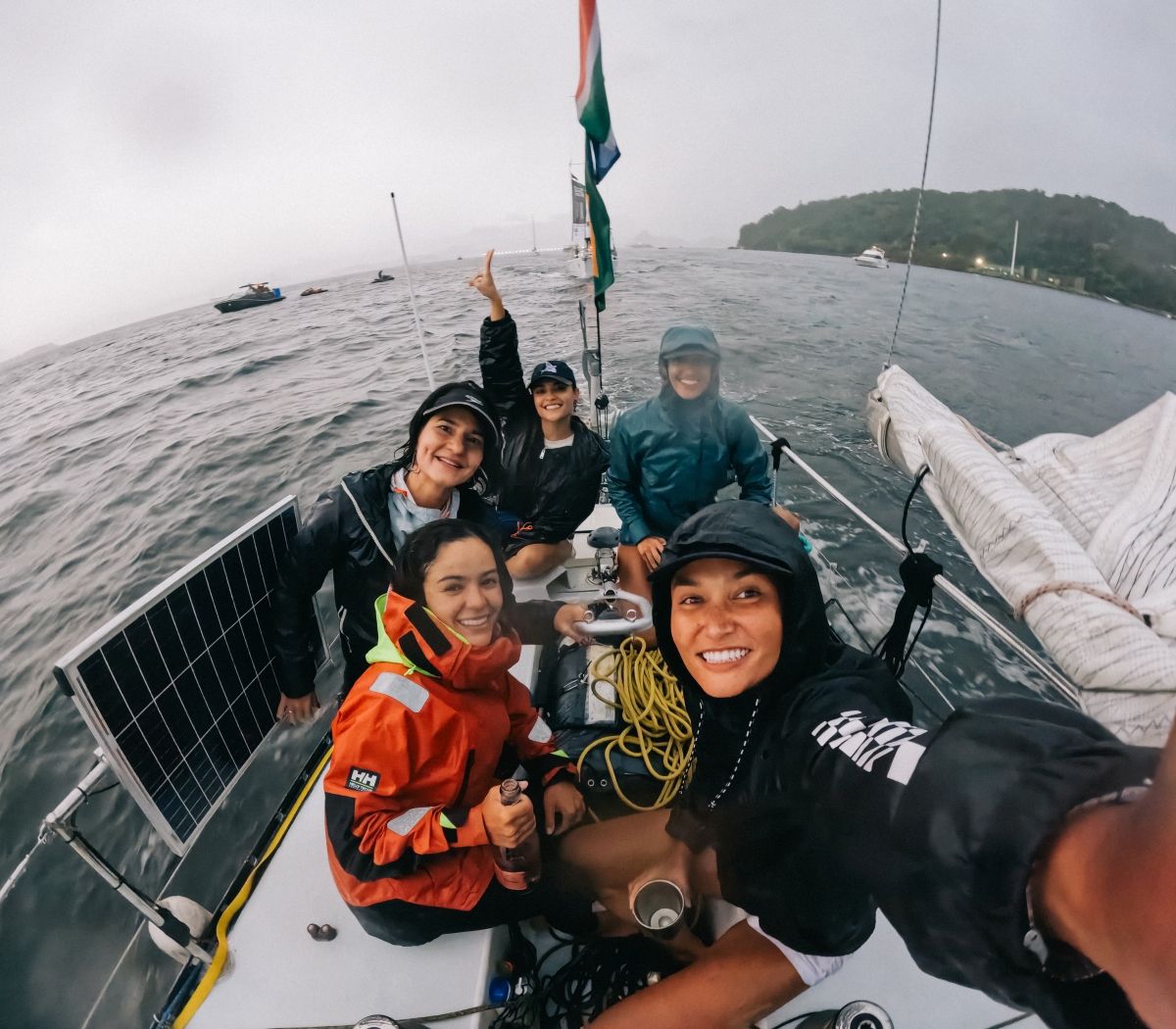
Images and videos:
Cape2Rio 2025 – Theodora (vídeos) @kondo.photos
From “Navegantes Oceánicos (Bluewater Sailors)” our congratulations to Theodora Prazo on her feat in the Cape2RioRace and our thanks for her participation in this exciting interview.
We wish her the best of luck in the future, and fair winds and following seas.