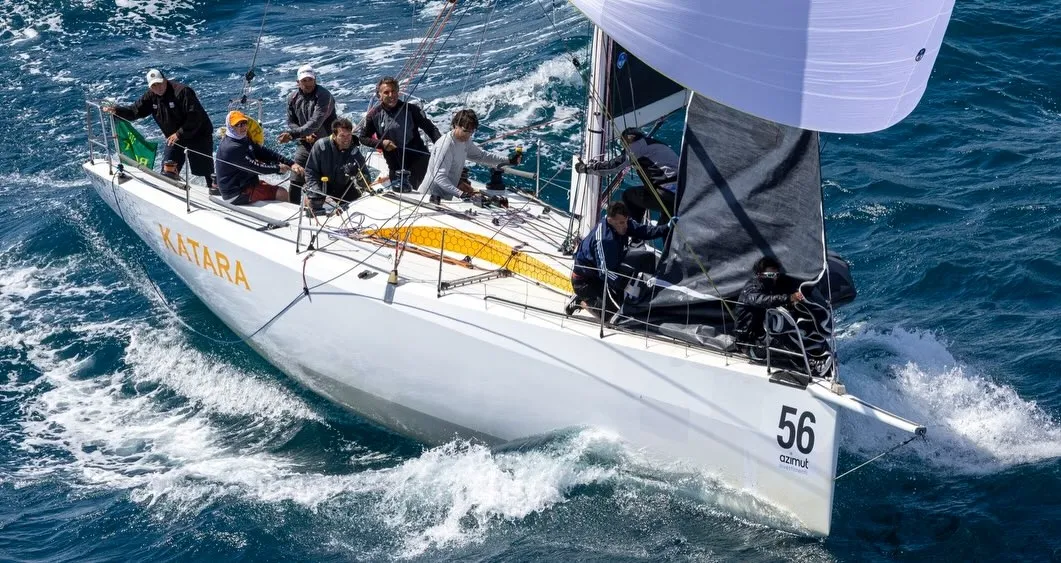
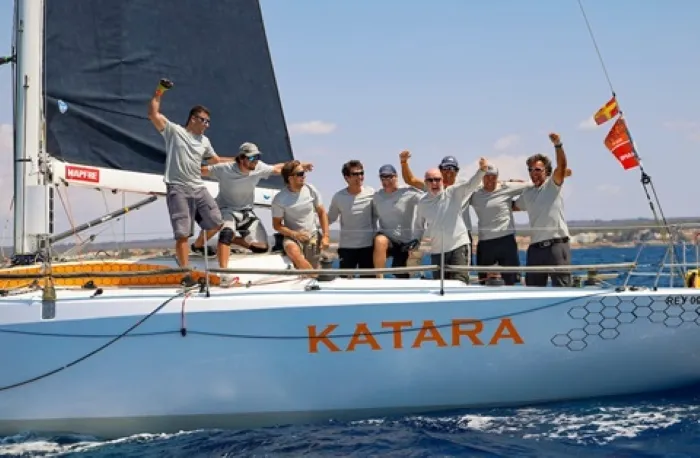
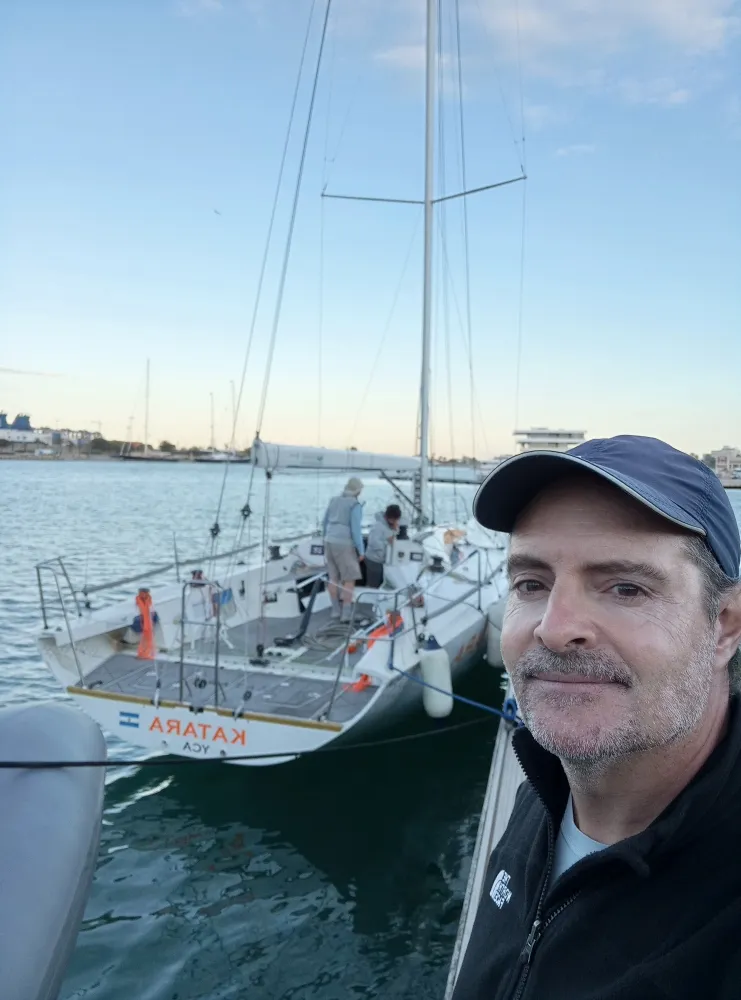
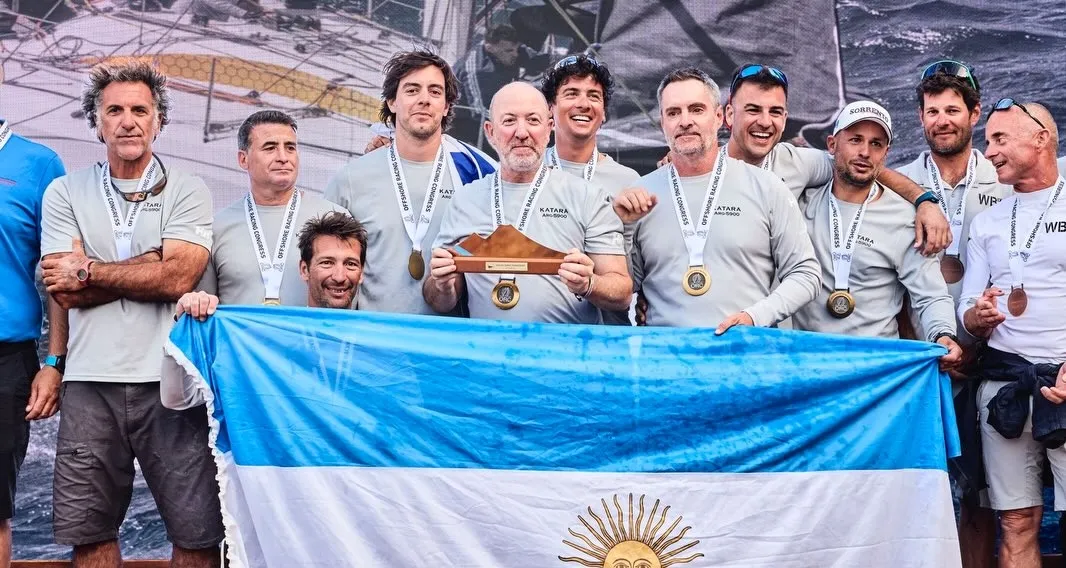
The boat designer, a graduate in Naval Architecture from the public university, was crowned World Champion in the ORC 2 Class at the championship held between May 5th and 14th in the Bay of Naples, in Sorrento, Italy. He was aboard the Katara, a PG390 One Design, owned by Julián Somodi and designed by Gutiérrez himself, in one of the most prestigious regattas in international sailing.
Initially, it was the Optimist. This was followed by the Snipe, the 470, the Soling class, the Laser, the J70, and even the Pampero. He was champion – and also placed among the top finishers – in the Argentine PHRF Championship, organized by the San Isidro Yacht Club, in the South Atlantic Circuit Championship, and in the Argentine IMS Championship. However, Patricio Gutiérrez never imagined that a sailboat he designed with his own ingenuity, the Katara, a PG 390 One Design, would win the Copa del Rey or the ORC 2 World Championship.
Gutiérrez is a boat designer and a graduate in Naval Architecture from the National University of Quilmes (UNQ). Aboard the Katara, owned by Julián Somodi (who was also the boat’s captain and helmsman), he became world champion in the ORC 2 Class at the World Championship held between May 5 and 14 in the Bay of Naples, in Sorrento, Italy, one of the most prestigious international sailing competitions in the world.
The event, organized by the Circolo del Remo e della Vela (Rowing and Sailing Circle), was part of Tre Golfi Sailing Week and featured more than 118 boats from around the globe. The competition began with the demanding 71st Regata dei Tre Golfi, a 130-mile long-distance race where the Argentine team demonstrated its potential by securing second place. Over the following days, the fleet faced a combination of medium-distance coastal races and windward-leeward courses in the heart of the Mediterranean, with wind conditions ranging from complete calm to the intense 20 knots of the final day.
“I always loved trying out different boats, understanding how each one worked. I sailed Optimists, Lasers, 470s, Snipes, and we even competed in a World Championship in a Soling. I wondered why a particular design sailed so well. So I’d get in and maybe spend a year playing with that boat, and when I understood it, I’d switch to another. Without meaning to, I realized I really enjoyed understanding why a Laser sailed fast, or why a 470 did, the variations in the setup for each boat. That way you absorb everything you do,” he says, now, just hours before another World Championship where Argentina is competing, but this time far from the water.
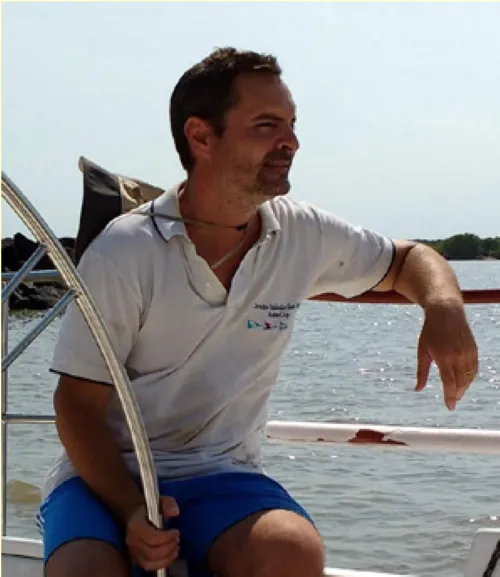
Interview with Patricio Gutierrez
Patricio, how did you get started in sailing?
My parents had always sailed, so from the time I was a baby they took me everywhere on their boat. They had a small boat in Olivos and they’d load up my bassinet (a wicker crib). When I was seven, I started sailing Optimists and worked my way up through the ranks of sailing. I don’t know why, but when I was 10 or 11, even though I was sailing really well and they raced every Saturday and Sunday, I just didn’t want to go anymore. I think I moved up a class, I was racing alone, without my friends, and I got bored.
Besides, my school and social life were very separate from my sporting life, so I went back to sailing with my parents. Around the age of twelve, I started racing in larger boats, all over the Río de la Plata circuit, from Buenos Aires to Colonia, and the Riachuelo. I really got hooked on the big boats.
What happened next?
When I was 16, I went back to racing Snipes for a couple of years, but I was still sailing the bigger boats. At 18, I started in the 470 class, and so on. Little by little, I got more involved: at 20, I raced my first Copa del Rey, and I started traveling to different European countries, as well as Brazil and Chile, to race. In 1996, 1999, and 2004, I raced with a Spanish team. I was doing very well on the water; it was a different era, too. Back then, there weren’t as many professionals; it was all more amateur, because you loved it and you were involved in it.
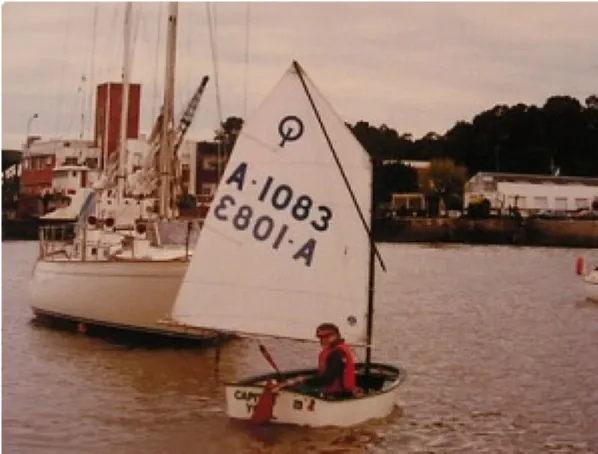
But how did you get into Naval Architecture and become directly involved in ship designs?
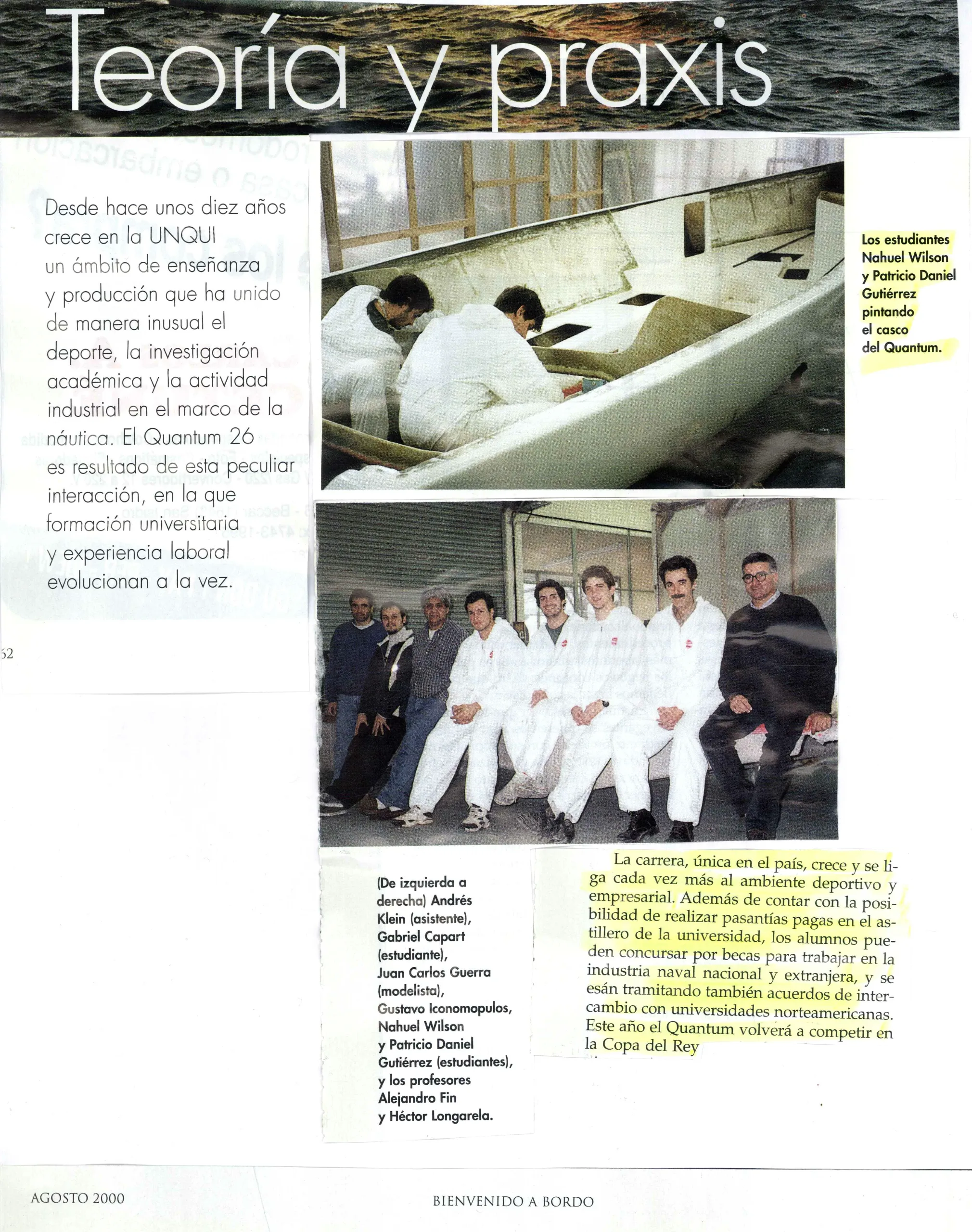
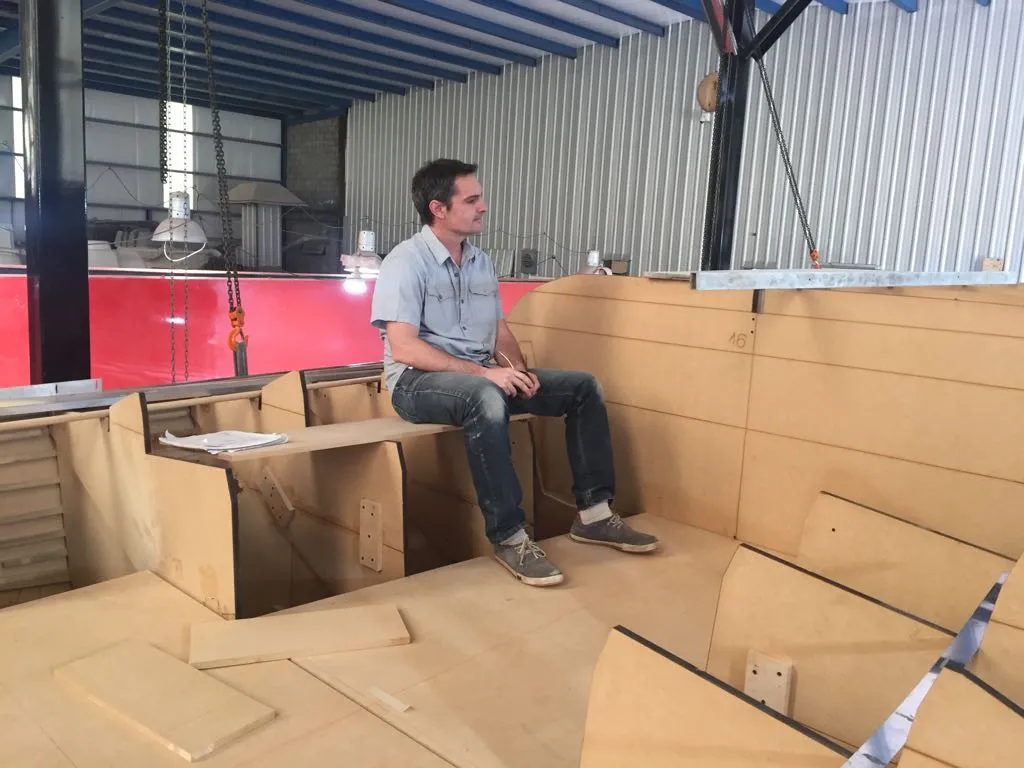
At that time, I started studying Industrial Engineering at the University of Buenos Aires, but it was too broad and didn’t quite suit me. Then I realized I really wanted to dedicate myself to boat design, so I went to the University of Quilmes (UNQ), where they offered a Naval Architecture program. In the introductory talks, I liked it because it combined the creative side with the technical foundation, although I had also considered continuing with Industrial Design or Civil Architecture.
In ’96, when we went to race the Copa del Rey, we had already trained a group from the university for that regatta with the first Quantum 26, which was also a project we had done at the university, very well built by an academic shipyard. That was a turning point for me. I came back and started taking things more seriously, racing on a different level. I saw another world I could go to if I sailed… I started approaching it differently, which is why I returned in 1999 and 2004, when I was more experienced, and we raced with a Spanish boat. In fact, many of my classmates from that time at university went to work in Europe, and I, I don’t really know why, even though there were offers, stayed here. I loved sailing, but I don’t know if I could live here…
How did your career continue in Argentina then?
Around that time, I started working at the Yacht Club Argentino (YCA), as a surveyor. I also worked in a design studio and joined the shipyard at the university. In 2001, I began working in the Sailing Office and organizing club events. By 2003, I had graduated, and as a naval architect, I started doing simple modifications—a keel, a rudder—mixing things together.
In 2010, the YCA offered me the position of chief surveyor, which made me a little uneasy because I also designed sailboats, and it might be seen as a conflict of interest. But they told me to relax, that they trusted my work, and that if anything, I shouldn’t be the one measuring their own boats. I stayed for twelve years and, in a way, I became an expert on the subject in South America. Over time, architecture took over.
What was it like working in the shipyards or with the shipowners at that time?
When I started working, the large shipyards that appeared later didn’t exist; everything was very artisanal and basic. Now they’ve developed and even export to other countries. In 2006, I started designing my own boats with Jorge Ferrero and his son from Velas Hood, a famous sailor and sailmaker, a legend in Argentina. We built the Jabeque to experiment with racing sails they had made, and we tested them on that 28-foot boat. We experimented with it, changing the designs, to race in the IMS. Separately, the Corum shipyard asked me to design the Corum 280.
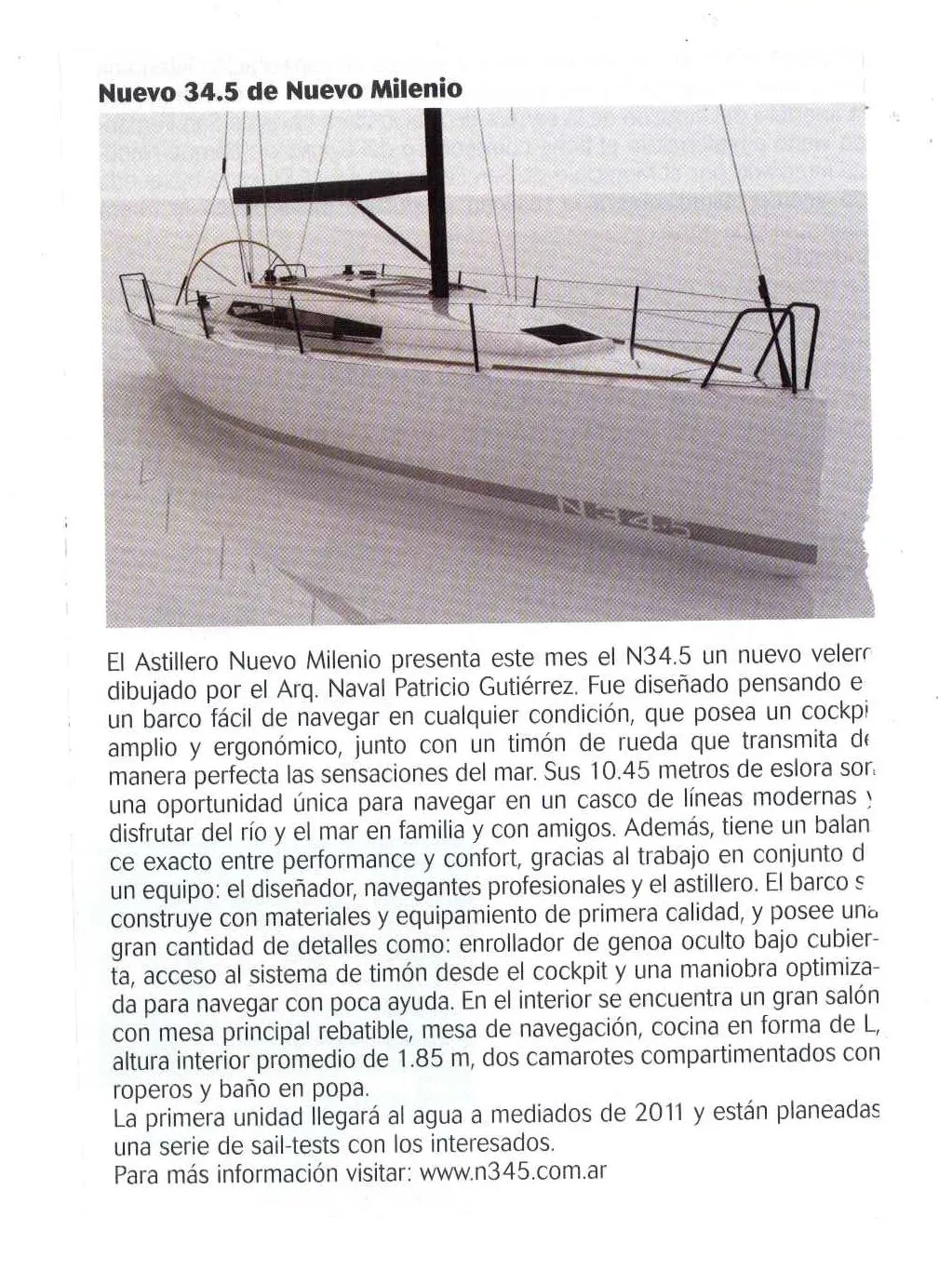
Then came the Corum 350, a larger boat. Also, a modification of the Quantum 26 (Corum 27 OD), which was a fairly competitive class. In any case, I continued making small modifications to the boats I raced to improve their performance—adjusting the sails, the keel, the rudder. But I’ve always worked with all kinds of boats: cruising boats, racing boats, boats that meet a multitude of requirements. One quality I was known for is that I listened to clients to understand exactly what they wanted. Now everything has evolved; most of the people who race on top boats are professionals, and everything has become specialized in each area, working to perfect the designs, the 3D models, everything has been moving in that direction.
How did you arrive at the design of the Katara, the sailboat that won the World Championship in 2026?
In 2019, Julián Somodi asked me to design the Katara, a 39-foot boat, for racing. He’s very detail-oriented, obsessive; he wanted something very specific: he was very clear about what he was looking for. But with the first design I presented to him, he said, “No, I’m not interested in the interiors.” I spent three months doing nothing. Then I drew a rudder and gave it to him. But I knew, when I started designing that sailboat, that it was going to be a turning point in many ways: all the knowledge I’d absorbed over the years, I think, came together in that boat, precisely because it was so specific, for racing, in that format, with certain characteristics.
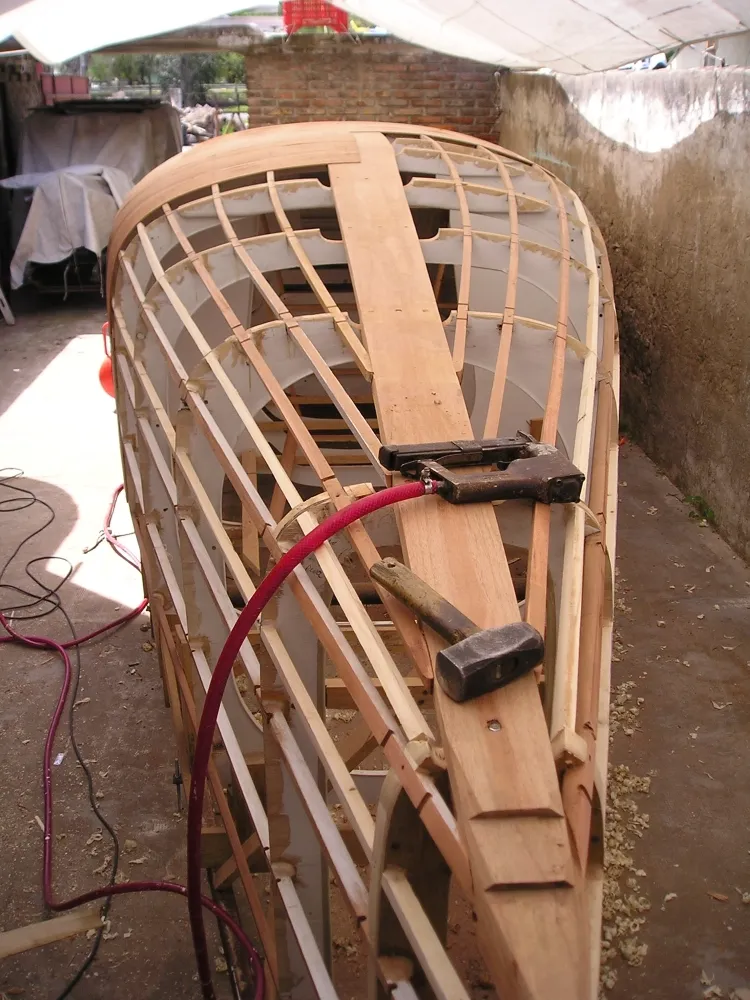
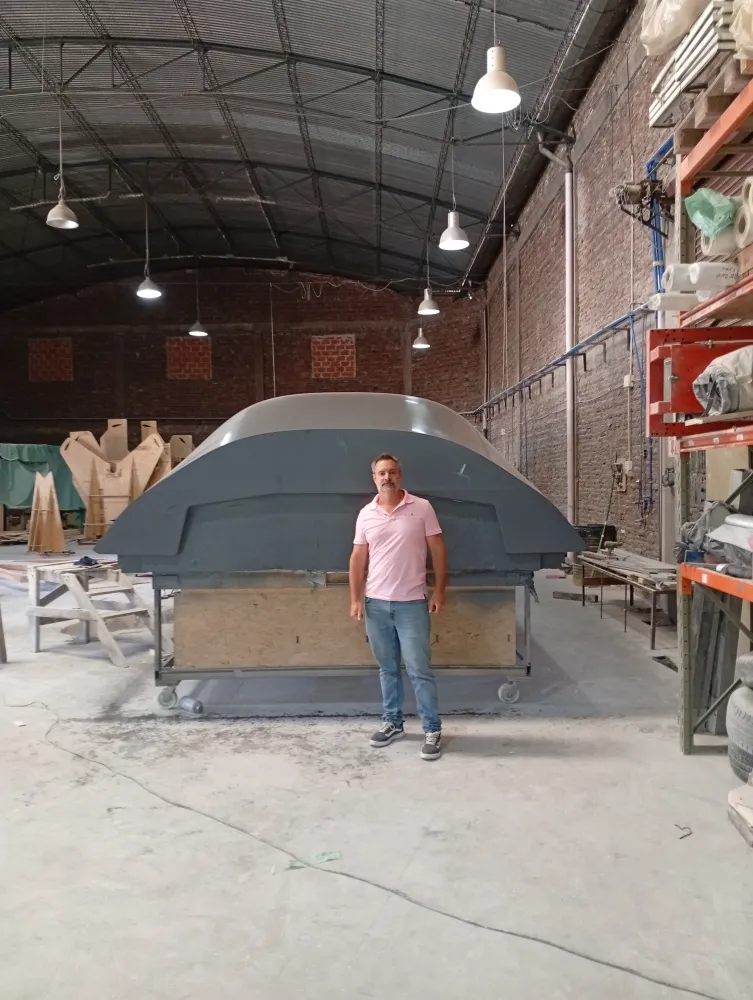
I imagine that a boat of this type, to be efficient, has to meet a lot of requirements…
Yes, to be truly efficient, it has to meet a lot of criteria: besides the design, you have to consider the owner’s decisions to put the right people in place, the boat’s structure, paying attention to every detail, the crew and the equipment… A boat like this, to be a winner, also needs peripheral factors that perhaps aren’t entirely within your control. But it all fell into place here: after those initial three months, which were a bit strange, I saw where things were headed, what needed to be done, and we developed a good rapport with the whole team. We worked through the pandemic, and it was launched in 2021. Even then, it performed very well in Argentina; it was a bit uneven in some conditions, but it was generally accurate. We went racing in Brazil, which didn’t go so well because it was in a calm area… But, in a kind of practice run, I started making some adjustments and changes, and the following year it won the Brazilian championship, and the year after that, the Argentine championship and the Rolex regatta in Punta del Este, Uruguay.
How did you get to Europe?
In 2024, we planned to take it to Europe and see how the boat performed, because we knew it was a competitive sailboat, but we weren’t quite sure where we stood. It’s a very seaworthy boat, very rigid, a real workhorse, capable of anything; sailing close-hauled is its strength: it could race to Rio de Janeiro, Mar del Plata (it participated in one of the toughest races it had faced in years), Punta del Este. But getting it there was quite an ordeal (laughs). It went on a ship (a roro), disassembled, arriving late in Antwerp, its stopover in Belgium: it missed a championship there. When it finally arrived and was assembled, Julián decided to hire Guillermo Moreira as captain and coach—who is a fantastic Uruguayan sailor—and they raced the Queen’s Trophy in Valencia, which it won.
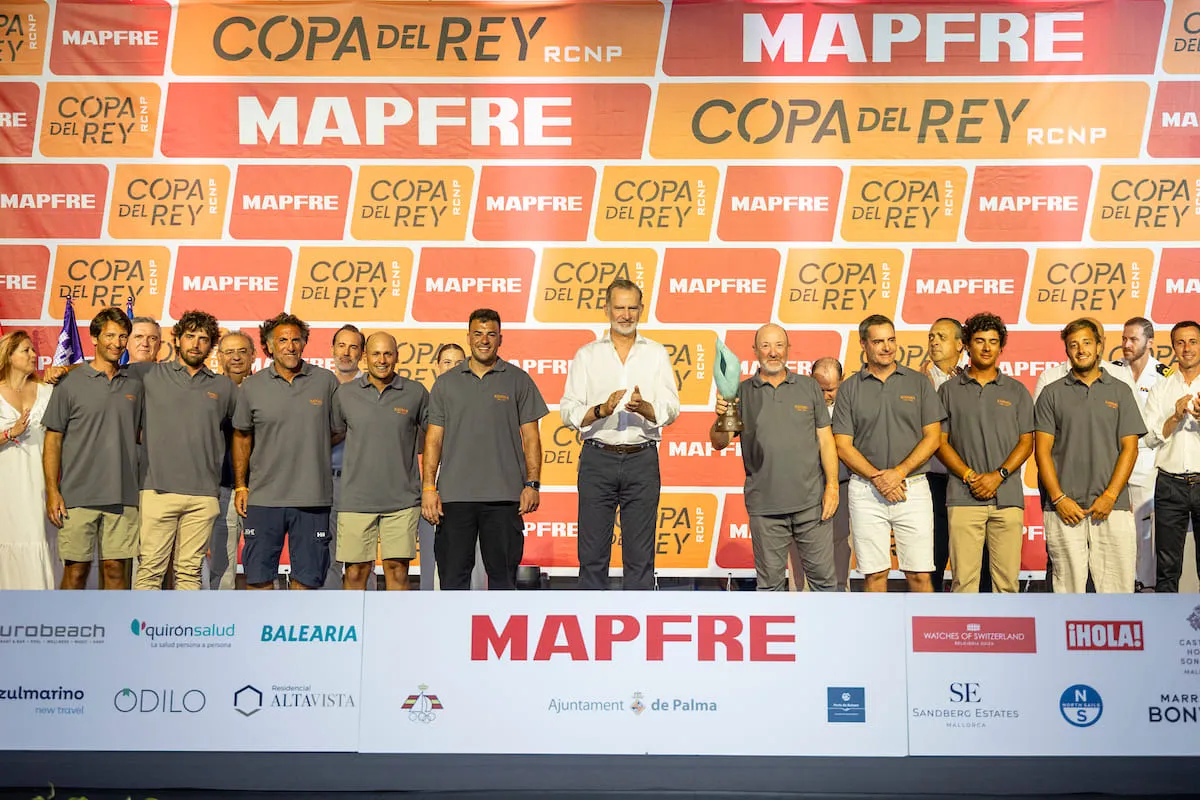
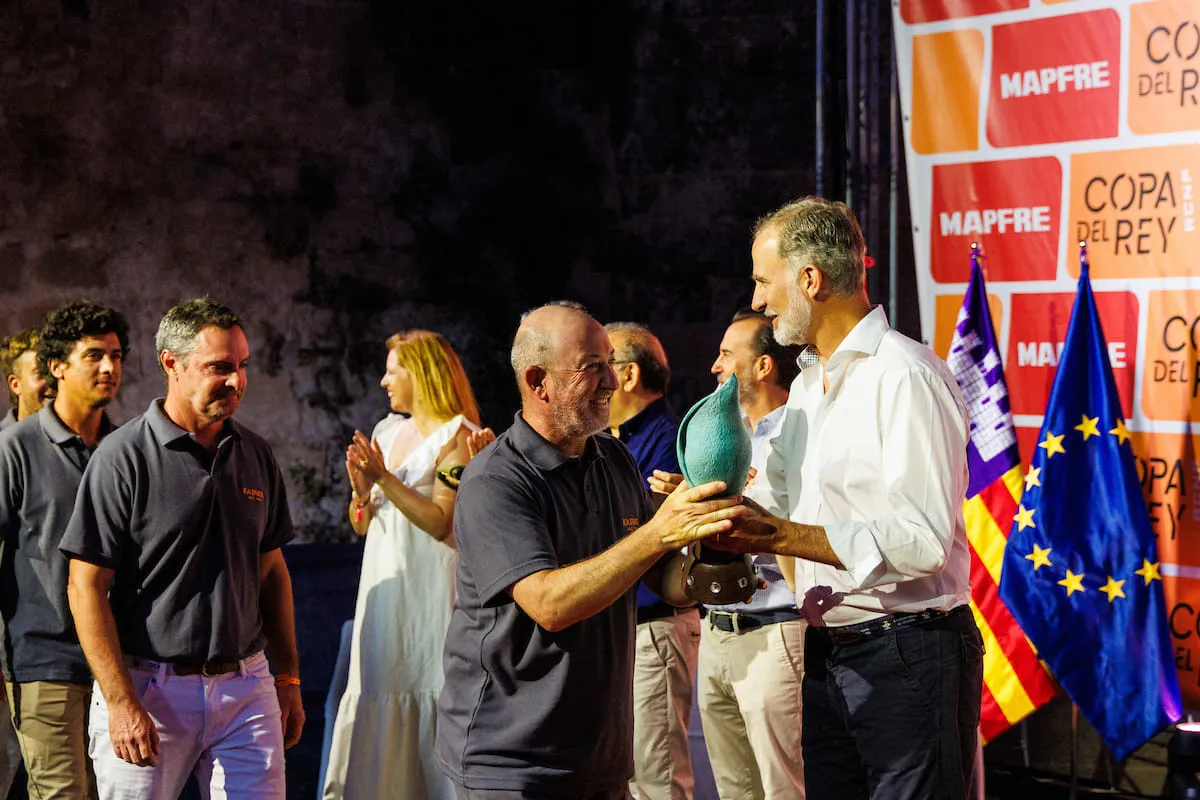
After that, we raced the King’s Cup, because the boat performed well, with a great crew. By then I was getting back into shape, I started racing again, in Lasers, because it’s much faster, it puts you in really challenging situations… We won it too, even though it was tough. I never would have imagined that scenario: when we went in ’96 or ’99, we rented a boat and finished 17th, 18th, 19th. In 2004, with the Spanish team, we finished ninth and we were happy because it was very difficult. But now, going with an Argentinian team and a sailboat I had designed was incredible. It was like validating the work we had done all these years… In 2025 we also raced again in Valencia and won, but in the Copa del Rey (European Championship) there was little wind, which is the boat’s most difficult condition, and we finished fifth.
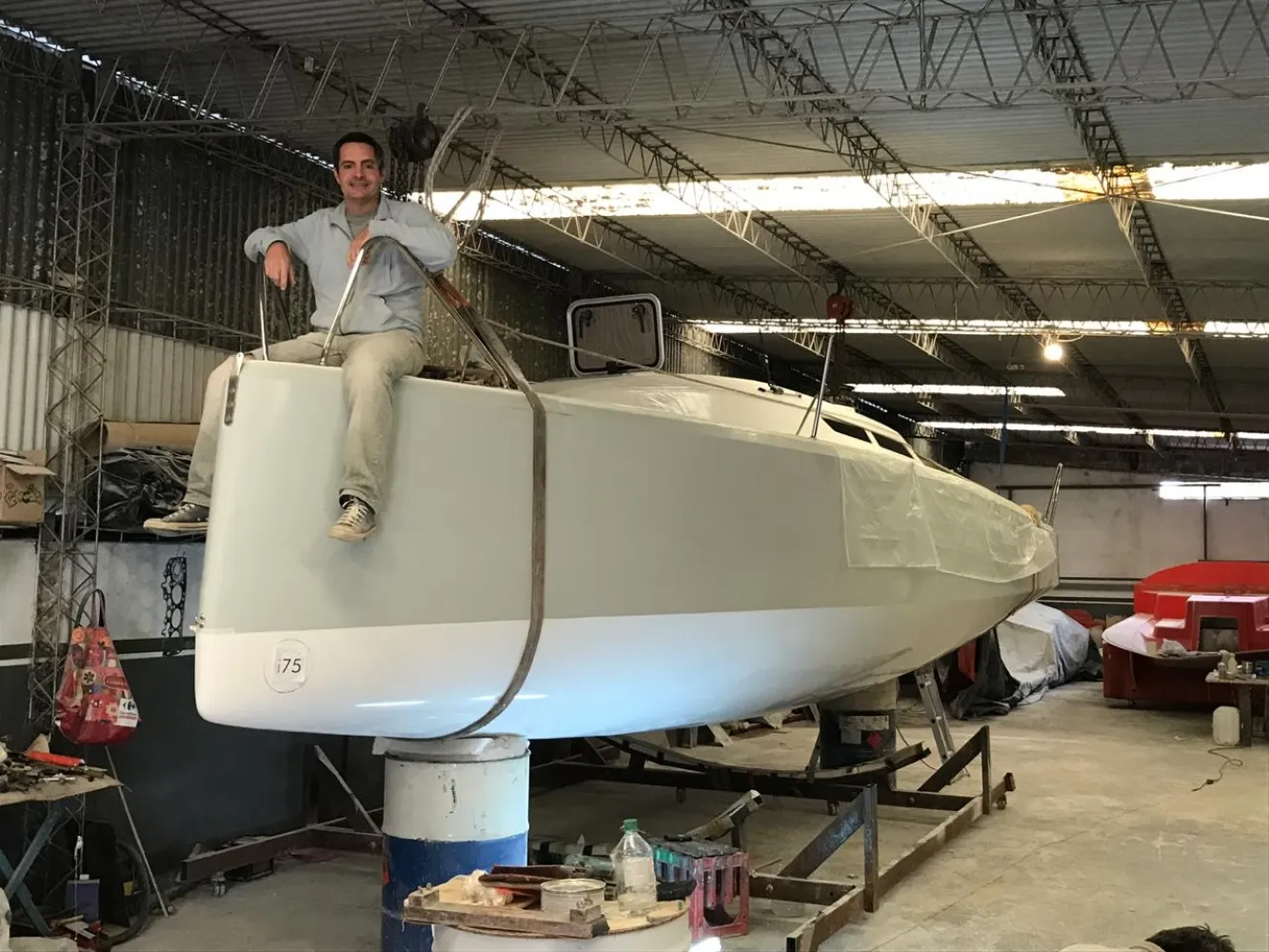
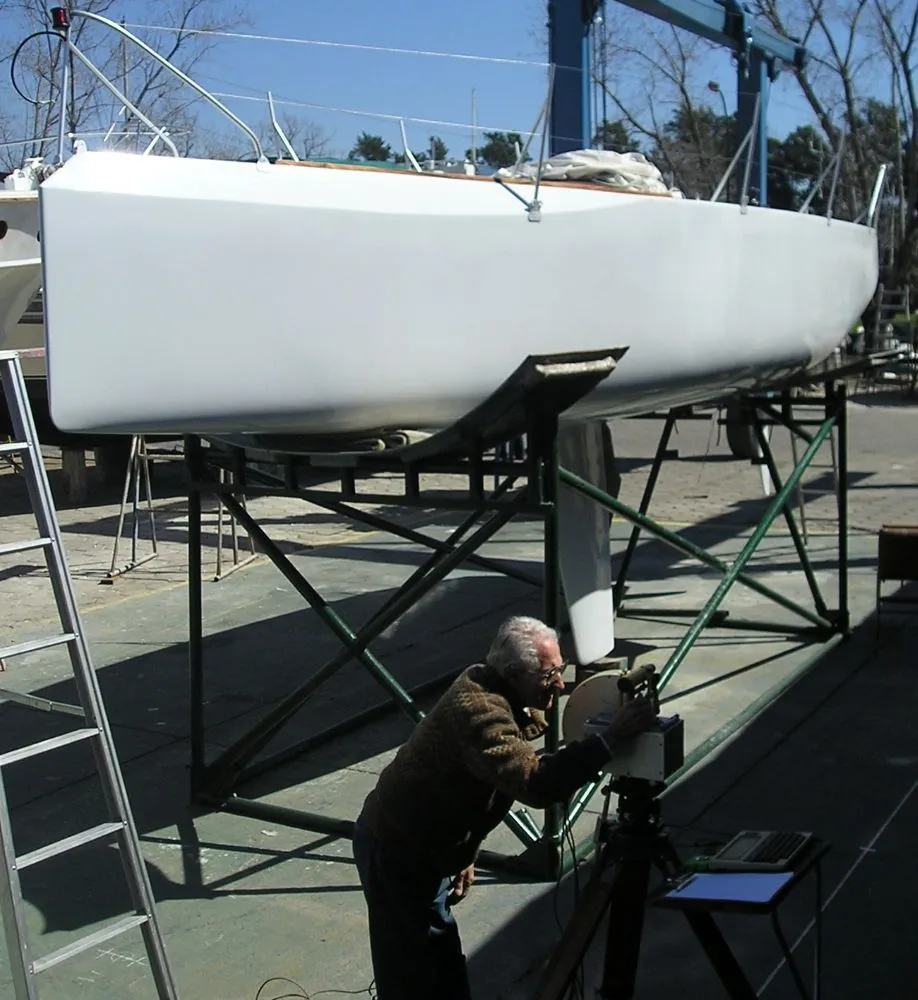
But they still decided to enter the World Championship.
Yes, this year it was being held in Naples, Italy (because the venues are always changing), and the boat was relatively close: in Valencia. But we knew it was going to be very complicated because it’s very competitive; there are people who know a lot about this. Even at the Copa del Rey, at night, when we were returning, I stayed at the computer making modifications to the boat to improve its performance. We all wove together ideas, from the rigging to the sails, including input from some crew members who have hours of experience sailing it and anticipate certain issues, managing to make it more “calmer” for low-wind areas, with a lot of new changes.
We also analyzed all the weather and conditions of the location where we were going to race extensively, and we added equipment that measures the boat’s performance minute by minute, so we did a really comprehensive job. Furthermore, all the measurements had to be accurate because they are very strict in Spain. Before the World Championship started, I knew we had one of the best boats. There were eight races in total, some very long, others shorter, with calm, windy conditions—everything changed… then there was a middle-distance race, and we came in second again. By then, we were third in the championship; there were only one or two days left, and up to that point, everything was going great. The fleet was very diverse but competitive.
On the last day, we had to make a decisive move if we really wanted to win. We also thought it was important to trust the team because the windier days were coming, which is when the boat performed best. We had a double spinnaker configuration that allowed us to sail in all wind conditions, while other boats were geared more towards calm or windy conditions. But in the end, there was a lot of wind and waves, and we won the last two races. It was spectacular. When I was a kid, I wanted to sail in a World Championship, but I never thought we’d win it with a boat I had designed. Later, the boat went to the Conde de Godó Regatta and won that one too.
Finally, Patricio, what are your upcoming projects?
We’re currently working on some 36- and 38-foot boats, semi-rigid inflatables made by MarTecna (one of the companies focused on the Optimist class in Argentina), which they exported to the United States. I’ve also started some projects in Brazil, which is a more closed market, and when we won the World Championship, four or five acquaintances wrote to tell me they were cheering us on from there (laughs). We’re also working on a 41-foot sailboat, which starts construction in a few days, which is fantastic because things are starting to get moving.
The Katara made quite a splash in Italy, and I think it’s helping this whole movement to generate interesting projects. I also feel like I’m meeting more and more experienced sailors, very interesting ones: that exchange is very important for the design because it provides a wealth of information.
From “Navegantes Oceánicos” we thank Patricio Gutierrez for sharing his vast experience as a designer and navigator with our readers in this interesting interview, and we wish him fair winds and good luck in his future projects.